Lithium-ion batteries (LIBs) are widely used in button batteries, electric vehicles, aerospace and military equipment due to their high energy density, long cycle life and environmental protection. As an important part of electrochemical energy storage systems, lithium batteries play a key role in modern technology. However, the liquid organic electrolyte in conventional lithium-ion batteries faces serious safety risks, such as flammability, unstable dendrite growth, etc., which pose a threat to the performance, longevity, and safety of the battery. All-solid-state batteries use a solid electrolyte, which can effectively inhibit the formation of dendrites, reduce the risk of short circuit or fire, and thus improve battery safety.
Among them, solid polymer electrolyte, as a material with excellent mechanical properties and flexibility, has become a good choice for the development of all-solid-state batteries. Compared to liquid electrolytes, solid polymer electrolytes not only improve the cycle life and safety of batteries, but also simplify the system structure in battery design and avoid problems such as leakage.
Preparation of composite solid electrolytes
Composite solid electrolytes are a combination of a polymer matrix and an inorganic filler. The choice of polymer matrix is critical to electrolyte performance. The polymer matrix should have the following characteristics:
Good cationic solvation ability - ensures that lithium ions can be solvated by the polymer backbone, which helps the movement and conduction of lithium ions inside the battery.
High rotational flexibility——The free movement of the polymer chains increases the conduction efficiency of ions.
Excellent mechanical strength——It has sufficient strength to inhibit the growth of lithium dendrites and avoid the problem of short circuit in the battery.
To improve the performance of solid electrolytes, researchers often add ionic liquids to polymer matrices as plasticizers to improve the ionic conductivity, electrochemical window, and interfacial contact properties of the electrolyte.
Due to their unique physical and chemical properties, ionic liquids have become an important research direction in the field of solid electrolytes in recent years. It is a liquid composed of organic cations and inorganic anions that usually appears in a liquid state at room temperature. Its low vapor pressure, high thermal stability, and wide electrochemical window make ionic liquids very suitable as electrolyte materials for lithium batteries, especially in high-temperature and high-voltage batteries.
In this paper, we prepared a composite solid electrolyte by combining vinyl ionic liquid (VBImNTF2), inorganic filler Li6.4La3Zr1.4Ta0.6O12 (LLZTO) and polyvinylidene fluoride-hexafluoropropylene (PVDF-HFP).
The specific preparation method is as follows:
Vinyl ionic liquid (VBImNTF2) is mixed with the initiator azodiisobutyronitrile (AIBN) to enhance the toughness of the electrolyte by thermal polymerization.
PVDF-HFP was dissolved in N,N-dimethylformamide (DMF) solvent, lithium salt LiTFSI and inorganic filler LLZTO were added, and stirred to form a homogeneous electrolyte matrix.
The above two solutions are mixed evenly by stirring and sonication to form the final composite solid electrolyte solution.
By solution casting method, the mixed liquid was poured into a PTFE mold and dried in vacuum at 60 °C for 12 hours, and finally the composite solid electrolyte membrane was prepared.
The composite electrolyte prepared by this process not only maintains the flexibility of the polymer, but also significantly improves the ionic conductivity and mechanical strength of the electrolyte. The addition of the ceramic filler LLZTO effectively enhances the mechanical properties of the electrolyte membrane, allowing it to play a key role in the inhibition of lithium dendrites. In addition, the introduction of ionic liquids further improves the electrochemical properties of the electrolyte.
Preparation of positive electrode pieces
The performance of the cathode material of lithium battery has a crucial impact on the overall performance of the battery. In this experiment, two different cathode materials, lithium iron phosphate (LiFePO4) and lithium nickel-cobalt-manganese oxide (NCM811), were used to assemble two different all-solid-state batteries.
The specific preparation process of the cathode electrode piece is as follows:
1) Material drying – LiFePO4 and NCM811 cathode materials are vacuum dried at 120°C for 12 hours to remove moisture from the material and prevent it from being affected by moisture during battery assembly and reducing performance.
2)Powder mixing——The dried cathode material is mixed with the conductive agent acetylene black and the binder PVDF in a ratio of 8:1:1, and ground in a mortar for 1 hour to make it fully mixed evenly.
3)Slurry blending: Add an appropriate amount of NMP solvent to the mixed cathode material for slurrying, and obtain a uniform cathode slurry by stirring.
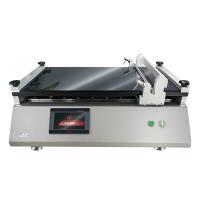
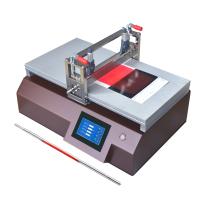
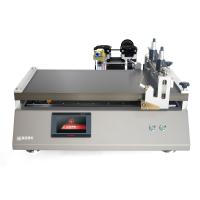
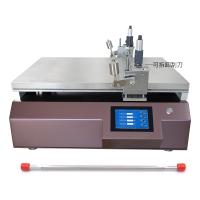
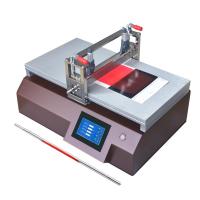
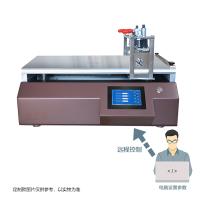
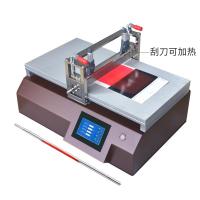
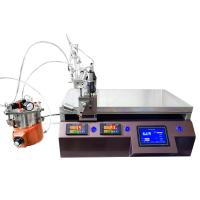
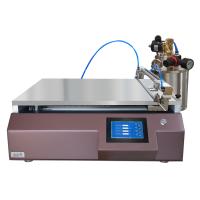
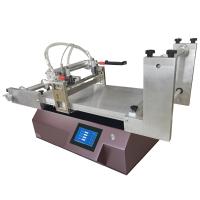
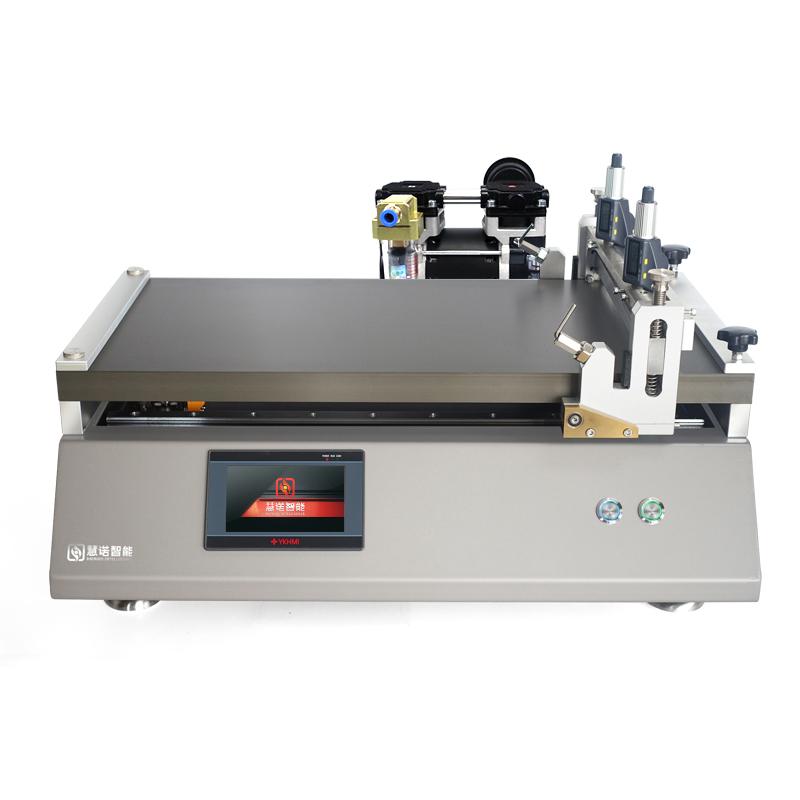
4)Coating and drying——useAutomatic film coating machineThe slurry is evenly coated on clean aluminum foil and initially dried at 60°C, followed by vacuum drying of the coated cathode piece at 120°C for 12 hours. After drying, the positive electrode piece is cut into 12mm diameter discs for later use in the assembly of the battery.
The positive electrode piece obtained by the above preparation steps has good conductivity and mechanical stability, and can show excellent electrochemical performance in subsequent battery tests.
Assembly of all-solid-state batteries
The assembly of the all-solid-state battery is carried out in a glove box filled with argon gas to ensure dry and oxygen-free conditions in the operating environment. In this experiment, CR2032 button cell batteries were used as models, and LiFePO4/Li and NCM811/Li all-solid-state batteries were assembled, respectively.
The specific assembly steps are as follows:
Battery assembly sequence: negative electrode shell, spring sheet, gasket, lithium sheet, composite electrolyte membrane, positive electrode sheet, positive electrode shell.
Battery encapsulation: The battery is sealed by the battery sealing machine to ensure the stability of the internal environment of the battery.
In addition, in order to verify the interfacial stability of the composite solid electrolyte, a lithium-symmetrical battery was assembled in the experiment, and the interfacial stability of the composite electrolyte was further studied through the interfacial contact between the lithium sheet and the composite electrolyte.
Material characterization and electrochemical testing
1) Material characterization is an important step in analyzing the properties of composite solid electrolytes and cathode pieces. Through a series of characterization methods, it is possible to gain insight into the molecular structure, thermal stability and practical application of electrolytes in lithium batteries.
Infrared Spectroscopy (FTIR):The molecular structure of the electrolyte was analyzed by FTIR-1500 infrared spectrometer, and the molecular bond characteristics of the composite solid electrolyte with different compositions were studied.
Scanning Electron Microscopy (SEM):The microscopic morphology of the composite electrolyte membrane and the positive and negative electrode sheets was observed by SEM, and the element distribution on the surface of the sample was further analyzed by X-ray energy spectroscopy (EDS).
Thermogravimetric Analysis (TGA):The thermal stability of the composite electrolyte membrane was studied by thermogravimetric analysis at a heating rate of 5°C/min in an argon atmosphere using the NETZSCH STA 449F5 analyzer.
2) Electrochemical testing is a critical step in evaluating battery performance. In this experiment, a series of electrochemical tests were performed using the CHI-760E potentiostat and the LANHE CT3001A test system, including electrochemical window, solid electrolyte ion conductivity, lithium ion mobility number, etc.
Electrochemical Window Testing:The electrochemical stability of the electrolyte was analyzed by placing the composite solid electrolyte between the lithium sheet and the stainless steel sheet, and the electrochemical window was tested in the voltage range of 0-6V after the battery was assembled.
Ionic Conductivity Test:The ionic conductivity of the electrolyte in the frequency range of 10^(-1)~10^5 Hz was tested by an electrochemical workstation at room temperature to evaluate the conductivity of the composite solid electrolyte.
Lithium-ion mobility number test:The lithium-ion mobility number of the composite solid electrolyte was measured using a combination of alternating current (EIS) and steady-state current (DC).
After the above series of tests, the results show that the composite solid electrolyte prepared in this paper not only has excellent ionic conductivity and a wide electrochemical window, but also has good interfacial stability, which is expected to play an important role in the practical application of all-solid-state lithium batteries.
conclusion
In this paper, a solid-state electrolyte with excellent performance was successfully prepared by the combination of vinyl ionic liquid, inorganic filler LLZTO and polymer matrix, and applied to all-solid-state lithium battery, and good experimental results were obtained. Experiments show that the composite electrolyte has high ionic conductivity, wide electrochemical window and good interfacial stability, which can significantly improve the safety and cycle life of the battery. Future research will continue to optimize electrolyte materials to advance the practical use of all-solid-state lithium batteries in higher energy density applications.
References
Preparation and Properties of Ionic Liquid Polymer Composite Solid Electrolyte》- Liu Yuxiang