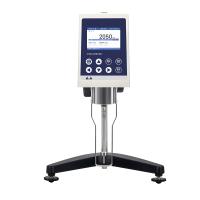
Polyethylene wax is a polymer material with excellent performance, which is widely used in plastics, rubber, coatings, inks, greases and other fields as a lubricant, dispersant and modifier. With the continuous expansion of industrial applications, the quality control of polyethylene wax has become a key link, and viscosity, as one of its important physical properties, can directly affect the flowability, processability and compatibility of the product with other materials. Viscosity test is one of the conventional means to evaluate the quality of polyethylene wax, and the digital rotary viscometer has become a good choice for measuring the viscosity of polyethylene wax due to its high precision, easy operation and data accuracy.
This article will discuss in detail the application of digital Rotational Viscometer in polyethylene wax, including its application significance, equipment selection requirements, testing requirements and related technical details.
Introduction of polyethylene wax
Polyethylene wax is a waxy substance with high molecular weight, mainly prepared by ethylene polymerization, with low molecular weight and good thermal stability. Its molecular structure is similar to that of ordinary polyethylene, but it has a lower molecular weight, which gives it special physical and chemical properties. Polyethylene wax is mainly manifested in the following properties in the application:
Polyethylene wax can effectively reduce the friction of materials during processing, thereby improving the processing performance of materials, reducing energy consumption and prolonging the service life of equipment.
In the production of plastics, rubbers and masterbatches, polyethylene waxes help to evenly disperse pigments, fillers or other additives, improving the performance and appearance of the product.
In coatings, inks and other industries, polyethylene wax can increase the adhesion and gloss of products, making the coating more uniform and long-lasting.
Polyethylene wax can be used as a surface treatment agent to improve the surface smoothness and scratch resistance of plastic and rubber products.
As an important indicator affecting the application performance of polyethylene wax, viscosity not only affects the fluidity during processing, but also relates to the final performance of the product. Therefore, accurate measurement of the viscosity of polyethylene wax is essential to ensure its application effect.
The application significance of digital Rotational Viscometer
1. The importance of viscosity
In the processing and application of polyethylene wax, viscosity reflects important parameters such as molecular structure, flow properties and processability. Too high viscosity will make it difficult to flow during processing, increasing the burden on the equipment; Too low viscosity can lead to uneven dispersion or poor lubrication. As a result, monitoring the quality of polyethylene wax through viscosity measurement can identify problems early in production and avoid failures or product rejects during processing.
2. Advantages of digital display Rotational Viscometer
The digital Rotational Viscometer has the advantages of easy operation, high accuracy and good stability in viscosity measurement. The principle is to determine the viscosity by the resistance generated by the rotating rotor in the liquid, and the result is output by digital display, avoiding the reading error of traditional pointer instruments. For polyethylene waxes, a material that requires precise control of processability, the application of digital Rotational Viscometers is of great significance. Its advantages are mainly reflected in the following aspects:
1) Accurate measurement. The digital display Rotational Viscometer uses electronic sensors and microprocessing technology to accurately measure the viscosity of polyethylene wax and avoid human reading errors.
2) Easy to operate。The equipment is easy to operate, and the viscosity value can be easily obtained by simply setting the speed and rotor type during the test.
3) High degree of automation。Some high-end digital viscometers have functions such as automatic data storage and curve drawing, which are convenient for data processing and post-analysis.
4) Wide range of application。Different models of digital Rotational Viscometers can be adapted to different viscosity ranges, and are suitable for high viscosity or low viscosity polyethylene wax products.
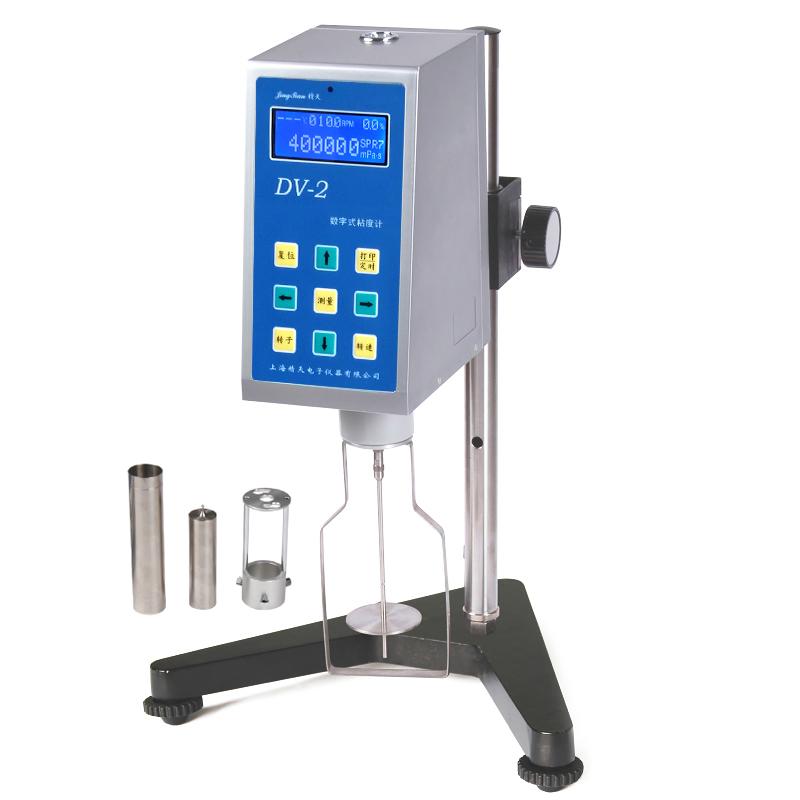
Device selection requirements
When choosing a digital Rotational Viscometer, there are a number of factors to consider, including the device's viscosity measurement range, accuracy, and type of rotor. Here are a few key factors to consider when choosing a digital Rotational Viscometer.
1. Measuring range
Different types of polyethylene wax products have a large difference in viscosity. In general, the viscosity of polyethylene wax is in the medium to high viscosity range, so the equipment should be selected so that the viscometer can measure the target product. For example, some low molecular weight polyethylene waxes have a lower viscosity and may require a device with a lower measurement limit, while high molecular weight polyethylene waxes have a higher viscosity and may require a device with a higher upper measurement limit.
2. Measurement accuracy
The application environment of polyethylene wax is varied, and the viscosity requirements are also relatively strict, so the measurement accuracy of the equipment is particularly important. In general, the accuracy of digital Rotational Viscometers is between ±1% and ±5%, and the appropriate equipment should be selected according to the specific application scenario. For example, in the process of formulation development and quality control that requires high precision, equipment with high precision should be preferred to ensure the reliability of test results.
3. Speed and rotor selection
A Rotational Viscometer determines viscosity by the rotational resistance of the rotor in a polyethylene wax sample, so choosing the right rotor type and rotational speed is critical to the accuracy of the test results. In general, a lower viscosity polyethylene wax can be selected with a larger diameter rotor and a higher speed; For high-viscosity polyethylene wax, it is necessary to choose a rotor with a smaller diameter and reduce the speed appropriately to avoid the rotor not being able to rotate or produce excessive errors.
4、Temperature control function
The viscosity of polyethylene wax is very sensitive to temperature, so a digital Rotational Viscometer should have precise temperature control. To ensure consistent measurement results, the device should have a built-in temperature probe or an external thermostatic Water Bath system to control the temperature of the sample to remain within the desired test range. For example, polyethylene wax is typically measured at a temperature of 120°C or higher to simulate its actual processing conditions.
5、Data processing functions
Digital Rotational Viscometers usually have strong data processing capabilities, such as automatic data storage, calculation of viscosity curves, statistical analysis and other functions. In the testing of polyethylene waxes, especially in R&D or mass production, it is of great significance to be able to quickly and accurately process a large amount of test data to improve work efficiency and accuracy of data analysis.
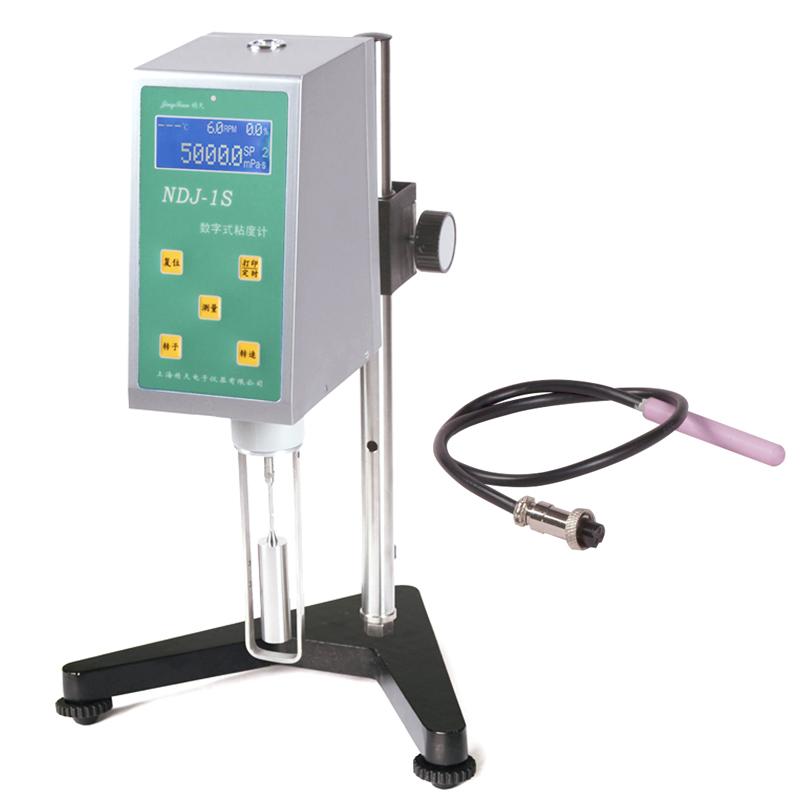
Test requirements and technical details
1、Sample preparation
Polyethylene wax is solid at room temperature and usually needs to be heated to a molten state for viscosity testing. Therefore, before performing the test, it is important to ensure that the sample is sufficiently melted and that the sample is as homogeneous as possible to avoid inconsistencies in the test data. For higher molecular weight polyethylene wax samples, the heating process can take a long time, and it is critical that the temperature is controlled precisely to the desired range.
2、Temperature control
As mentioned earlier, the viscosity of polyethylene wax is extremely sensitive to temperature, so a thermostat should be used to control the sample temperature when performing viscosity testing. Generally, the test temperature of polyethylene wax should be around 120°C, depending on the molecular weight of the product and its melting point. To ensure the accuracy of the test, the temperature should be constant and the sample should be allowed to sit at the test temperature for a period of time before the test to ensure that the temperature is evenly distributed.
3、Speed selection
During the test, the rotation speed should be selected according to the viscosity range of the polyethylene wax sample. In general, higher rotational speeds can be used for low-viscosity samples, while higher rotational speeds are required for high-viscosity samples to avoid overloading the equipment or increasing measurement errors. For example, for low molecular weight polyethylene waxes, you can choose to rotate between 50 and 100 rpm, while high molecular weight polyethylene waxes may need to adjust the rotation speed to 10 to 30 rpm.
Application case analysis
In order to better understand the application of digital Rotational Viscometer in polyethylene wax, the following is an analysis of several practical cases.
Case 1: Application of polyethylene wax in coatings
When a coating company develops a new environmentally friendly coating, it needs to use polyethylene wax as an additive to improve the fluidity and gloss of the coating. In order to ensure that the viscosity of the polyethylene wax meets the formulation requirements of the coating, the company introduced a high-precision digital display Rotational Viscometer. During the production process, technicians regularly test the viscosity of different batches of polyethylene wax and compare the results with the formulation requirements to ensure that the performance of the coating meets the desired target.
After a period of testing, the company found that the viscosity of a certain batch of polyethylene wax was obviously high, which affected the uniformity of the coating. Based on this data, the company quickly adjusted the production process of polyethylene wax and optimized the formulation, and finally succeeded in producing environmentally friendly coatings that met the standards. This case illustrates the important role of a digital Rotational Viscometer in product development and quality control.
Case 2: Application of polyethylene wax in plastics
A plastics manufacturer uses polyethylene wax as a lubricant in the production process to reduce equipment wear and improve the surface smoothness of the finished product. In order to guarantee the fluidity of polyethylene wax during the production process, the company conducts viscosity tests before each production batch. With the use of a digital Rotational Viscometer, companies are able to quickly obtain accurate viscosity values and adjust the amount of additives in time based on the test results.
In a certain production process, the company found that the viscosity of the added polyethylene wax was low, resulting in insufficient surface gloss of the finished product. After further testing, the technician confirmed that the viscosity of the polyethylene wax was unqualified and decided to change the batch. The test results of the new batch of polyethylene wax showed that the viscosity met the standard, and finally solved the problem of the surface quality of the product. In this way, the company effectively controls the risks in the production process and improves the consistency and stability of the product.
Case 3: Application of polyethylene wax in ink
An ink company uses polyethylene wax to improve the adhesion and gloss of inks. In the development of the new ink, the R&D team used a digital Rotational Viscometer to test the viscosity of polyethylene waxes in different formulations. During testing, the team found that the viscosity of the polyethylene wax in one formulation was too high, resulting in poor ink flow.
In response to this problem, the R&D team adjusted the formula ratio, reduced the amount of polyethylene wax, and re-tested to finally obtain a viscosity that meets the requirements. Through real-time monitoring and feedback from a digital Rotational Viscometer, companies are able to quickly adjust formulations to ensure that the performance of inks meets market demand.
summary
The digital Rotational Viscometer is of great significance in the application of polyethylene wax, which can effectively control the quality and performance of the product. With the development of technology, the future digital display Rotational Viscometer will develop in the direction of intelligence and multi-function to better meet the needs of industrial production and R&D. In the application of polyethylene wax, accurate viscosity testing can not only help enterprises improve product quality, but also take advantage of the fierce market competition.