Asphalt is an important road and building material, and its testing is essential to ensure the quality and safety of the material. In this article, we will detail the two main asphalt testing methods: the liquid petroleum bitumen flash point test (Tiger open cup method) and the coal bitumen distillation test.
Flash point test of liquid petroleum asphalt (Tiger open cup method)
Purpose and Scope of Application
This method is used to determine the flash point of liquid petroleum bitumen materials with a flash point below 93 °C by a Tiger Open Cup (TOC). Flash point is the lowest temperature at which a gas produced on the surface of a liquid can be ignited by an external flame after mixing with air under certain conditions. This test can help assess the volatility of the material and the potential fire risk.
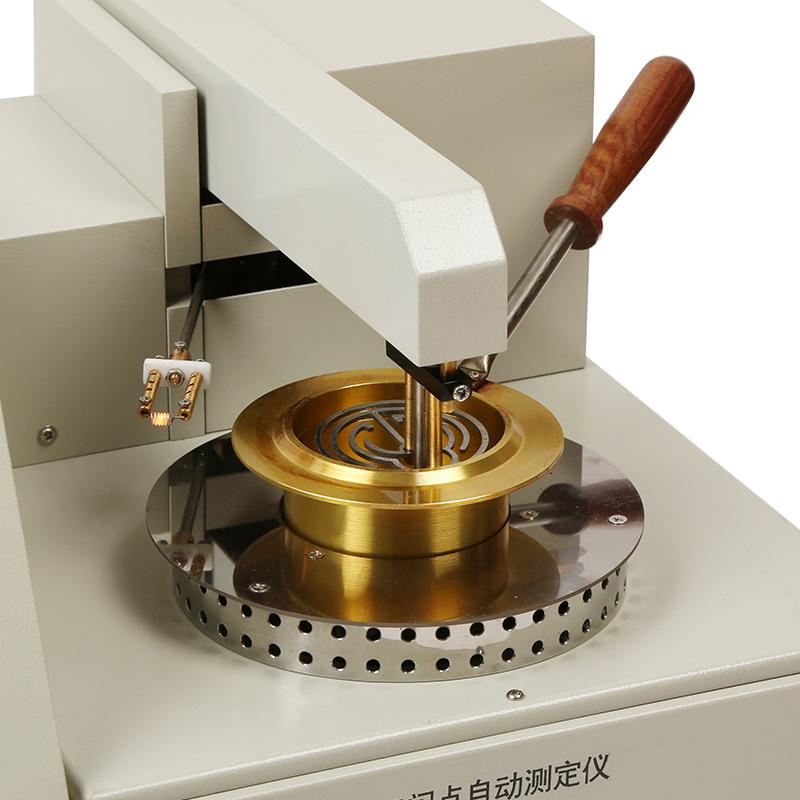
Technical requirements for instruments and materials
Flash point meter- Use Tiger open cups, which are heat-resistant glass or metal crucibles, and are precisely sized to ensure test consistency. Depending on the flash point of the sample, water or glycol solution can be selected for the holding liquid bath.
Igniter- Use a metal igniter with an adjustable flame, provide a source of ignition through a gas pressure vessel, and ensure that the flame is stable as it passes through the specimen cup.
Thermometers and heating sources——The thermometer is used to accurately measure the temperature of the sample, and the heating source can be an electric furnace or a gas furnace, and the temperature control is accurate.
Methods and Steps:
Preparation – Wash and dry the specimen cup, install the thermometer, and adjust the bath to below the expected flash point temperature of 16.5°C. Reduce the temperature of the specimen to at least 11°C below the expected flash point and inject the specimen into the 3.2mm line of the cup mouth to ensure that there is no residual asphalt in the cup.
Test procedure - start heating the specimen to ensure that the heating rate is controlled at about 1°C/min. When the temperature of the specimen is close to the expected flash point, sweep the surface of the specimen with an igniter for every 1°C increase to observe for the appearance of a blue flame. If there is an instantaneous blue flame, the temperature is recorded, as the flash point.
Analysis of results - at least two parallel tests on the same specimen, if the difference between the two results is not more than 10°C, the average value is taken as the final flash point.
Precautions
The test should be carried out in an environment without significant airflow to reduce external interference.
The time for the flame to sweep over the surface of the specimen should be strictly controlled within the specified range to ensure the accuracy of the test results.
Coal pitch distillation test
Purpose and Scope of Application
The coal pitch distillation test is mainly used to determine the fraction content of coal pitch, which can be used for subsequent analyses such as taric acid content and naphthalene content. In addition, properties such as the softening point of the residue after distillation can also be obtained by this method.
Technical requirements for instruments and materials
Distillation flasks——Short-necked viscous oil distillation flask, with a capacity of 250mL, meets the specified size requirements.
Condenser tube and insulation cover- The condenser tube is used to collect the fractions, and the insulation hood is used to ensure that the heat of the distillation process is evenly distributed.
Thermometers and balances- The thermometer has an accuracy of 1°C and the balance has an accuracy of 0.1g and 1mg, respectively, and is used to measure the mass of the specimen and fraction.
Methods and Steps:
Preparation - After washing and drying the distillation unit, weighing the quality of the distillation flask and Erlenmeyer flask, the sample is injected into the distillation flask according to the regulations, and the condensing device is prepared.
Test step – heat the flask evenly so that the specimen begins to distill. The first drop of fraction should appear between 5 and 15 minutes, and the heating rate is subsequently adjusted to ensure that the fraction flows out at a rate of 50 to 70 drops per minute. Every time the specified temperature is reached (e.g., 170°C, 270°C, 300°C), the corresponding fractions are collected and the Erlenmeyer flask is replaced.
Analysis of results – weigh the fraction mass of each Erlenmeyer flask, record and calculate the fraction content for each temperature range. After distillation, the residue in the flask has cooled to room temperature and can be further tested for physical properties such as softening point.
Precautions
During the distillation process, the sample should not be overheated or foamed to form.
Solids such as naphthalene may appear in the condenser tube, which needs to be heated in time to avoid clogging.
summary
The flash point test of liquid petroleum asphalt and the distillation test of coal asphalt can effectively evaluate the combustion characteristics and component content of asphalt. These two inspection methods not only play an important role in the quality control of roads and building materials, but also have key importance for the safety assessment of materials. In actual operation, the instrument requirements and test procedures are strictly adhered to ensure the accuracy and reliability of the experimental results.
