1. Scope of application
This method is suitable for the determination of sulfate content in natural water and wastewater, and is widely used in the field of water quality monitoring and environmental protection. The assay ranged from 5.0 to 200 mg/L.
2. Measuring principle
This method is based on the reaction of sulfate and barium chromate to form a precipitate, and the quantitative analysis is carried out by spectrophotometry. The sulfate reacts with a barium chromate solution under acidic conditions to form a barium sulfate precipitate, and the solution is subsequently adjusted to alkaline to remove excess barium chromate. The color shade in the filtrate is directly proportional to the sulfate content, in accordance with the Lambert-Beale law, and the sulfate content is finally quantified by colorimetric method.

3. Reagent preparation
3.1 Reagent Requirements
All reagents must be analytically pure or above, and the experimental water should be distilled water.
3.2 Main reagents
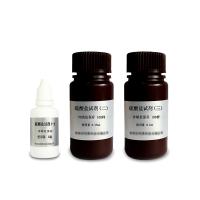
Reagent 1: Direct use.
Reagent 2: The preparation method is to take 1 vial of sulfate "Reagent 2", add 40mL of distilled water to mix, seal and refrigerate storage, and the shelf life is 1 week.
Ammonia aqueous solution (1+1): prepared in the ratio of 1:1 of ammonia and distilled water.
Standard solution (200mg/L): accurately weigh 0.3500g of potassium sulfate (K₂SO₄) dried at 105 °C for 2 hours, dissolve in distilled water and set to 1000mL.
4. Instruments and consumables
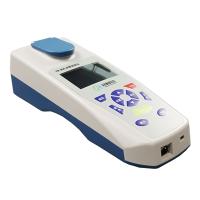
Sulfate analysis Tester
Cuve: diameter 25mm, height 95mm
Volumetric flasks: used for the preparation of standard solutions
Small beakers, pipettes, glass rods and other conventional laboratory utensils
Disposable filter: 0.45 μm aqueous membrane
5. Analysis steps
5.1 Blank preparation
Place 10.0 mL of distilled water in a cleaned cuvette.
Add 3 drops of reagent 1, shake well and leave for 30 seconds.
Add 2.0mL of reagent 2 (stir well before adding), shake well and let stand for 2 minutes.
Add 3.0mL of ammonia solution (1+1) and shake vigorously for 1 minute.
Filtration using a 0.45 μm aqueous membrane and transfer the filtrate to a colorimetric tube for instrument testing.
5.2 Sample Preparation
Take 10.0 mL of the sample to be tested and place it in a colorimetric tube.
Add 3 drops of reagent one, shake well and leave for 30 seconds.
Add 2.0mL of reagent two, shake well and let stand for 2 minutes.
Add 3.0 mL of ammonia solution and shake vigorously for 1 minute.
Filtered using a 0.45 μm aqueous membrane, the filtrate was transferred to a colorimetric tube for instrument testing.
6. Data analysis and results reporting
The sulfate concentration in the sample is read according to the linear relationship between the color of the filtrate and the sulfate content. The final result should be in the assay range of 5.0 to 200 mg/L. Based on the actual measurement results, combined with the calibration curve of the standard solution, the accurate amount of sulfate in the water sample was obtained.