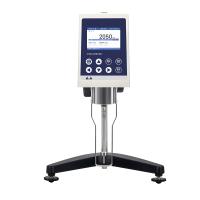
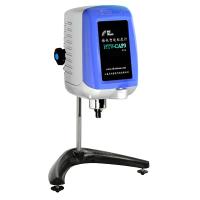
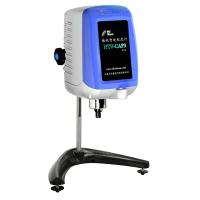
A Rotational Viscometer is an instrument used to measure the viscosity of fluids, which is widely used in petrochemical, coating, food and other industries. Its basic function is to detect the viscosity of the fluid through the resistance of the rotating element in the liquid, and then evaluate the fluidity and consistency of the liquid, which is essential for understanding the rheological properties of the material and regulating the production process.
Viscosity is a key parameter to characterize the rheological properties of fluids, which directly affects the flow behavior and processing properties of products. For example, in the coatings industry, viscosity is critical to the coverage and spraying effect of coatings; In the food industry, viscosity determines the texture and mouthfeel of a product. The use of viscometers helps companies ensure product consistency and quality stability, thereby meeting industry quality standards and optimizing product performance.
Principle of operation
The principle of operation of a Rotational Viscometer is based on the relationship between shear stress and shear rate to determine the viscosity of a fluid. During the measurement, a rotating element (usually a cone plate, coaxial cylinder, or spindle) rotates in the fluid at a set angular velocity. This rotation creates a shear stress, and as the speed of the element's motion and the friction inside the fluid increases, the viscometer is able to measure the resistance of the fluid, i.e., the fluid's "obstruction" effect on the rotating element, which is directly proportional to the viscosity
A Rotational Viscometer calculates viscosity by the relationship between torque and angular velocity. According to the formula:
viscosity η=τ/γ
ηindicates viscosity,τis the shear stress,γis the shear rate.
During rotation, the viscometer's sensor accurately measures the torque and outputs the ratio of shear stress to shear rate as the viscosity of the fluid. This torque-based measurement is suitable for different types of fluids, especially by capturing changes in viscosity of non-Newtonian fluids at different shear rates to evaluate the rheological behavior and processability of fluids.

Viscosity type and fluid behavior
Viscosity is one of the important rheological properties of fluids, which is mainly manifested in the resistance of fluids to deformation during flow. During the measurement process of a Rotational Viscometer, different types of fluids exhibit different viscosity behaviors, which are mainly divided into two categories: Newtonian fluids and non-Newtonian fluids.
Newtonian fluids
For Newtonian fluids, the viscosity remains constant at any shear rate, i.e., the shear stress is linearly related to the shear rate. This means that the molecular structure inside the fluid remains stable regardless of the external force, and the viscosity does not change with changes in external conditions. Typical Newtonian fluids include water, mineral oil, and glycerol, among others, whose rheological behavior is simple and predictable, so they can be described by a single viscosity value under standard conditions。
Non-Newtonian fluids
The viscosity of non-Newtonian fluids varies with the shear rate, exhibiting more complex rheological behavior. Depending on how their viscosity changes, non-Newtonian fluids can be further classified into the following categories:
Shear the thinner fluid
Also known as pseudoplastic fluids, the viscosity decreases as the shear rate increases, exhibiting the property of "thinning". These fluids become easy to flow when agitated or accelerated, and typical applications include paints, toothpaste, and some foods。
Shear thickens the fluid
Also known as bulkimal-plastic fluids, the viscosity rises as the shear rate increases, exhibiting the property of "thickening". This type of fluid becomes denser when accelerated, such as a cornstarch solution.
Time-dependent fluids
The viscosity of this type of fluid is not only related to the shear rate, but also to the length of time the external force is applied. For example, thixotropic fluids (such as jelly and certain emulsions) will thin under shear, but once shear is stopped, the viscosity will return。
The complex behavior of non-Newtonian fluids has attracted much attention in engineering applications, as the processing and use of these fluids often requires knowledge of their shear-thinning or shear-thickening properties to optimize production processes and product performance. This classification facilitates viscometer viscometer measurement and rheological behavior analysis in a variety of industrial applications.
Types and selection of Rotational Viscometers
Rotational viscometers can be divided into several types based on their design and measurement methods, each suitable for different fluid properties and measurement needs. Here are a few common types of Rotational Viscometers and recommendations for their selection:
Coaxial cylindrical Rotational Viscometer
This viscometer consists of an inner and outer coaxial cylinder in which the inner or outer cylinder rotates to create a shear action. This type is suitable for measuring low to medium viscosity fluids, and is able to provide high accuracy and stable measurement, which is one of the commonly used equipment in the petrochemical and food industries。 Due to its good temperature control and accuracy, it is particularly suitable for fluid testing that requires high repeatability.
Cone plate type Rotational Viscometer
This type of viscometer consists of a conical rotor and a parallel plate and is typically used to measure viscosity in thin liquid layers or small sample volumes. The cone plate type is suitable for high-precision measurements, especially for viscosity changes in high-viscosity samples or non-Newtonian fluids. Its design allows the measurement of highly viscous fluids at low shear rates, making it suitable for shear-sensitive samples such as paints and adhesives。
Rotary rotor type viscometer
This viscometer typically uses a simple spindle-shaped rotor to measure viscosity at different shear rates by varying the rotational speed. revolverotorThe viscometer has a simple structure and easy operation, which is suitable for rapid measurement of a variety of fluids. It is used in a wide range of applications, from low-viscosity liquids such as solvents to high-viscosity liquids such as creams and pastes, and is a common tool in laboratory and process control。
【Selection Suggestions】
The choice of Rotational Viscometer should be based on the specific measurement needs and fluid characteristics. For example, for test scenarios with high precision and repeatability requirements, the coaxial cylindrical type or cone plate type can be preferred; For rapid detection in industrial sites, the rotary spindle type is more suitable. In addition, the temperature control system, sample volume requirements, and measurement range are also key factors to consider during the selection process.
The calibration and error control of a Rotational Viscometer is a key part of ensuring measurement accuracy and stability. An effective calibration method not only provides accurate viscosity data, but also reduces systematic errors during the use of the equipment.
Calibration Method: The calibration of Rotational Viscometers is usually performed using standard liquids of known viscosity that have certified viscosity values that are stable over a certain temperature range. By measuring the viscosity of a standard liquid in the same environment, the difference between the resulting reading and the standard value is compared, and the accuracy of the viscometer is adjusted and verified. Some advanced viscometers also have a built-in calibration function that automatically adjusts measurement parameters to reduce human error。
Error Sources and Control
Temperature control
Temperature has a significant effect on viscosity, and small temperature fluctuations can cause significant viscosity changes. Therefore, the use of thermostatic equipment to ensure that the test sample is performed at a stable temperature is the key to reducing errors.
Equipment cleaning and maintenance
The rotor and sample cup of the viscometer should be kept clean to prevent residues from affecting the measurement results. Under the demand for high precision, regular maintenance and checking the accuracy of equipment are particularly important。
Selection of rotational speed and shear rate
To avoid nonlinear effects, it is important to select the appropriate rotational speed and shear rate, especially when measuring non-Newtonian fluids. Correct settings can reduce errors caused by factors such as eddy currents and unwanted shear distortion.
Data validation and logging
At the end of the experiment, the measurement data is compared to the standard value or reference sample, and all measurement conditions and data deviations are recorded for reference and optimization in subsequent measurements. This systematic calibration and error control process helps improve the reliability of the viscometer and the repeatability of the results