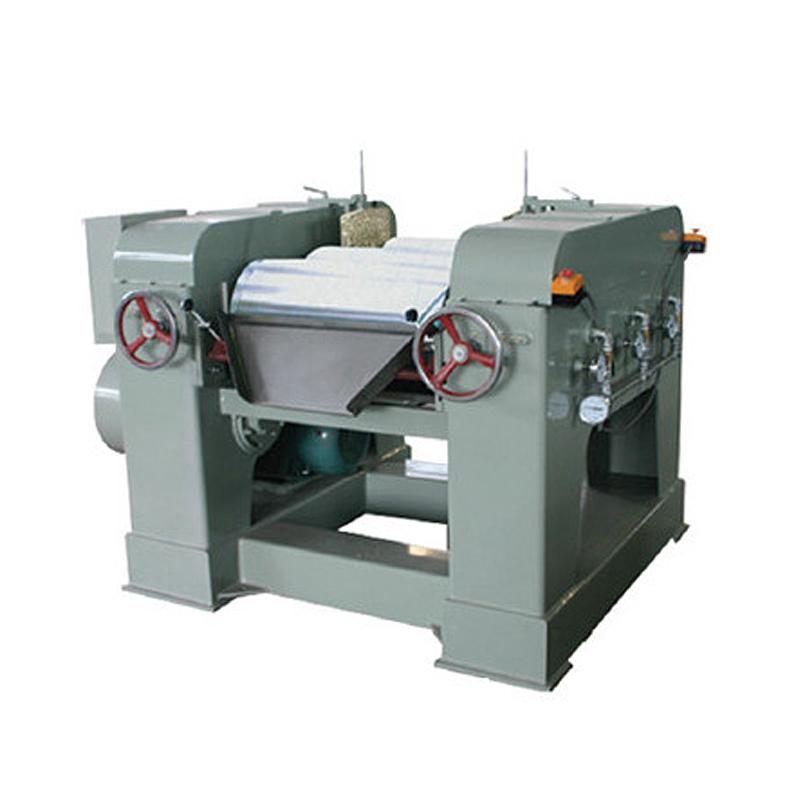
Originally used in the cement industry, roller mills are gradually being adopted by the titanium dioxide (TiO₂) industry due to their simple structure, low noise, small footprint and easy maintenance. With the rise of titanium dioxide enterprises, roller grinding equipment has been continuously transformed and optimized, and the introduction of automatic control technology has become a key breakthrough. This technology significantly improves the grinding efficiency of roller mills and promotes the efficient, energy-saving and high-quality development of titanium dioxide production. This paper discusses the multi-faceted application of automatic control technology in roller grinding, covering integrated systems such as automatic material control, liquid level control and automatic lubrication of the main engine, and analyzes how these systems can promote the upgrading of production in the titanium dioxide industry.
Automatic control system architecture
The automatic control system of the roller mill adopts a two-layer network architecture, and the monitoring network and the control network work together, each with different responsibilities. The monitoring network is responsible for the communication between the engineer station, the operator station and the field control station, facilitating the efficient transmission and interaction of information. The control network, on the other hand, focuses on communication and coordination between field devices, ensuring that the individual components are precisely connected. Through real-time monitoring and precise control, the system is able to stabilize production capacity, improve production efficiency, and significantly reduce the cost of manual intervention, thereby reducing overall production expenses.
Automatic material control
The stability of the material supply is crucial for the production process of roller milling. The automatic material control system accurately monitors the material height through the level sensor and automatically adjusts the operation of the feeding equipment according to the material height. When the material accumulates to a high level, the system immediately issues an instruction to stop feeding, preventing material overflow and waste. On the contrary, when the material level is insufficient, the feeding equipment will be started in time to replenish the material and ensure the smooth operation of the feeding system. This intelligent control mode not only ensures the continuity of production, but also effectively reduces human error, eliminates potential production fluctuations, and makes the material supply process more reliable and efficient.
Automatic control of the mixing level of material and water
Precise control of the material and water mixing level is essential for the roll mill process. The automatic control system adjusts the opening and closing status of the valve according to the real-time data feedback of the liquid level sensor. When the liquid level exceeds the set threshold, the system quickly adjusts the opening of the valve to bring the liquid level back to the appropriate range and ensure the stability of the mixing process. This automated control process significantly reduces manual handling, greatly improves the accuracy and consistency of the production process, and lays the foundation for the smooth progress of subsequent processing steps.
Automatic lubrication control of the main engine
The stable operation of the main engine depends on good lubrication conditions. The automatic lubrication system adopts automatic control technology to achieve intelligent lubrication operation. When the main motor starts, the timer is activated at the same time, and the lubricating oil pump is triggered after accurate timing, and the lubricating oil is injected into the main engine bearing. After the set time of operation, the lubricating oil pump is automatically stopped, and lubrication is carried out periodically. This automatic lubrication scheme greatly reduces the frequency of manual intervention, effectively avoids lubrication delays caused by human negligence, and comprehensively ensures the long-term stable operation of the equipment, prolongs the service life of the equipment, and reduces maintenance costs.
Automatic control of the hydraulic system
The hydraulic system is an important support for the efficient operation of the roller mill, and its stability directly affects the performance of the equipment. By presetting the upper and lower pressure limits, the hydraulic oil pump can automatically start or stop according to the system pressure. When the pressure is lower than the lower limit, the oil pump will start automatically to quickly replenish the hydraulic oil and increase the system pressure; When the pressure reaches the upper limit, the oil pump automatically stops to prevent the equipment from malfunctioning due to excessive pressure. This automatic control mode eliminates the uncertainty of human operation, significantly improves the response speed and control accuracy of the hydraulic system, provides a solid guarantee for the efficient and stable operation of the roller mill, and ensures that the equipment is always in excellent working condition.
Automatic control of tangential agitators and dispersing equipment
Tangential agitators and dispersing equipment play an important role in the processing of roller mills. The automatic control system controls the amount of water and dispersant added according to the liquid level of the material in the agitator, so as to promote the full mixing of the material. The mixed material is ground by a frequency-controlled extrusion pump to ensure that the material meets the predetermined application standards. The system also automatically adjusts the opening of the outlet valve according to the density data of the material, accurately controls the dispersion effect, and maintains the consistency of the material quality. This series of automated control operations enables seamless connection and precise control of the material mixing, grinding and dispersing processes, significantly improving the quality and productivity of material processing.
conclusion
Through the deep integration of precision equipment and cutting-edge control technology, the automatic control system of roller grinding has realized a comprehensive upgrade of the production process in terms of efficiency, stability and intelligence. From material supply to host lubrication, from hydraulic system control to agitator and dispersion equipment operation, the automatic control of each link is precisely coordinated, which not only significantly improves the quality of titanium dioxide products, reduces energy consumption costs, but also greatly reduces the dependence on manual operation, and comprehensively improves production efficiency and safety. Looking forward to the future, with the continuous innovation of technology, the automation level of roller milling will surely reach a new height, inject stronger impetus into the high-quality and sustainable development of the titanium dioxide industry, and promote the industry to move forward steadily in the fierce market competition and move towards a broader development field.
