This article discusses:electricityThe conductivity meter uses the calibration principle of a DC resistance box and is designed to help readers better understand the calibration process and improve its accuracy and reliability. Conductivity meters are widely used in the measurement of conductivity of liquid media, and are used in scientific research, teaching, industry, agriculture, environmental protection and other fields. By measuring the conductivity of a solution, the conductivity meter can determine the properties of the solution, including the concentration and composition of the solute. Ensuring the accuracy of conductivity meters is critical, and common calibration methods include the standard solution method and the standard resistance box method, the latter of which is more robust and therefore widely used.

How it works
electricityguideA rate meter generates an electric current by applying a constant voltage signal between the conductive electrodes. The magnitude of the current is directly proportional to the concentration of ions in the solution. The number of ions and the conductivity of the solution affect the strength of the current. The conductivity meter's probe detects these changes, and the internal circuitry processes the information and converts it into conductivity readings. In this way, the conductivity meter can reflect the change in the conductivity of the solution in real time, helping the user to accurately judge the composition and concentration of the solution.
Calibrate the conductivity meter
The standard resistance box method is commonly used for the calibration of conductivity meters. A standard resistance box provides a more stable and reliable reference value than using a standard solution. During calibration, the electrodes of the conductivity meter are connected to a standard resistance box, which provides a preset standard resistance value. The conductivity meter measures the change in the current and calculates the corresponding conductivity value. The accuracy of the instrument calibration can be evaluated by comparing the display readings of the conductivity meter with the preset values of a standard resistance box.
Conductivity vs. electrical resistance
There is a close relationship between conductivity and electrical resistance. The conductivity of a solution depends on the concentration and type of ions present in the solution, whereas resistance is the impedance of the solution to an electric current. During the measurement, the conductivity of the solution is inversely proportional to the resistance of the current flow. Therefore, a conductivity meter can calculate conductivity indirectly by measuring the resistance of a solution. During calibration, replacing the liquid sample with the standard resistance value of a standard resistance box can effectively verify the accuracy of the conductivity meter.
Calibration procedure
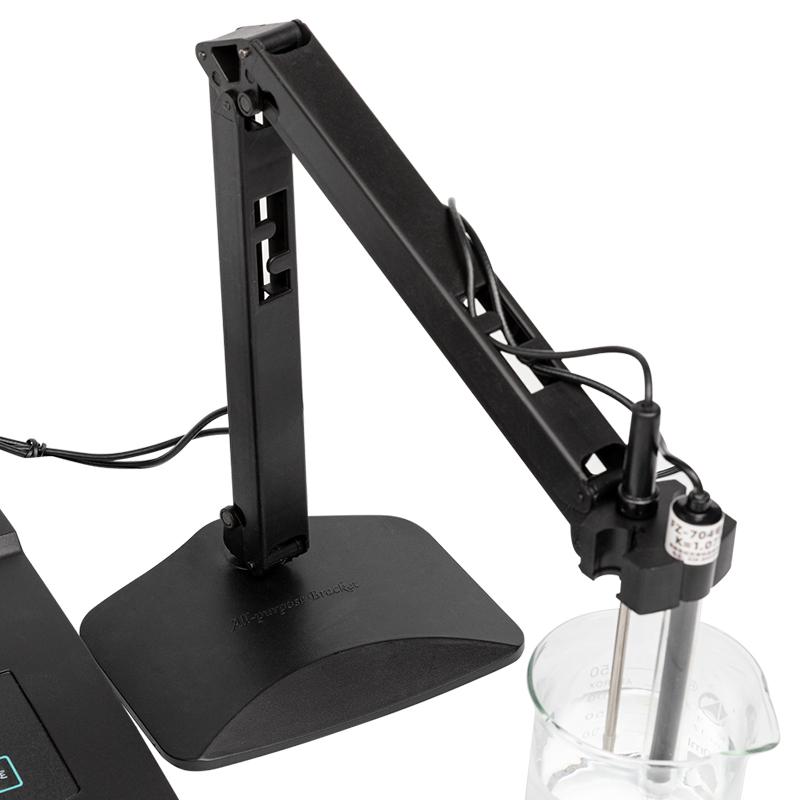
The calibration process begins by adjusting the constants of the conductivity meter to the standard values. Then, connect the electrodes of the conductivity meter to a standard resistance box, which provides a fixed resistance value. The conductivity meter then measures and displays the corresponding conductivity. The measurement accuracy of the conductivity meter is evaluated by comparing the actual readings of the instrument with the values provided by a standard resistance box. If there is a deviation, the instrument needs to be adjusted to ensure that it meets the requirements.
Advantages and implications of calibration
Compared with the standard solution method, the standard resistance box method has higher stability and reliability. The resistance values of the standard resistance box are more stable and unaffected by changes in solute composition in solution, providing a more accurate and consistent reference value for calibration. Regular calibration of the conductivity meter not only ensures the accuracy of the measurement, but also ensures its proper functioning, especially in the field of measurement where high precision is required, where the quality and data requirements are more stringent.
conclusion
The calibration of a conductivity meter is essential to ensure its measurement accuracy. Compared with the standard solution method, the standard resistance box method has higher stability and reliability. Understanding how conductivity meters work and the calibration process can help you better calibrate your instrument and provide more accurate data for real-world applications. As conductivity meter technology continues to evolve, the standard resistance box method will continue to play an important role in conductivity meter calibration, especially in research and industrial applications.

