In the paper industry, the color and color difference of the paper are important factors that affect the quality of the product. Chromatic aberration not only directly affects the printing effect and the aesthetics of the finished product, but also may affect the consumer's purchase decision. Therefore, controlling paper color aberration is essential to improve paper quality and production efficiency. The advent of Colorimeter provides an effective means for color difference measurement and control, especially in the evaluation of paper color consistency and color fastness, which is of great significance.
Basic concepts
color
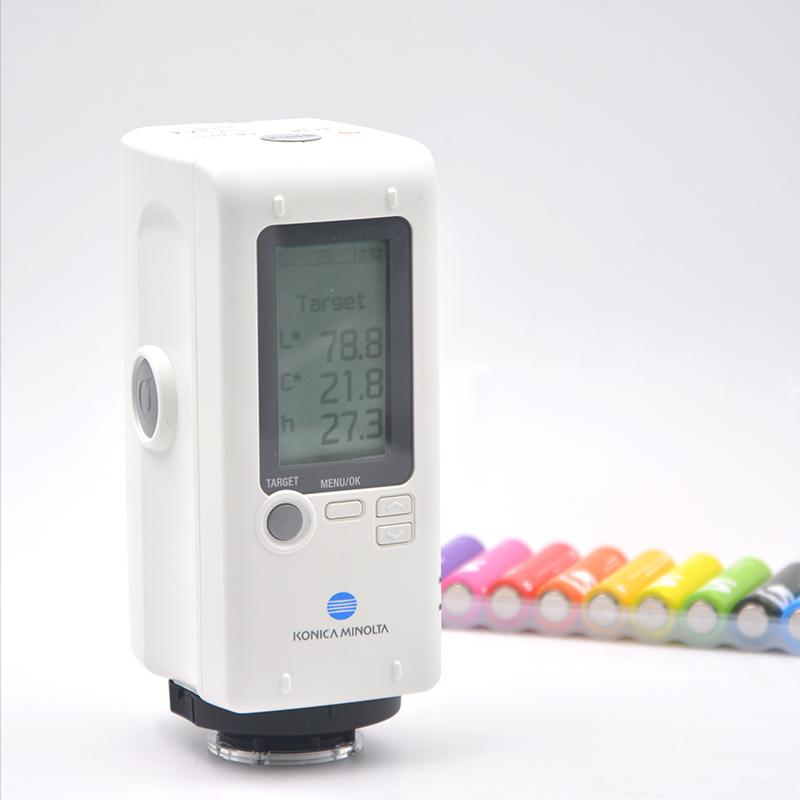
The measurement of paper color is the basis for color aberration control. Color is made up of three main properties: lightness (L*), hue (a*, b*), and saturation (C*). Brightness refers to the brightness of the surface of the paper, with white having the highest brightness and black being the lowest. Hue reflects the basic type of color (such as red, green, blue, etc.), saturation indicates the purity of the color, and higher saturation indicates that the color is more vivid. For the tinting and dyeing process of paper, accurate measurement of these properties can effectively prevent and control color aberrations.
chromatic aberration
Chromatic aberration refers to the visual difference between two colors. In the papermaking process, controlling color aberration is an important step to ensure the quality of the paper. Excessive color aberration will affect printing and post-processing, resulting in products that do not meet customer requirements. Therefore, the use of scientific and standardized measurement methods to quantify and evaluate color difference can help manufacturers control product quality.
Chromatic aberration formula
In order to calculate the color difference more accurately, scientists have proposed a variety of color difference formulas, the most commonly used of which is the CIELAB color difference formula. The formula measures color aberration in three dimensions (L*, a*, b*) and can be calculated in a uniform color space, reducing the error of human visual inspection. The calculation of the CIELAB chromatic aberration formula includes the luminosity difference, chromaticity difference and chromatic aberration of chromatic aberration. With these calculations, the size of the color difference of the paper can be precisely quantified.
How to evaluate color difference
Visual evaluation
Visual evaluation is a common method for evaluating color differences in the paper production process. The operation is simple and convenient, but it is also easy to be affected by environmental factors and subjective factors of the evaluators, resulting in inaccurate color difference evaluation results. Proper visual inspection requires the use of standardized light sources and the evaluation of chromatic aberration based on different viewing angles and distances. In actual production, visual inspection is mainly used for rapid screening and preliminary judgment, but it is not suitable as the final quality control standard.
Instrumental evaluation
In order to improve the accuracy of color difference evaluation, the Colorimeter has become an important tool. Colorimeters eliminate human error and provide objective, accurate measurements. By using a Colorimeter, the color difference of the paper can be accurately measured and the data can be output in digital form, ensuring that the color difference of each batch of paper is within the standard range. Commonly used Colorimeters include Datacolor dispensers, which use international standards such as ISO/A02 and AATCC gray cards for color difference analysis and are calculated according to the CIELAB color difference formula.
Chromatic aberration calculation formula
In the calculation of color difference, the CIELAB color difference formula is widely used. The CIELAB chromatic aberration formula describes the brightness, hue and saturation of a color through three numerical values L*, a*, and b*. By calculating the difference between the two colors, an exact color difference value can be derived. The specific calculation formula is as follows:
Luminosity Difference (△L*): Indicates the difference in brightness between the two colors.
Chromaticity difference (△C*): Indicates the difference in saturation between the two colors.
Chromatic phase contrast (△h*): Indicates the difference in hue between two colors.
These calculations can help producers determine whether the paper meets the color difference standard and improve it by adjusting the production process. The Colorimeter automates these calculations and provides actionable data for quality control and production adjustments.
Applications of Colorimeters
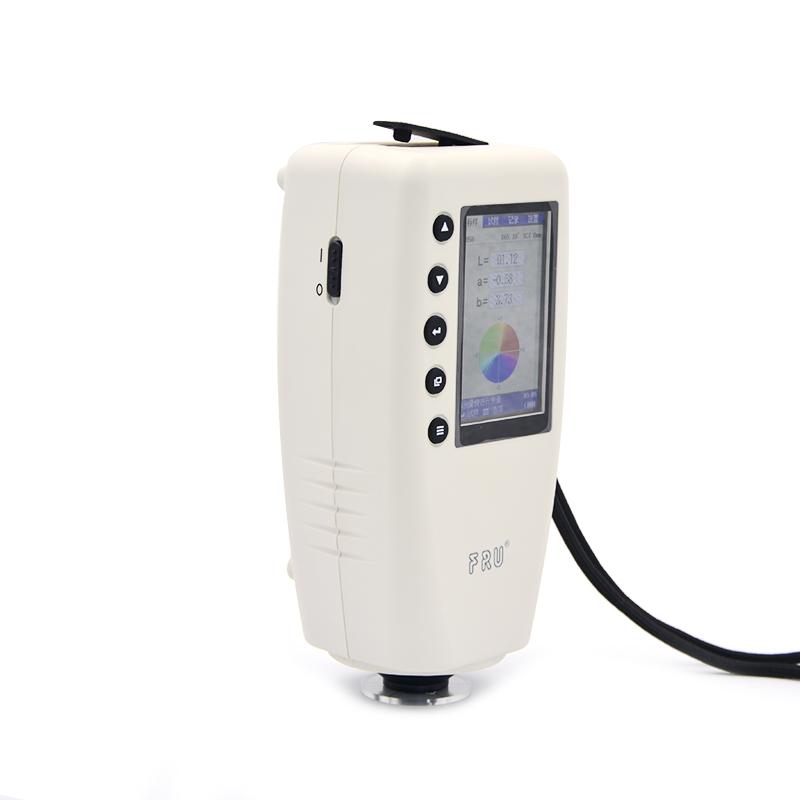
The application of Colorimeter in paper production can greatly improve the accuracy of color difference control. Through the measurement of the Colorimeter, the manufacturer can carry out real-time monitoring at all stages of paper production to ensure that the color difference of each batch of paper meets the standard. This not only improves the consistency and quality of paper products, but also reduces customer complaints and rework due to color differences, improving production efficiency.
In addition, the Colorimeter can also be used to evaluate the color fastness of the paper, measure the whiteness, and determine the color of the sample. These features help manufacturers further optimize product quality to gain a competitive edge in the marketplace.
conclusion
In modern paper production, the application of Colorimeter has become an important tool to improve product quality and control production costs. Compared with visual measurement, the Colorimeter can provide more objective and accurate measurement data, reduce the interference of human factors, and ensure that the product meets the standard. Through the rational use of Colorimeter and combined with the CIELAB color difference formula, manufacturers can effectively prevent and control paper color difference problems, thereby improving product consistency, stability and market competitiveness.
