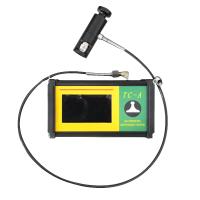
The adhesion of the paint film is an important criterion for evaluating the quality of the coating, especially in the application of anti-corrosion coatings, the quality of adhesion directly affects the durability and protective effect of the coating. Common adhesion testing methods include the circle, grid, and pull method. Compared with the first two, the pull-off method is widely used in coating testing because it can more accurately reflect the adhesion between the coating and the substrate. The pull-off method evaluates the adhesion strength of the paint film by applying a vertical tensile force to measure the force required for the coating to peel off.
Experimental part
Materials & Equipment
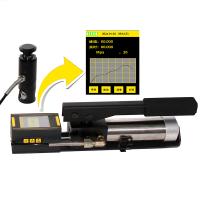
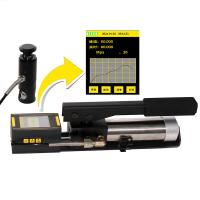
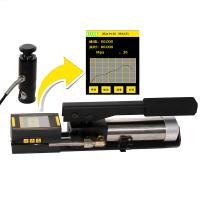
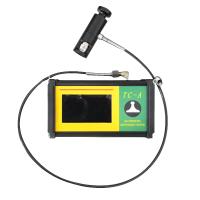
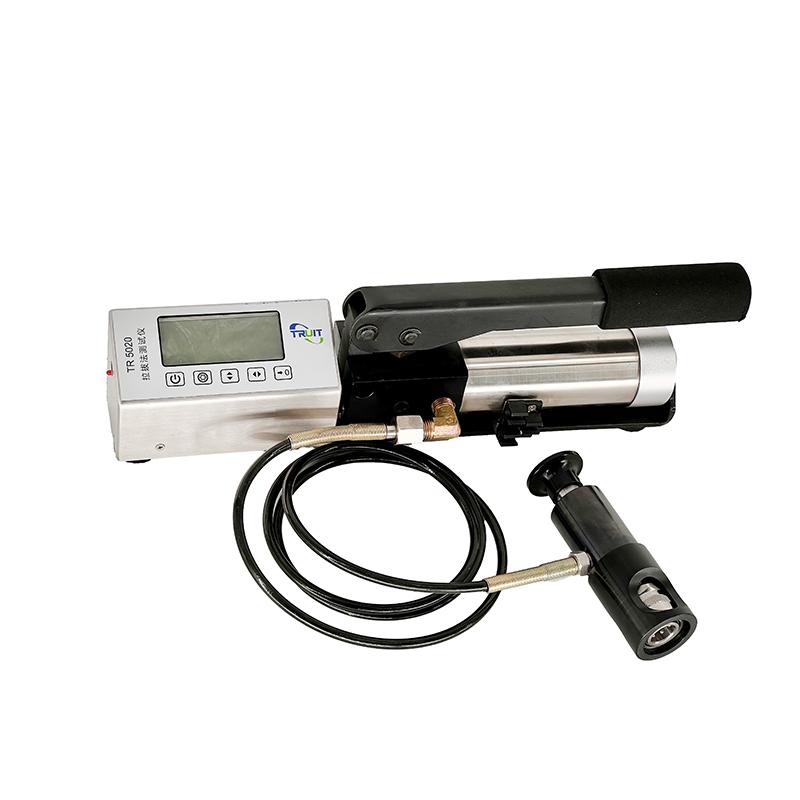
Four different types of coatings (polyurethane topcoat, epoxy high-build paint, epoxy zinc-rich primer, polyurethane topcoat) were used for this trial, and sandblasted steel plate and plain cold-rolled steel plate were used as substrates. The surface roughness and thickness of the substrate varies and may have different effects on adhesion test results. Two adhesives were used in the trial: ALTECO110 Super Glue (one-component) adhesive and Araldite Super Epoxy Adhesive (two-component). All tests were carried out using the AGS-J Tensile Testing Machine.
Paint film preparation
In accordance with the provisions of the standard, the paint film is prepared on the substrate by spraying. After 7 days of curing, the pull-up adhesion test was carried out, and the ambient conditions at the time of the test were temperature (23±2)°C and relative humidity (50±5)%.
Results & Discussion
The impact of the substrate
It was found that the roughness and thickness of the substrate had a significant impact on the adhesion test results. The adhesion test data of sandblasted steel plate is significantly higher than that of ordinary cold-rolled steel plate, which indicates that the rougher the surface of the substrate, the stronger the adhesion of the coating. The test data showed that the thicker the substrate, especially for the harder substrate, the adhesion test result increased slightly. Therefore, the roughness and thickness of the substrate treatment are important factors affecting adhesion testing.
The combination of the sample and the test column
The way the sample is combined with the column can also affect the adhesion test results. For substrates that are prone to deformation, such as thin steel plates or plastics, the test data is significantly higher when the sample is docked with the test column than when it is not docked. For thicker or harder substrates (such as sandblasted steel plates), whether the template is docked with the test column has little influence on the test results. Therefore, for substrates that are easy to deform, the butt method is preferred, while for substrates with high hardness, the test column can be directly bonded.
The impact of adhesives
The choice of adhesive also has a significant impact on the adhesion test results. By comparing the two adhesives, it was found that the two-component epoxy adhesive provided stronger adhesion than the one-component adhesive. Under the same conditions, the test data of epoxy adhesives is larger, which indicates that the adhesion of the adhesive directly affects the adhesion of the coating, and the choice of adhesive should be determined according to the specific application requirements.
Effect of tensile speed
The effect of different tensile velocities on the adhesion test results was also investigated. The study shows that there is little difference in the test data between the tensile speed of 10 mm/min, 5 mm/min and 3 mm/min, indicating that the tensile speed has almost no significant effect on the test results. Therefore, in practice, the tensile speed can be adjusted within a certain range without significantly affecting the accuracy of the test.
conclusion
The pull-off adhesion test is an important method for accurately assessing the adhesion of coatings, and its results are influenced by a variety of factors. The roughness and thickness of the substrate, the type of adhesive, and the combination of the sample and column can all have a significant impact on the test data. Therefore, when performing adhesion testing, special attention needs to be paid to these factors to ensure the accuracy of the test results. In addition, the tensile speed has little effect on the adhesion test results and can be adjusted within a certain range. By optimizing the test conditions, the quality control of the coating can be improved and the long-term performance and protection of the coating can be ensured.