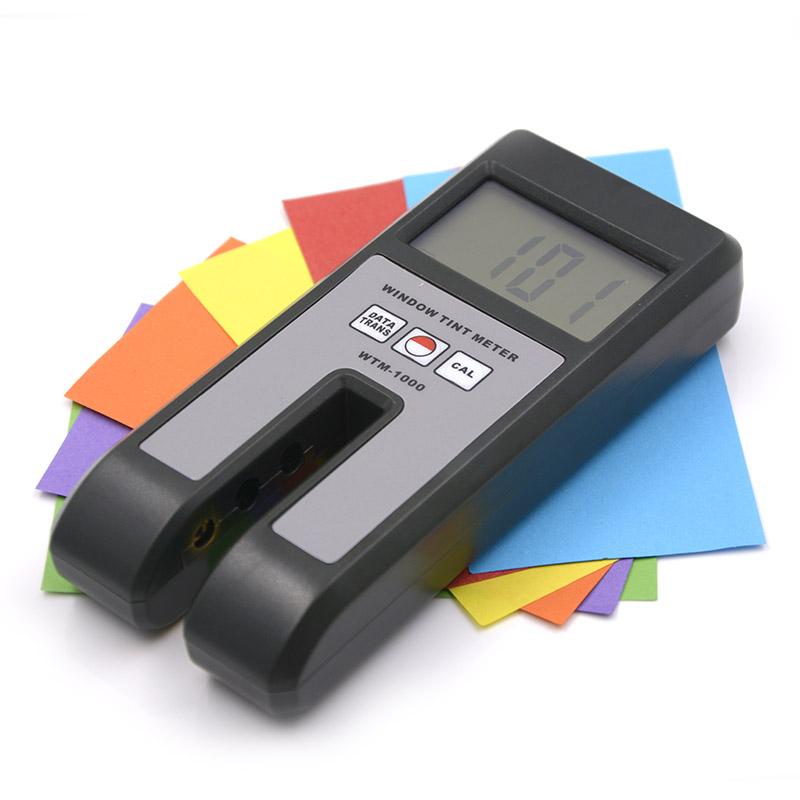
Transmittance/haze meters are widely used to measure the transmittance and haze values of transparent materials such as packaging films, plexiglass, and aerospace and automotive glass. However, at present, CHINA has not formulated a unified verification procedure or calibration specification, and the standards of various enterprises are different. This situation results in a lack of consistency in the transmission of transmittance and haze metrics, as well as in instrument calibration. Therefore, the transfer of value by using standard transmittance sheets and standard haze sheets becomes an important solution. In this study, a set of transmittance/haze standard pieces that meet the measurement standards were introduced, and a set of calibration methods were proposed in combination with practice, and the uncertainty analysis and evaluation of the calibration results were carried out.
How it works
When a parallel beam of light passes through a transparent medium, such as plastic, due to inhomogeneities inside the medium, surface defects, bubbles, and impurities, the beam is scattered, and some of the light deviates from its original direction. The ratio of this deviation of luminous flux to transmitted luminous flux is called haze, expressed as a percentage. The higher the haze value, the more blurry the material will look.
Transmittance is the ratio of the transmitted luminous flux to the incident luminous flux and is also expressed as a percentage. The decrease in light transmittance is usually due to the reflection of light from the specimen surface and the absorption of light energy.
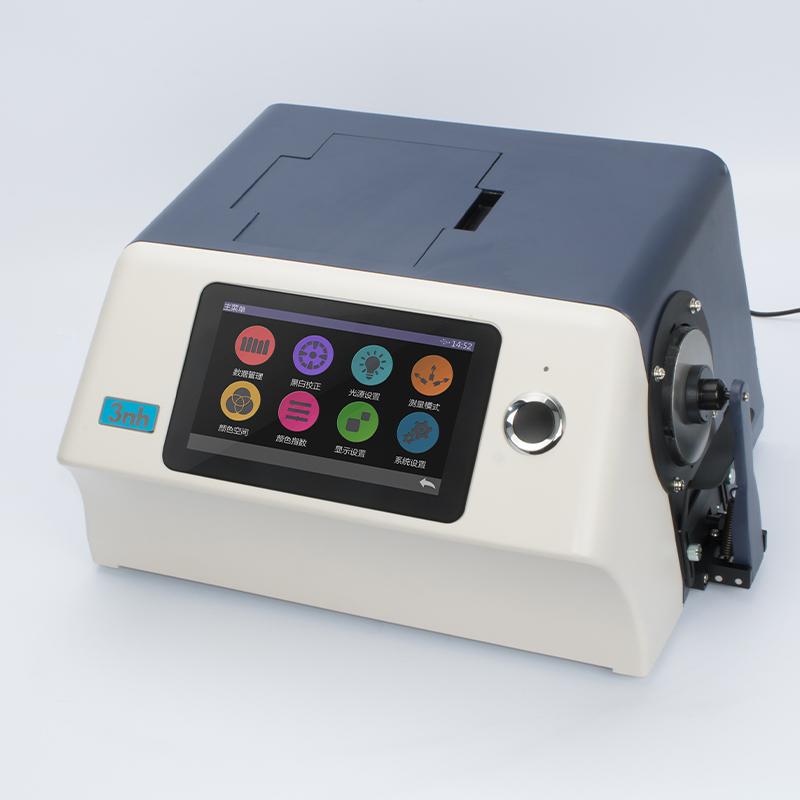
The integrating sphere transmittance/haze meter measures these parameters by collecting luminous flux, and its design ensures that the beam is evenly distributed and accurately reflects the transmission and scattering characteristics of light.
Calibration method
The calibration is carried out in a specified environment, requiring a temperature of 20±5°C, a relative humidity of less than 85%, and no direct sunlight, vibration, and strong electromagnetic interference.
Zero Drift – Regularly measures the readings of light transmittance and haze when the optical path is completely obscured and calculates the difference in the readings.
Indication Drift – Timing measurements are made using a standard to record the maximum and minimum readings over a period of time and calculate their differences.
Indicative Error – The standard is measured multiple times to calculate the difference between the measured mean and the standard value.
Measurement repeatability – Evaluate the consistency of readings by measuring multiple times in a row for standard slides with a transmittance of approximately 90% and a haze of approximately 10%.
Uncertainty rating
Uncertainty of light transmittance
The measurement instability of the instrument under test introduces uncertainty and can be evaluated multiple times by continuous measurements.
The accuracy of the standard film itself and the uncertainty of its traceability are also important influencing factors.
The uncertainty of the haze
The evaluation method is similar to light transmittance, taking into account the instability of the instrument and the accuracy of the standard.
The final uncertainty is calculated by the synthetic evaluation method, and the extended uncertainty is obtained by combining the uncertainty of each source to reflect the reliability of the overall measurement results.
summary
The calibration and uncertainty analysis of the transmittance/haze meter provide a reliable basis for the accuracy and traceability of the instrument. The method proposed in this study has been verified in practice, which can meet the needs of light transmittance and haze measurement of transparent materials, and provides a reference direction for the formulation of unified industry standards in the future.
