In the production of compact fluorescent lamps, the weight consistency of the cathode coating has a critical impact on the quality of the lamp. The uniformity of the cathode coating not only determines the initial luminous flux and lumen maintenance of the lamp, but also directly affects the service life of the cathode. However, at present, most domestic compact fluorescent lamp manufacturers still rely on manual operation for cathode coating, which is difficult to ensure the consistency of coating weight, which in turn affects the overall quality of the lamp. To solve this problem, the application of magnetic stirrers is an efficient and reliable solution.
The importance of weight consistency of cathode coatings
Initial luminous flux – If the ternary carbonate is not completely decomposed, the initial luminous flux of the lamp will be reduced. This is because carbonates that are not completely decomposed can affect the properties of electron-emitting materials, resulting in a decrease in the luminous efficiency of the lamp.
Lumen Retention – Inconsistent coating weights can lead to poor lumen maintenance of the lamp. Lumen maintenance rate refers to the ability of the lamp to maintain its luminous flux during use, and inconsistent coating will cause the light decay of the lamp to accelerate during use, affecting the service life.
Cathode lifetime – If the emitting material coating is over-activated, the coating will become less active due to sintering. Overactivation will cause excessive evaporation of the active material in the coating, which will blacken the cathode site, which in turn will shorten the cathode life and reduce the initial luminous flux of the lamp.
Physical and chemical properties of electronic powder (pulp).
The physicochemical properties of electronic powder (slurry) are one of the key factors affecting the weight consistency of cathode coatings. Electronic powder is composed of ternary carbonates, a variety of organic reagents (such as charging agents, dispersants, plasticizers), and zirconium dioxide or zirconium powder. These materials vary in density and sedimentation velocity, which can easily lead to differences in coating weight.
The specific gravity of ternary carbonate and organic reagent is very different, which can easily lead to uneven mixing.
Different materials have different sedimentation rates, which are easy to form delamination during the mixing process, which affects the uniformity of the coating.
The traditional manual stirring method is difficult to ensure the uniformity of electronic powder (slurry), and the operator needs to stir with a glass rod from time to time, which is not only inefficient, but also difficult to ensure the consistency of each stirring.
How it works
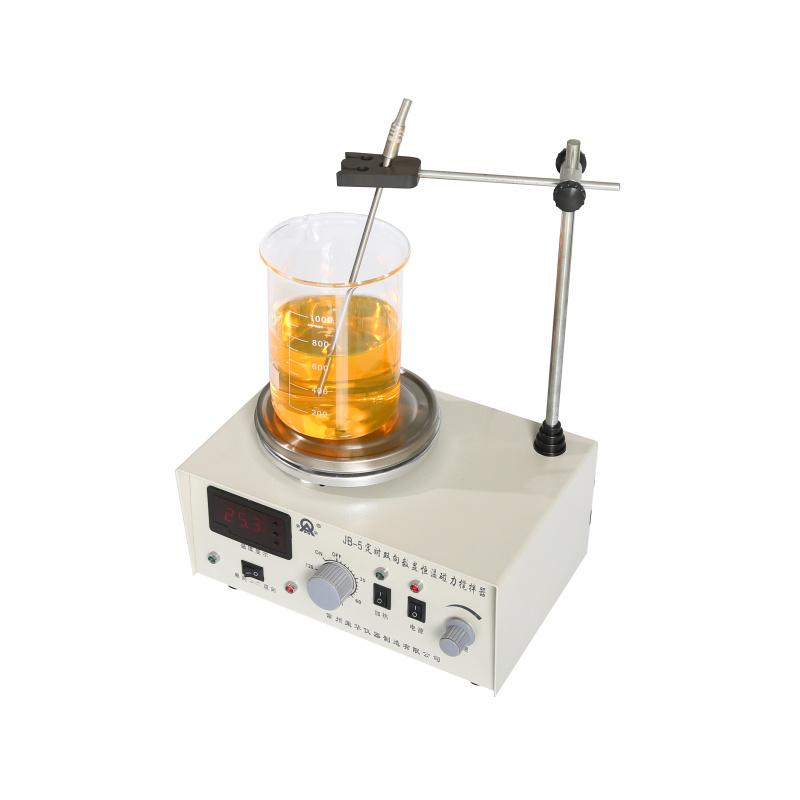
The working principle of the magnetic stirrer is to use the magnetic field to drive the stir bar to rotate continuously, so that the electronic powder (slurry) always maintains a uniform specific gravity.
A plastic stir bar is placed in the cathode cup, and the material and shape of the stir bar are optimized according to the size and shape of the cathode cup.The magnetic stirrer drives the stir bar to rotate through a magnetic field, and the speed of the stir bar can be adjusted as needed to ensure the full mixing of electronic powder (slurry).The stirring rod rotates continuously in the cathode cup to keep the electronic powder (slurry) at a uniform specific gravity, so as to ensure the consistency of the amount of powder.In the exhaust process, the continuous agitation of the magnetic stirrer contributes to the complete decomposition and rational activation of the electronic powder, further improving the quality of the coating.
Application in the cathodic coating process
The continuous stirring of the magnetic stirrer ensures the uniformity of the electronic powder (slurry) and thus the consistency of the powder loaded.
By ensuring a homogeneous coating, the magnetic stirrer significantly increases the initial luminous flux and lumen maintenance of the lamp, extending the life of the cathode.The automatic operation of the magnetic stirrer reduces the time and labor intensity of manual stirring, and improves the production efficiency.The efficient mixing of the magnetic stirrer reduces the waste of electronic powder (slurry) and reduces the production cost.
Practical effects
Practice has proved that the application of magnetic stirrer in the cathode coating process not only improves the quality and work efficiency of the lamp, but also saves the amount of electronic powder (slurry). Many enterprises that pay attention to the quality of lamps have widely used magnetic stirrers instead of manual stirring, and have achieved significant economic and social benefits. Through the application of magnetic stirrer, the company not only improves the market competitiveness of its products, but also contributes to the technological progress and quality improvement of the industry.
conclusion
The application of magnetic stirrer in the cathode coating process is an effective way to solve the shortcomings of traditional manual operation. Through continuous stirring, the magnetic stirrer ensures the uniformity of the electronic powder (slurry) and improves the consistency of the coating weight, which in turn significantly improves the quality and production efficiency of the lamp. The successful application of this technology provides an efficient and reliable solution for domestic compact fluorescent lamp manufacturers, which helps to promote the technological progress and quality improvement of the industry.
