As an important cash crop in the tropics, the ecosystem of rubber trees plays an important role in the global carbon cycle. Accurate determination of the organic carbon content of different organs of rubber trees is of great significance for understanding their carbon storage capacity and ecological function. Traditional organic carbon determination methods include Oil Bath method and boiling Water Bath method, but these methods have the disadvantages of complex operation, long time consumption and large error. In recent years, as an emerging measurement technology, oven heating method has attracted attention because of its high efficiency, simplicity and accuracy. The purpose of this study was to verify the feasibility and superiority of the oven heating method by comparing the measurement results of the three methods.
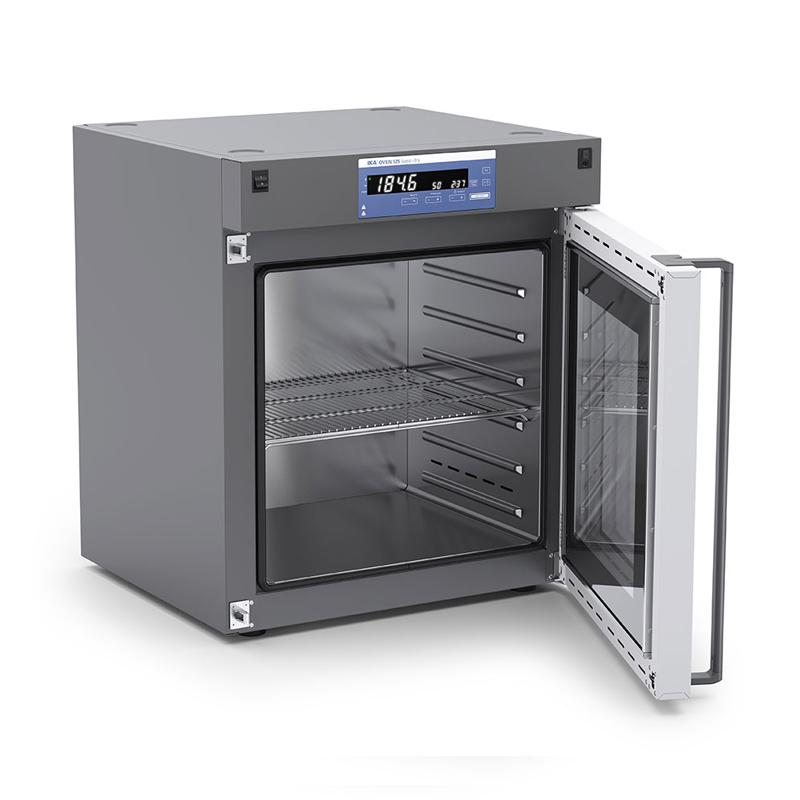
Materials and methods
(1) Materials
Reagent: 1.0 mol/L Potassium dichromate 0.5000 mol/L Potassium dichromate standard 0.4 mol/L ferrous sulfate solution (calibration required) Ph-phenanthroline indicator Potassium hydrogen phthalate (reference material)
Instruments: analytical balances, blast ovens, triangular bottles, burettes, screens and other experimental equipment
Sample: Fresh leaves, branches, bark, trunk (peeled), litter (a mixture of litter and fruit) of rubber trees, and 3 replicates each.
(2) Method
Determination principle
In sulfuric acid media, potassium dichromate is used to oxidize the organic carbon in plant samples to produce carbon dioxide, while potassium dichromate is reduced. The remaining potassium dichromate is titrated by ferrous sulfate, and the organic carbon content is calculated based on consumption. The endpoint of the reaction was determined by the color change of the phenanthroline indicator (brown yellow→ coffee red).
Assay method
Oven heating method
Weigh 0.020.03g of sample, add 10 mL of potassium dichromate solution and 10 mL of concentrated sulfuric acid, shake well, and heat in an oven at 180190°C for 30 minutes, during which appropriate shaking is given.
After taking it out and cooling, phenthroline indicator was added and titrated with ferrous sulfate solution to the endpoint.
Results & Analysis
Comparison of oven heating method and Oil Bath method
The relative deviation was 0.05%1.98%, the average was 0.78%, and the correlation coefficient r was 0.9043, which had a strong linear correlation. This suggests that the oven heating method can be used as an effective alternative to the Oil Bath method.
Comparison of oven heating method and boiling Water Bath method
The results of the two methods were similar, with a relative deviation of 0.12% and 1.31%, an average of 0.88%, and a correlation coefficient of 0.8425, reaching a very significant level. The oven heating method is superior to the boiling Water Bath method in terms of ease of operation and stability of results.
A comprehensive comparison of the three methods
Accuracy - The recovery rate of the oven heating method was 92.66%, 102.54%, and the average recovery rate was 98.69%, showing high accuracy.
Reproducibility - the standard deviation of the oven heating method was 0.10% to 0.69%, which was lower than that of the Oil Bath method (0.16% 0.80%) and the boiling Water Bath method (0.40% 0.90%), and the reproducibility was better.
Ease of operation – The oven heating method is easy to operate and is suitable for the determination of large sample batches, while the oil and boiling Water Bath methods are susceptible to environmental influences during operation, resulting in fluctuating results.
Discussion and conclusions
In this study, the organic carbon content of different organs of rubber tree was determined by comparing oven heating method, Oil Bath method and boiling Water Bath method
advantage
High accuracy – compared to oil and boiling Water Baths, the oven heating method provides closer to true values and high recovery.
Good reproducibility—small standard deviation, stable results, and suitable for reproducible assays.
Easy to operate—no special equipment is required, the operation process is simple, and it is suitable for the analysis of large batches of samples.
Environmentally friendly - it avoids the pollution problem of mineral oil in the Oil Bath method and reduces environmental pollution.
In summary, this study verified the efficiency and accuracy of the oven heating method by comparing the oven heating method, the Oil Bath method and the boiling Water Bath method to determine the organic carbon content of different organs of rubber tree. The results show that the results of the oven heating method are highly consistent with those of the traditional method, and have the advantages of simple, fast and stable results. It has close to 100% recovery and is reproducible for analysis of large sample volumes. In addition, this method avoids the pollution problem of the Oil Bath method and the correction error of the boiling Water Bath method, and has high environmental friendliness and applicability. Therefore, the oven heating method is a method worthy of promotion for the determination of organic carbon in rubber trees, which can provide strong support for ecological research and production practice.
