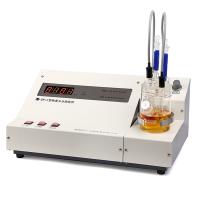
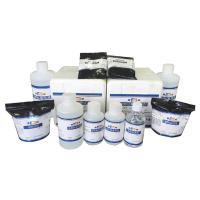
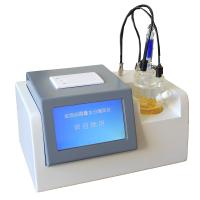
Karl Fischer titrator is a precision instrument widely used in chemical, pharmaceutical, food and other industries to determine the moisture content in a sample.
To ensure the accuracy of the assay results, operators need to focus on the following key factors:
(1) The tightness of the reagent
Karl Fischer titration reagents are susceptible to moisture absorption, and when exposed to air, they absorb moisture, resulting in a decrease in titer and affecting the accuracy of the determination. Therefore, the burettes and cells of the titration system must be well sealed to prevent the ingress of outside moisture.
(2) Selection of titer
Depending on the moisture content of the sample to be measured, select the appropriate Karl Fischer reagent titer. Samples with high water content require the use of high-titer reagents and vice versa.
(3) Endpoint determination method
Common endpoint determination methods include the visual method (observing the color change of the solution), the permanent stop endpoint method (observing the change of ammeter deflection) and the microcomputer automatic control method based on the permanent stop endpoint method. Choosing the appropriate endpoint determination method can help to improve the accuracy of the measurement.
(4) Structure and location of the titration system
The structure and position of the transmitter of the titration reagent have a significant impact on the measurement results. Ensuring that the transmitter head is properly designed and positioned correctly helps to reduce titration errors.
(5) Adequacy of stirring
During titration, the sample solution needs to be stirred sufficiently and evenly to ensure that the reagent reacts adequately with the sample for accurate results.
(6) Injection operation
When using a syringe to inject samples, the needle should be protected from external contamination and sample loss during the injection process to ensure the reliability of the assay results.
(7) Protection of reagent bottles
The air inlet of the Karl Fischer reagent bottle should be equipped with a desiccator to prevent the reagent from absorbing moisture from the air and keep the titer of the reagent stable.
(8) Environmental factors
Oxygen and light exposure in the air may affect the measurement results. Oxygen oxidizes the iodine ions in the titration cell, resulting in an earlier endpoint and lower measurements. Sunlight accelerates this oxidation process. Therefore, the titration process should be carried out in a dark, low-oxygen environment.
(9) Effect of side effects
When the concentration of sulfuric acid generated in the Karl Fischer reaction exceeds 0.05%, it may trigger a reverse reaction and affect the measurement results. Ensuring that there is enough pyridine and methanol in the reagent and titration solution can help avoid such problems.
(10) Chemical properties of the sample
Some samples may contain substances that react side by Karl Fischer reagents, such as mercaptans, hydrogen sulfide, peroxides, chromates, etc. These substances may be reduced or oxidized by iodine, resulting in high or low assay results. For such samples, pretreatment or selection of other assays is required.
In summary, the key to ensuring the accuracy of a Karl Fischer titrator is to maintain the tightness of the reagents and system, to select the appropriate titer and endpoint determination method, to pay attention to operational details, to control environmental factors, and to fully understand the chemistry of the sample and take appropriate pretreatment measures.