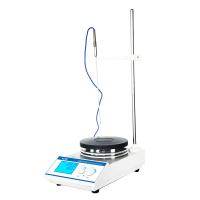
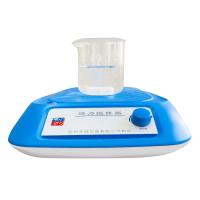
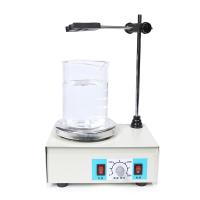
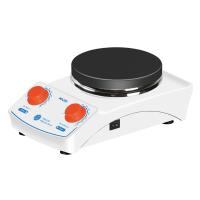
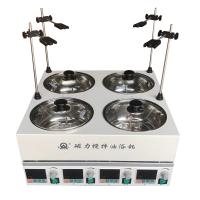
In the lab, stirring is a difficult step to bypass. It not only makes the reaction mixture more homogeneous, but also ensures a uniform temperature distribution of the reaction system, thus facilitating the chemical reaction, especially in heterogeneous reactions. In this issue, we will talk about two common stirring methods: magnetic stirring and mechanical stirring, and analyze their advantages and disadvantages and application scenarios.
The importance of stirring
The role of stirring in organic chemistry experiments cannot be ignored. By stirring, the reactants can be fully contacted, the reaction rate can be increased, and the reaction conditions are more controllable. Especially in heterogeneous reactions, stirring can effectively reduce the interfacial resistance between reactants and make the reaction more homogeneous.
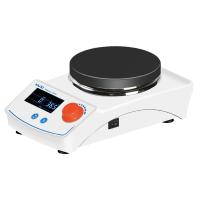
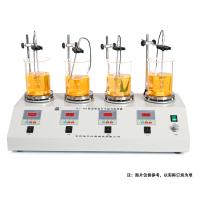
Magnetic stirrer
How it works
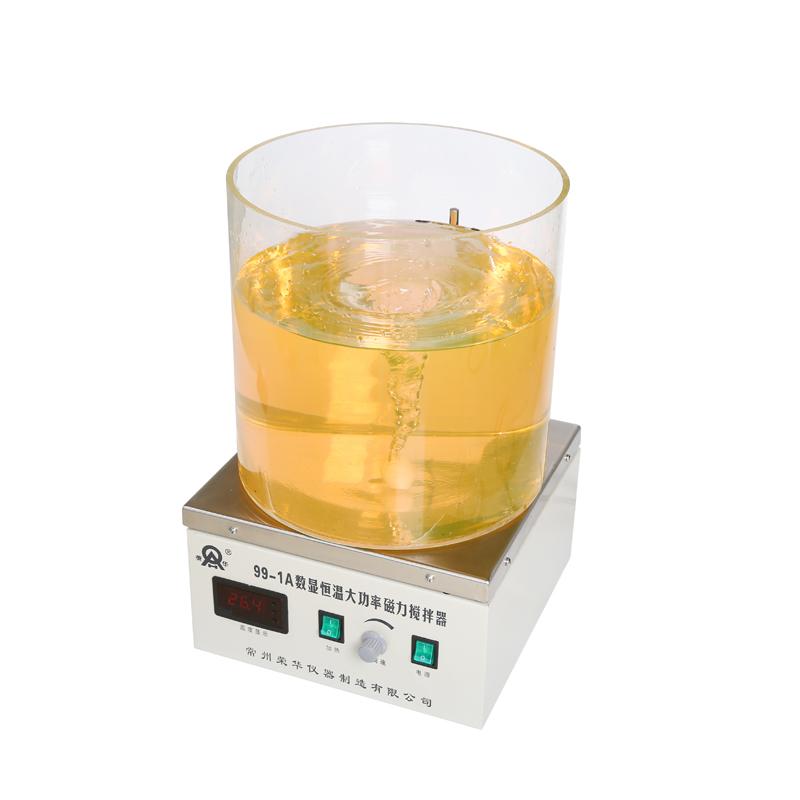
A magnetic stirrer uses the rotation of a magnetic field to drive the rotation of magnets. Magnets are typically made from a small piece of metal encased in an inert material such as PTFE and come in a variety of shapes, including cylindrical, oval, and round. The size and shape of the magneton can be selected according to the scale and requirements of the experiment.
merit
The magnetic stirrer is simple in structure and easy to install, especially suitable for small-scale reactions or reactions under closed conditions.
The magnetic stirrer allows for continuous stirring to ensure that the reaction mixture is always homogeneous.
For experiments with low reaction volumes, a magnetic stirrer is able to provide sufficient stirring force.
shortcoming
For viscous liquids or reaction systems containing a large number of solids, the stirring effect of the magnetic stirrer is poor.
The stirring force of the magnetic stirrer is relatively small and cannot cope with reactions with high viscosity or high solids content.
Mechanical agitator
How it works
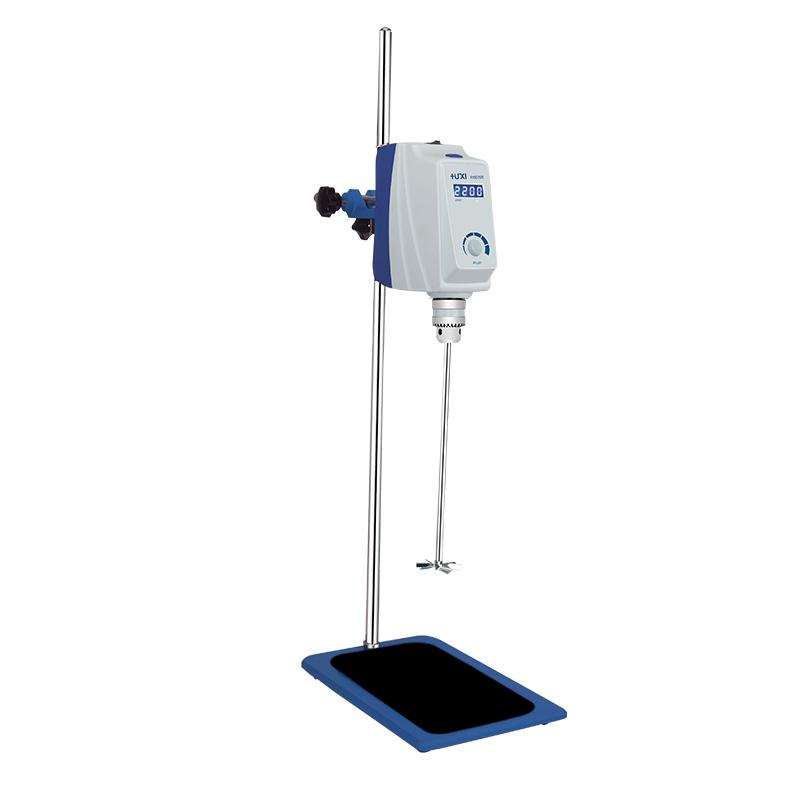
The mechanical stirrer is mainly composed of three parts: an electric motor, a stirring rod and a stirring sealing device. The motor provides power, and the stirring rod is connected to the motor, and the stirring rod is driven by the rotation of the motor for stirring. The stirring seal ensures that the reaction is carried out in a closed system and prevents the leakage of reactants.
merit
Mechanical agitators provide high mixing power and are suitable for highly viscous liquids or reaction systems containing large amounts of solids.
For large-scale reactions, a mechanical stirrer is able to provide sufficient agitation force to ensure that the reaction mixture is homogeneous.
By means of a governor, the stirring speed can be flexibly adjusted to adapt to different reaction conditions.
shortcoming
The structure of the mechanical agitator is relatively complex, and the installation and maintenance are cumbersome.
Mechanical stirrers are more expensive than magnetic stirrers, especially in large-scale experiments.
Considerations for choosing a blender
When selecting a stirrer, the characteristics of the reaction system need to be considered first, including the viscosity of the reactants, the solids content, and the scale of the reaction. For example, for highly viscous liquids or reaction systems containing a large number of solids, mechanical agitators are more suitable due to their strong mixing force; For small-scale or low-viscosity reactions, magnetic stirrers are more convenient and economical. In addition, reaction conditions are important considerations, such as reaction temperature, pressure, and whether a containment environment is required. Mechanical stirrers are generally better suited for reactions that require closed or high-temperature and high-pressure conditions, while magnetic stirrers are more suitable for experiments under conventional conditions.
Of course, the experimental budget is also a factor that cannot be ignored when choosing a stirrer. Magnetic stirrers are generally less expensive and suitable for experiments with limited budgets; Whereas, although the price of mechanical agitators is higher, their powerful functions and applicability make them a reliable choice for large-scale or complex reactions. Therefore, when selecting a stirrer, it is important to consider the reaction needs, experimental conditions, and budget constraints to ensure that the right equipment is selected to meet the experimental objectives.
Magnetic stirrers and mechanical stirrers have their own advantages and disadvantages, and are suitable for different experimental scenarios. Magnetic stirrers are suitable for small-scale, low-viscosity reactions, while mechanical stirrers are more suitable for large-scale, high-viscosity or reactions containing a large number of solids. In the actual experiment, the appropriate stirrer should be selected according to the specific needs of the reaction to ensure the smooth progress of the experiment and the efficient completion of the reaction.