A thermostatic bath is a device that can provide a constant temperature environment, which covers two types: thermostatic air (thermostatic chamber) and thermostatic liquid (thermostatic bath). In practical applications, thermostatic liquids are more widely used, and are subdivided into cryostatic baths (-40°C to 100°C) and super thermostatic baths (room temperature to 300°C) according to the achievable temperature range. When an operating temperature of more than 100°C is required, oil is usually used as the medium, which is also called an Oil Bath. It also has many other names, such as thermostatic water oil tank, thermostatic Water Bath, Thermostatic Water Bath, thermostatic circulator, Electric Thermostatic Water Bath, etc., these names reflect its various application scenarios and functional characteristics.
Core components
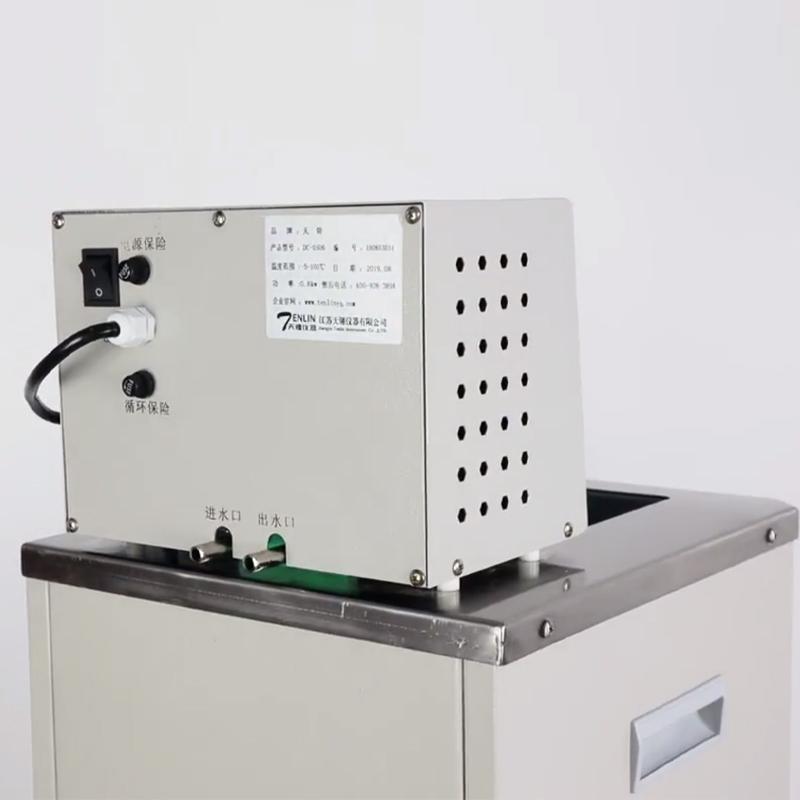
A thermostatic bath is made up of several key components working together. As the main vessel, stainless steel or other corrosion-resistant materials are often selected to ensure good stability and corrosion resistance under complex temperature conditions and chemical environments, and provide safe and reliable bearing space for experimental samples or workpieces. The temperature control system can be called the "smart brain", the temperature sensor monitors the temperature in the tank in real time and quickly transmits the signal to the controller, the controller generates a control signal according to the deviation between the setting and the actual temperature, and directs the actuator to adjust the operation of the refrigeration or heating system to achieve accurate temperature control. The refrigeration system plays a central role in the low-temperature thermostatic bath, and the compressor, condenser, expansion valve and evaporator work together to complete the process of refrigerant compression, cooling liquefaction, throttling and depressurization and evaporative heat absorption, thereby reducing the temperature in the tank. The circulating system circulates and transports the liquid medium in the tank through pumps, pipelines and valves, so that the heat is evenly distributed, the local temperature difference is avoided, and the consistency of the experimental environment is ensured.
How it works
The operation of the thermostat relies on the coordination of the temperature control system with the refrigeration and heating systems. In the case of cryostatic baths, the refrigeration system operates first after start-up. The compressor compresses the refrigerant into a high-temperature and high-pressure gas, pushes it into the condenser, and cools it into a liquid through heat exchange with the outside. Then the liquid is depressurized through the expansion valve and enters the evaporator, which quickly absorbs the surrounding heat, reduces the temperature around the evaporator, and realizes the refrigeration of the liquid in the tank. At the same time, the temperature control system monitors the bath temperature at all times. When the temperature is higher than the set value, the controller instructs the refrigeration system to increase the refrigerant flow rate or increase the compressor frequency to accelerate the refrigeration; When the temperature is low, the flow rate is reduced and the frequency is reduced. The circulation system also runs continuously, circulating the liquid in the tank to evenly distribute the temperature, so that the temperature in the tank is stable at the set value.
type
1. Low temperature constant temperature bath - mainly used to provide a low temperature constant environment, in the field of biological sciences, for cell culture, enzymatic reactions and other experiments to provide stable low temperature conditions, to ensure the activity of biological samples and the accuracy of experimental results; In chemical research, it is used to control the temperature of chemical synthesis, catalytic reactions and other processes to help chemical reactions proceed in the desired direction; In materials science, the low-temperature environment can be simulated to study the performance changes and phase transformation behavior of materials at low temperatures.
2. Super thermostatic bath - can achieve constant control of higher temperature range, in the petrochemical industry, used for product performance testing, process optimization, etc.; In the metallurgical industry, the heat treatment process of metal materials is accurately controlled, which affects the microstructure and properties of metals. In the food industry, it can be used for the research and optimization of food processing technology, such as temperature control in baking, sterilization and other links.
3. Portable thermostatic bath - it is compact, lightweight, and easy to carry, suitable for field operations, on-site testing and other scenarios. For example, in environmental monitoring, the collected samples can be stored at a temporary constant temperature to ensure that the properties of the samples are not affected by temperature fluctuations during transportation and subsequent analysis; In some emergency detection work, a constant temperature environment can be quickly built to meet the needs of on-site experiments.
4. Transparent Thermostatic Water Bath - its unique feature is that the tank is transparent on all sides, which is convenient for researchers to clearly observe the real-time reaction inside the bath. In chemical experiments, you can intuitively see the color changes and material form changes in the process of chemical reactions. In biological experiments, cell culture, microbial growth and other phenomena can be observed, providing more intuitive information for experimental research.
Fields of application
Thermostatic Baths play an integral role in many areas. In the field of biology and medicine, it ensures the experimental stability of drug research and development and cell culture, helps the constant temperature treatment of medical test samples, and maintains the activity of vaccines. In the field of chemical and materials, it provides a stable environment for chemical synthesis reactions, auxiliary material performance testing and temperature control during processing. In the field of scientific research and education, it is a powerful assistant for all kinds of experiments, providing precise temperature control for cutting-edge research, helping students understand the influence of temperature on experiments and cultivating practical ability in teaching.

Essentials of use and maintenance
Correct way to use
Before use, it is necessary to select the appropriate type of thermostat according to the experimental needs, and check whether the appearance of the equipment is intact and whether the connection of each component is stable. After the power is turned on, set the desired temperature value and wait for the thermostat to reach the set temperature and stabilize. When placing the experimental sample, care should be taken to avoid colliding with the internal parts of the tank, and the sample should be placed evenly so as not to affect the temperature uniformity. During use, pay close attention to the temperature display, and troubleshoot in time if there is any abnormality.
Maintenance measures
Clean the tank regularly to remove surface dirt and internal impurities to prevent the accumulation of impurities from affecting the accuracy of temperature control; Check the working status of the refrigeration and heating system, such as the running sound of the compressor, the heating of the heating element, etc., and repair it in time if there is any abnormality; Calibrate the temperature sensor to ensure the accuracy of the temperature measurement; Replace the liquid medium in the tank regularly, especially in case of long-term use or contamination of the medium, to ensure a constant temperature effect. At the same time, it is necessary to pay attention to the storage environment of the equipment, avoid humidity, high temperature and other harsh environments, and prolong the service life of the equipment.
summary
Thermostats have become a mainstay in laboratory equipment due to their precise temperature control, wide range of types, and wide range of applications. From basic scientific research to industrial application, from microscopic biological cell culture to macroscopic material processing, the thermostat has always silently escorted all kinds of experiments and production processes. The correct use and careful maintenance of the thermostatic bath can not only ensure its stable and efficient operation, prolong the service life of the equipment, but also provide a solid guarantee for the output of scientific research results and the improvement of industrial product quality. With the continuous progress of science and technology, the technology of the thermostat will continue to innovate to create better conditions for future scientific exploration and industrial development.
