Transparency is one of the important indicators of coating quality, especially for transparent coatings such as varnish and clear oil, its transparency directly affects the gloss, color performance and drying performance after film formation. This article will systematically introduce the detection methods of paint transparency, including visual inspection and instrument methods, and analyze the application scenarios and technical points of different methods.
1. The significance of transparency testing
Transparency refers to the ability of a substance to transmit light, which can intuitively reflect the content of mechanical impurities and suspended solids in the coating. If the transparency is not up to standard, it may lead to fogging or turbidity on the surface of the coating film, which will affect the decorative effect; Light scattering will reduce the gloss and make the coating lose its due aesthetics; In addition, impurities can interfere with the drying process and chemical stability of the coating, leading to degraded performance. Therefore, transparency testing is an indispensable quality control link in the production, storage and application of coatings to ensure that the product meets the application requirements.
2. Visual inspection to detect transparency
The visual inspection method is easy to operate and suitable for rapid testing in the laboratory and in the field, mainly including the Grignard tube method and the standard comparison method.
1. Grignard Tube Method (ASTM D2090)
(1) Instruments and materials
Grignard tube (clear glass, inner diameter 10.65±0.025mm, outer length 114±1mm)
Test tube racks
(2) Detection steps
Air bubble observation method:
Inject the specimen into the Grignard tube, leaving a small bubble.
Tilt the tube to move the bubbles slowly and observe for cloudiness or particles in the liquid.
Thin film observation method:
Pour out 80%~90% of the sample and let it stand for 15min (high-viscosity samples need to be extended).
Observe the uniformity of the residual film on the tube wall.
(3) Result judgment
Grade Description
Pure without any visible particles or mist
Transparent and evenly transmitted, without visible impurities
Foggy A small amount of suspended solids, translucent
Turbidity Obvious flocs or gels, poor light transmission
2. Standard solution comparison method (GB/T 1721-2008)
(1) Instruments and materials
Plugged cuvettes (25mL)
Iron and cobalt Colorimeter (1~18 color scale)
Photoelectric Spectrophotometer (wavelength 460nm)
Direct yellow-brown D3G dye (for colored standard preparation)
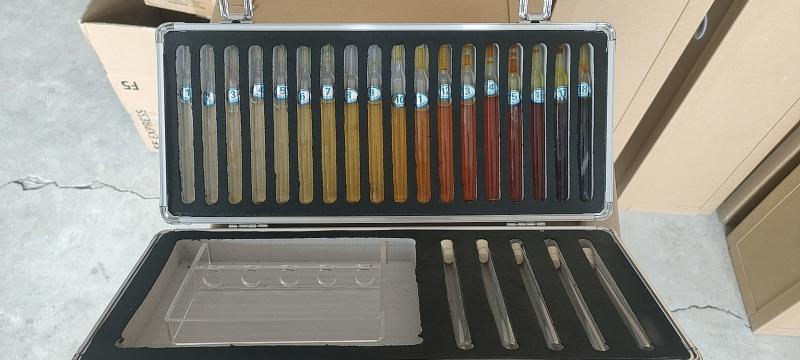
(2) Preparation of standard solution
Colorless standard solution: "transparent", "slightly turbid" and "turbid" tertiary test solution were prepared according to Table 1-1, and the transmittance was calibrated with a Spectrophotometer .
Colored standard solution: adjust to iron and cobalt color scale 12~13 to simulate the transparency of colored paint.
(3) Detection steps
The specimen was poured into a cuvette and compared to the standard solution under a D65 standard light source.
If the low temperature causes turbidity, it can be heated to 50~55°C and then cooled to 23±2°C before testing.
(4) Result indication
Directly report as "transparent (level 1)", "slightly cloudy (level 2)", "cloudy (level 3)".
3. Instrumental detection transparency
The instrumentation method can quantify transparency and reduce human error, which is suitable for high-precision inspection needs.
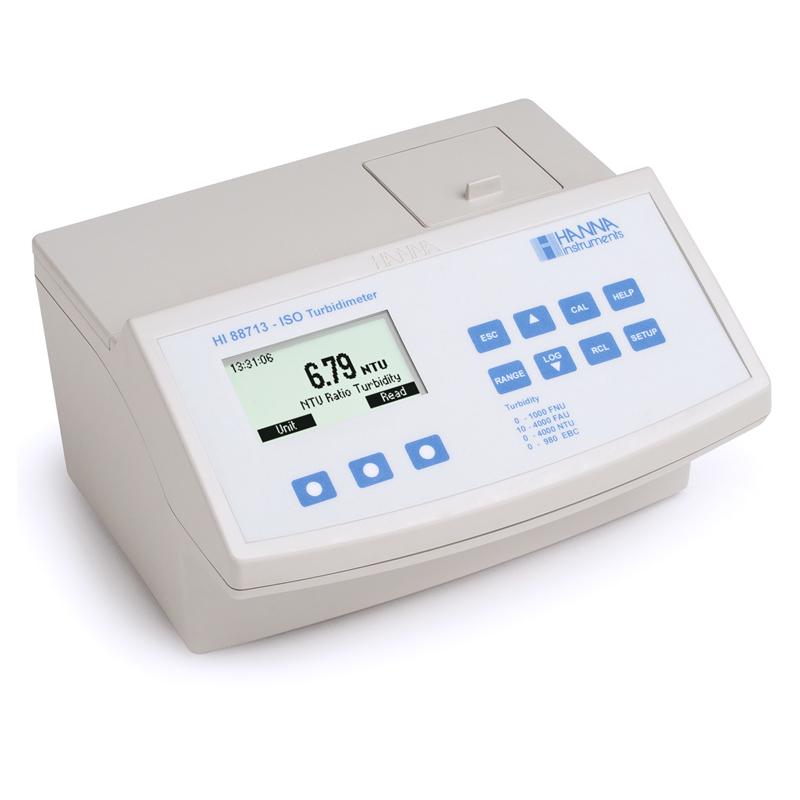
1. Diffusion photometry (Turbidity Meter)
(1) Instruments
Turbidity Meter (with standard tubes)
Frosted plexiglass rod (for calibration)
(2) Detection steps
Calibrate with distilled water and calibrate the grinding rod to a turbidity value of 100.
Insert the specimen tube and read the turbidity value (NTU) directly.
Notes:
The specimen should be free of air bubbles to avoid precipitation interference.
For dark samples, the appropriate filter (red, green, blue) should be used.
2. Transmitted Light Measurement (TMD Type Transparency Meter)
(1) Principle
Transparency is assessed by measuring the intensity of directional transmitted light (Iₑ):
Completely clear solution: Iₑ ≈ Incident light intensity (I)
Cloudy solution: Iₑ significantly reduced
(2) Detection steps
The instrument is preheated and calibrated to 100% transparency with air.
The sample is filtered by 80~100 mesh copper mesh and tested.
Measured twice in parallel, the deviation was averaged ≤2%.
(3) Result grading
Transparency Grade: Colorless Paint, Colored Paint
High transparency: 86~100, 70~100
Medium transparency: 63~85, 31~69
Low transparency <60 <30
4. Factors affecting transparency and improvement measures
1. The effect of raw material purity on transparency
The purity of the raw materials used in the coating is the primary factor affecting transparency. Resins and solvents containing trace amounts of impurities or substances that are not completely dissolved can form suspended particles in the paint, causing light to scatter and reduce transparency. Especially in the production of transparent coatings such as varnishes, even the smallest impurities can cause noticeable cloudiness. Improvements include:
Strictly control the quality of raw materials, and give priority to high-purity raw materials
To add a fine filtration link in the production process, it is recommended to use a 5μm precision filter element for multi-stage filtration
The solvent is pre-treated, and adsorbents such as molecular sieves are used to remove trace impurities if necessary
2. The effect of the dispersion process on transparency
The degree of dispersion of pigments and fillers directly affects the transparency of the coating. When pigments and fillers are not sufficiently dispersed, they tend to form agglomerates or flocs, and these microstructures can significantly increase the scattering of light. Especially for nanoscale pigments, their high specific surface area is more prone to agglomeration. Suggested improvements:
The composite process of "high-speed dispersion + grinding" is adopted, which is first pre-dispersed by high-speed shear, and then finely ground by sand mill or bead mill
Optimize the selection and dosage of dispersants to ensure that they form a stable adsorption layer on the surface of pigments and fillers
Control the temperature and pH of the dispersion process to avoid unfavorable conditions that can lead to the destruction of the dispersion system
3. The effect of storage conditions on transparency
During the storage process, the coating may undergo physical and chemical changes due to environmental factors, which will affect the transparency. When stored at low temperatures, some wax additives or polymer components may precipitate, forming microcrystals and causing turbidity; High temperatures, on the other hand, may accelerate the oxidative cross-linking of resins, resulting in insoluble substances. Improvements include:
Strictly control the storage temperature in the range of 5-30°C to avoid drastic temperature fluctuations
For wax-containing formulations, it is recommended to store at least 5°C to prevent wax crystallization from precipitating
Regularly inspect the products in stock and recheck the transparency of long-stored paints
Improves package tightness and prevents solvent volatilization and external contaminants
Transparency detection can be carried out in two ways: visual inspection is simple to operate, low cost, and suitable for daily rapid screening; The instrument law can provide objective quantitative data, which is more suitable for quality arbitration and accurate testing. Enterprises should choose the appropriate method according to the actual needs and strictly follow the standard specifications such as ASTM D2090 or GB/T 1721.
References
GB/T 1721-2008 Determination of appearance and transparency of varnishes, clear oils and thinners
ASTM D2090-2016 Standard Test Method for Clarity and Cleanness of Paint and Ink Liquids
ISO 4630-2004 Determination of the color of transparent liquids (Gachloin colorimetry)



