In the coating process, the problem of coating streaks can have a negative impact on the quality of the product. According to the actual production and related research, the coating stripes are mainly divided into two categories: process stripes and mechanical stripes.
Craft streaksStemming from the irrationality of process design. For example, the inappropriate sizing degree of base paper will affect the combination of paint and paper; The water retention of the coating is poor, which may lead to uneven water distribution during the coating process; Improper coating formulation will also change the coating performance. The streaks caused by these factors are often discontinuous and randomly positioned.Mechanical streaksDefects in the equipment itself, such as wear and tear of components, lack of precision, or impurities mixed into the coating system, result in streaks that are consistent and persist for a long time.
Coating method
When using metering stick coating for primer coating and squeegee coating for topcoating, the probability of streaks is low. When both the primer and topcoat are applied with a squeegee, streaks are prone to appear. When the metering rod is coated, the stress on the paper web gradually increases when it enters the coater and gradually decreases to zero when it leaves. In this process, the coating first forms a smooth film on the surface of the paper web, and then due to stress changes, the film is destroyed, making the paper surface rough. When the squeegee is coated, the paper web leaves the coater at the highest stress, resulting in a smooth coating surface. However, the highly smooth coating after the primer is not conducive to the adhesion of the paint during the topcoat, and it is easy to cause streaks on the topcoat.

In actual production, there has been a large number of porcelain clay with sheet structure and high smoothness in the paint at the beginning of the commission, and after the primer is changed from metering rod coating to scraper coating, the primer coating is too smooth, and the topcoat coating is difficult to adhere to resulting in streaks. An effective solution to this problem is to increase the content of spherical calcium carbonate in the base material, so as to increase the roughness of the primer and destroy the smooth film. When the calcium carbonate dosage is increased to 40%, the streaks disappear completely.
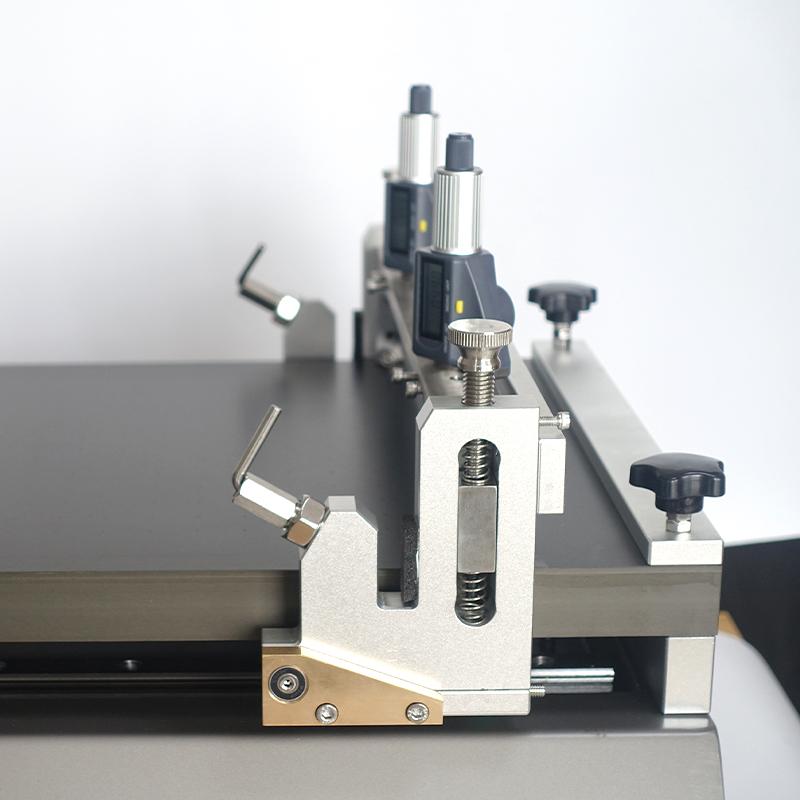
In addition, too many impurities in the pulp or chemical raw materials, the difficulty of sizing in the pulp leads to low sizing of the base paper, the angle of the scraper is too large, and the poor workshop environment causes foreign substances such as sand particles to enter the coating system, which may cause coating streaks. To solve these problems, it is necessary to strengthen operation management, such as strictly controlling the quality of raw materials, adjusting the sizing process, reasonably setting the angle of the scraper, and improving the workshop environment.
In general, both the top coat and the primer are applied with a squeegee coat, which has obvious advantages in improving the quality of the paper, but this method is extremely sensitive to process rationality and impurity control, and is prone to streaks. Therefore, in the production process, all links must be strictly controlled to reduce streaks and ensure product quality.
