in modern industrial production with sectionAccurate measurement and control of color in the field of research is crucial. As an instrument that can accurately quantify color differences, Colorimeters play an indispensable role in many industries such as textiles, printing and dyeing, and chemicals. It not only provides a key basis for product quality control, but also promotes the standardization and refinement of production processes in various industries. However, to ensure the reliability of the Colorimeter measurement data, a scientific and rigorous verification process is essential. This article will elaborate on the key precautions in the verification process of Colorimeter, and help relevant personnel improve the accuracy and standardization of verification work.
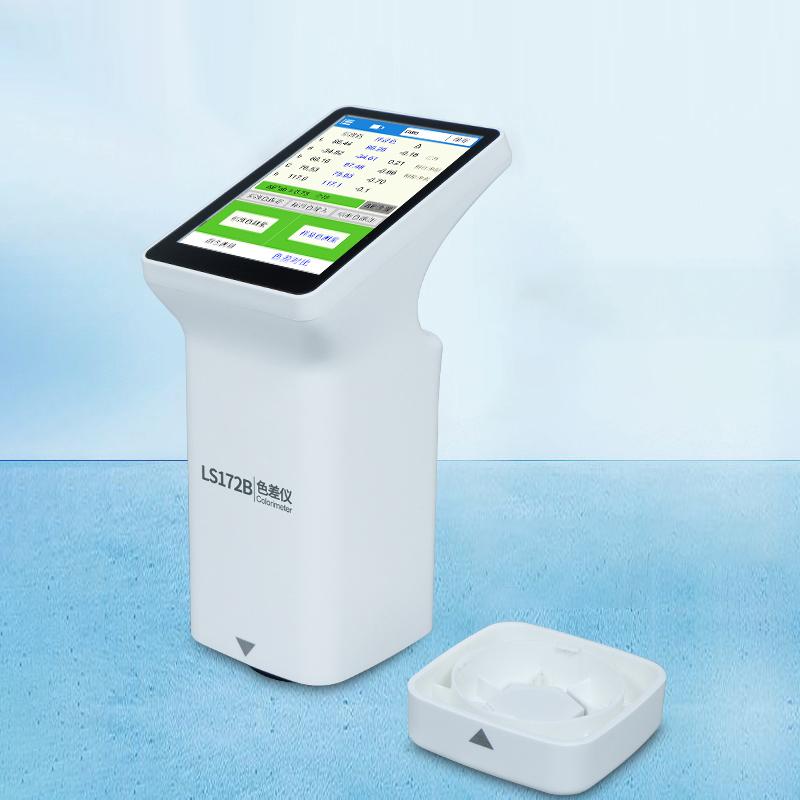
Whiteboard correction
Each Colorimeter comes with a standard whiteboard, which must be used to calibrate the instrument before use. Due to the difference in the instrument, the light source will be attenuated, and the correction can eliminate the error and ensure the accuracy of the measurement. Failure to calibrate may cause large deviations in the readings of the same color plate measured by different instruments, affecting production.
Measure the light source
The color of the object depends on the illumination source. The International Commission on Illumination specifies a variety of standard illuminators, such as A (2856K blackbody radiation), B and C (daylight at different color temperatures), and D series (e.g. D65 color temperature 6504K). Different light sources have different spectra, color temperature affects the blue-green composition, and the color measurement results of different light sources are different.
Field of view
The human eye's ability to distinguish colors is related to the field of view. When the field of view increases from 2° to 10°, the color matching accuracy and color discrimination ability are improved, and the improvement is not obvious. The same color is different under different field of view, so it is necessary to select and indicate the field angle when measuring, otherwise it will affect the interpretation of the results.
Measured lighting and observation conditions
There are four types of illumination and observation conditions: 45/0, 0/45, d/0, and 0/d. This condition should be indicated in the color plate verification certificate, and the same condition data as the Colorimeter should be selected for verification, and the data under different conditions will cause large deviations in the results and affect data processing. For example, 45/0 conditions are suitable for flat samples, and D/0 may be more suitable for irregular samples.
Mirror reflection
The surface of the object reflects the mirror reflection and diffuse reflection, and most of them are incomplete diffuse reflection. The reflected light from the mirror mostly reflects the color of the light source, not the color of the sample itself. The verification should be clear whether there is mirror reflection, otherwise the result will be greatly deviated. Instruments with diffusion/vertical conditions can be treated with gloss absorbers for mirror reflections, and their specifications need to be specified. Reflectance measurements with mirrors have specific lighting observation requirements, and gloss absorbers are used when they are not available.
Color space
There are various forms of color space expression, such as XYZ, Yxy, etc. Yxy is commonly used in the procedure, but many Colorimeters use other forms, and different forms present different forms for color difference calculation, so the appropriate form should be selected for verification to ensure that the results meet the standards and requirements.

Selection of chromatic aberration formulas
Chromatic aberration is the key indicator of quality assessment, and the selection of different chromatic aberration formulas will result in large differences in chromatic aberration values, which may cause misjudgment in testing, especially in industries with high requirements for color accuracy. When measuring, it is necessary to select the appropriate formula according to the measurement requirements, sample characteristics and industry standards to ensure that the results are accurate and reliable.
Colorimeters play a key role in color measurement in many industries, and every step of the verification process has a profound impact on the reliability of measurement results. From correcting instruments with standard whiteboards to eliminate inherent errors, to carefully selecting measurement sources, field of view, illumination, and observation conditions, to properly handling mirror reflections, determining color space representations, and selecting the appropriate chromatic aberration formula, every consideration is important to ensure the accuracy of a Colorimeter. In the actual verification work, strictly following these requirements and clearly indicating the relevant conditions in the results can not only help customers deeply understand the measurement basis, but also help enterprises to promote the production process in the direction of data and standardization, so as to ensure that the verification results have good repeatability and comparability between different operators at different times, and finally provide solid and reliable color measurement support for various industries.
