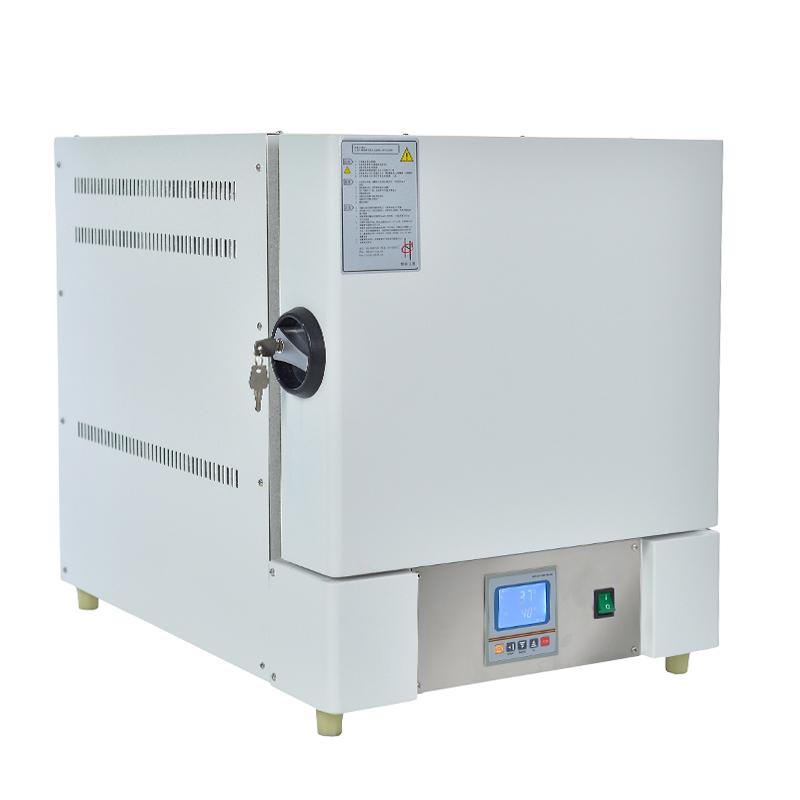
Industrial resistance furnaces convert electrical energy into heat energy and are widely used in metallurgical and heat treatment industries. The heating control mode determines the heating power, operating temperature, heating speed and temperature stability of the furnace. The heating control methods of common box-type, well-type and vacuum resistance furnaces mainly include position-type, thyristor regulator, electric furnace transformer, saturation reactor and magnetic voltage regulator.
Positional heating control
The position control regulates the furnace temperature by intermittently switching on and off the heating power supply and changing the power, and there are two working states. The commonly used contactor is used as an actuator, which is suitable for resistance furnaces with only fixed value control, relying on the relay contacts in the position temperature control instrument to control the contactor on and off, and using the upper and lower temperature limits set by the instrument to avoid frequent action of the contactor. This method has extreme heating power, large temperature fluctuation and low control accuracy, but the circuit is simple and the equipment is less, and it is still widely used in resistance furnaces with low heating process requirements and small load changes. The high-power resistance furnace adopts a three-position control mode, and improves the temperature control effect through triangular and star conversion circuits.
Time-proportional heating control
Using a solid state relay (SSR) as the heating actuator of a low-power resistance furnace, the solid state relay has high reliability, high on-off response frequency and long life compared with the contactor mechanical contact. The output of the intelligent temperature controller is set to SSR mode, and according to the deviation between the measured value and the set value, an adjustable square wave of duty cycle is generated during the set control period, and the heating power and furnace temperature are controlled by controlling the on-on time of the solid state relay. This method has low cost, high temperature control accuracy, low power pollution, suitable for temperature determination and program control, and the control period is selected in 4 - 20s according to the inertia of the furnace system.
Thyristor regulator heating control
The regulator with thyristor as the core can realize the control of weak current to strong current, with the advantages of small size and long life, and can continuously adjust the input power, so that the temperature of the resistance furnace can be controlled according to the process curve, which is suitable for resistive and inductive loads, and is a widely used heating control mode, which is divided into voltage regulator (phase shift trigger is used for resistive load) and power regulator (zero-crossing trigger is used for inductive load) according to the trigger mode. When the heating power of the resistance furnace is not large and the insulation is good, it can be directly controlled, and its output characteristics are affected by the change of power supply voltage and impedance of the electric heating element, so there are constant voltage type, constant current type and constant power type. The thyristor regulator controls the limited power, and the single-phase is generally used for resistance furnaces that do not exceed 30kW, and the high-power resistance furnaces can be connected to electric heating elements in three-phase or grouping.
Electric furnace transformer heating control
As the pre-power supply of the electric heating element, the electric furnace transformer can overcome the influence of the resistance of the electric heating element with temperature or time, stabilize the heating power and prolong its life, such as the application scenario of silicon carbon rod and silicon molybdenum rod electric heating element. It is used in high-power resistance furnaces, outputting low voltage and high current, and a wide range of secondary output voltages and currents. Large-capacity electric furnace transformers need to be cooled by circulating water, and natural cooling or oil invasion self-cooling is used for small and medium-sized capacities. In order to obtain a continuously adjustable heating voltage, the primary side is often connected to a thyristor regulator and controlled by an intelligent temperature controller.
Saturation reactor heating control
The saturation reactor is connected in series with the electric heating element as an actuator in the temperature control of the resistance furnace, and the effective permeability of the core AC is changed by the input DC current control signal according to the saturation phenomenon of the ferromagnetic material, so as to change the effective reactance value, voltage drop and current of the AC working coil to realize the furnace temperature adjustment. In the single-phase control circuit, the DC control current is obtained by the controllable rectifier circuit, if the circuit control signal is generated by the intelligent temperature controller, automatic temperature control can be realized, this mode is small current control and high power, the output voltage is continuously adjustable, and the temperature can be controlled according to the process curve.
Magnetic voltage regulator heating control
The magnetic voltage regulator can control the transformer, control the heating power of the electric heating element with low voltage and high current, and can adjust the power by itself, which is a voltage regulator without mechanical transmission and contact, and has the advantages of load smooth voltage regulation, and is suitable for high-power resistance furnace. It combines a transformer with a saturation reactor to adjust the heating output voltage by changing the DC excitation current of the control winding. It has the function of voltage regulation and transformer, can be open-loop manual or closed-loop automatic control, and has outstanding advantages in the case of resistance furnace load easy short circuit, DC control voltage signal is obtained by controllable rectifier circuit, and automatic temperature control can be realized when coming from the intelligent temperature controller.
summary
Position control is suitable for the situation of high heating power and low requirements for temperature control accuracy; Time proportional control is suitable for resistance furnaces with low heating power and high temperature control accuracy. The thyristor regulator has good temperature control performance, but it has high requirements for resistance furnace conditions, and it is difficult to be used in high-power resistance furnace. Resistance furnace with high heating power, high temperature and large change of load resistance is suitable for electric furnace transformer and magnetic voltage regulator control mode. The specific choice needs to be determined according to the structure, use, power, operating temperature and control accuracy of the furnace.
