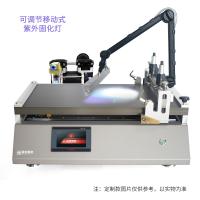
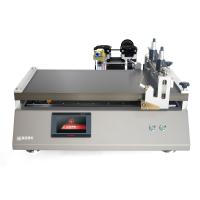
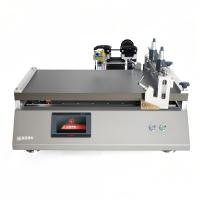
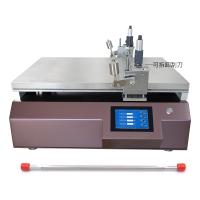
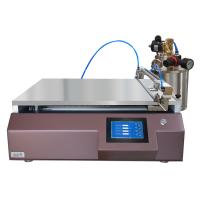
Laboratory film coater is an important experimental equipment, which has a wide range of applications in the field of new energy battery research and development, especially for coating battery slurry on copper foil and aluminum foil substrates. The following is a discussion of the specific applications, advantages and related technical points of the coating machine in this field.
First, the basic principle of the coating machine
A laboratory coater is a device used to prepare a uniform coating, and its core working principle is to evenly apply the slurry to the surface of the substrate by means of a precision scraper or wire rod. According to different application scenarios and technical needs, laboratory film coating machines are matchedWet Film Applicators are suitable for high viscosity slurries and are capable of forming thicker coatings. collocationThe wire bar applicator is suitable for low-viscosity slurries, and the coating thickness is more uniform and controllable.The automatic Film Applicator is equipped with an automatic control system, which can accurately control the coating speed, slurry dosage and other parameters.
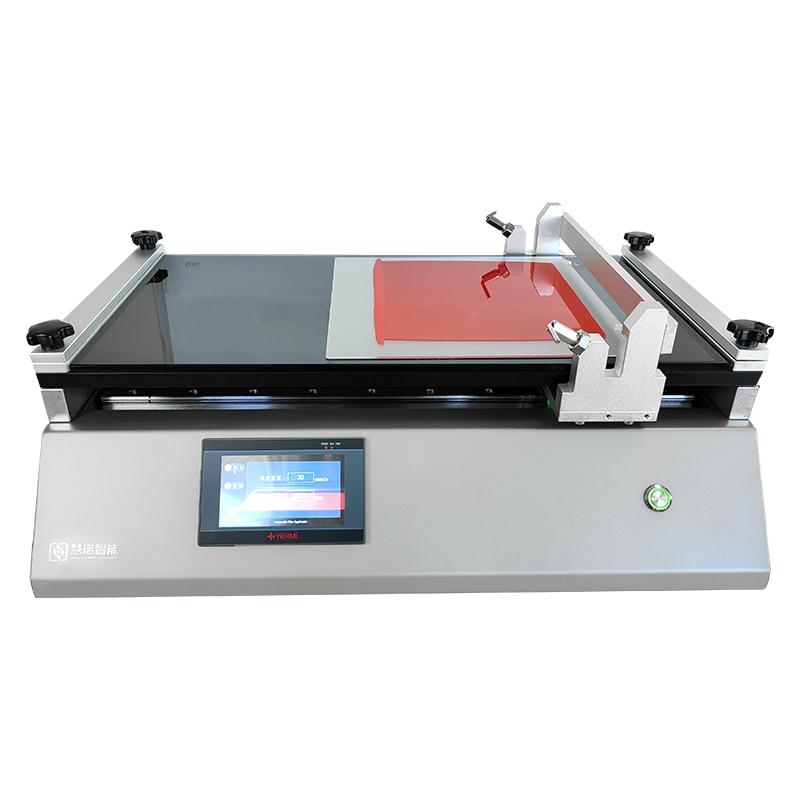
2. Copper foil and aluminum foil
In battery R&D, copper foil and aluminum foil are the most commonly used current collector materials. They have:Good electrical conductivity and effective electron transfer.The low density and thin design facilitate the weight reduction of the battery.It has a certain strength and ductility, and is suitable for the coating process.
3. The coating machine coats the battery slurry on the copper foil and aluminum foil
Preparation of a homogeneous coating
The coater is able to form a uniform and dense coating on the surface of copper or aluminum foil by precisely controlling the slurry flow, substrate speed and doctor blade pressure. This uniformity is critical to battery performance as it directly affects the contact area between the electrode material and the current collector.
Adapt to different slurry characteristics
Different types of battery slurries (e.g., lithium iron phosphate, ternary materials, etc.) have different viscosity and rheological properties. The coater needs to select the appropriate coating mode and parameter settings according to the characteristics of the slurry:For high-viscosity slurries, a wet Film Applicator is usually used.For low-viscosity slurries, a wire bar applicator is an option.
Automation and efficiency
Modern laboratory film coating machines are often equipped with automatic control systems, which can realize unattended operation. This not only improves the efficiency of the experiment, but also reduces the impact of human error on the quality of the coating.
Fourth, technical points
Substrate pretreatment
Before coating, the surface of the copper or aluminum foil needs to be cleaned and dried to remove oil and impurities and ensure a good combination of the slurry and the substrate.
Formulation and stability of slurry
Properties such as viscosity, solids content, and particle distribution of the slurry have a direct impact on the quality of the coating. Therefore, it is necessary to strictly control the ratio of slurry during the experiment and maintain its uniformity by stirring device.
Coating parameter optimization
Applying too fast can lead to uneven coating, and too slow can compromise efficiency.Too much slurry can lead to excessive coating thickness, and too little can affect electrode performance.The angle and pressure of the scraper directly affect the uniformity and compactness of the coating.
Drying process
After the coating is completed, it needs to be dried to remove the solvent. Laboratory coaters are often equipped with a heating block that allows for fast and uniform drying.
5. Practical application cases
In the research and development of lithium batteries, laboratory coating machines are widely used to prepare positive and negative electrode sheets:
Cathode Material:Such as lithium iron phosphate slurry.
Anode Material:Such as graphite slurry.
With precise control of coating parameters, battery designs with high energy density and long cycle life can be realized. For example, in a laboratory, researchers used an automatic Film Applicator to prepare a ternary cathode coating with a thickness of 50 μm, which significantly improved the energy density of the battery.
With the development of artificial intelligence and Internet of Things technology, laboratory film coating machines will be more intelligent. For example, the machine is able to automatically optimize coating parameters through AI algorithms and monitor the status of the slurry in real time.In the future, more functional modules may be added to the coating machine, such as in-line detection, multi-layer coating, etc., to meet different experimental needs.The application of laboratory coating machine to coat battery paste on copper foil and aluminum foil is an indispensable key link in the research and development of new energy batteries. By selecting the right type of equipment, optimizing process parameters, and strengthening quality control, experimental efficiency and battery performance can be significantly improved.