Coating aging refers to the process of changing the chemical and physical properties of the coating under the action of external environmental factors, which is manifested in the reduction of mechanical strength, the reduction of adhesion, the change of color, embrittlement, chalking, tarnishing and the production of acid spots. As an important indicator to measure the performance of coatings, the anti-aging ability of coatings has always been the focus of research in the field of materials science. At present, it is known that the aging and degradation of coatings are mainly driven by light-initiated oxidation and hydrolysis reactions, and ultraviolet rays in sunlight, ambient temperature, oxygen, water and pollutants are the key factors affecting the aging process of coatings. In view of the long period of field exposure experiments, it is difficult to meet the research needs of rapidly improving the anti-aging performance of coatings, and the artificial accelerated aging experimental method has become an important means to explore the aging mechanism of coatings.
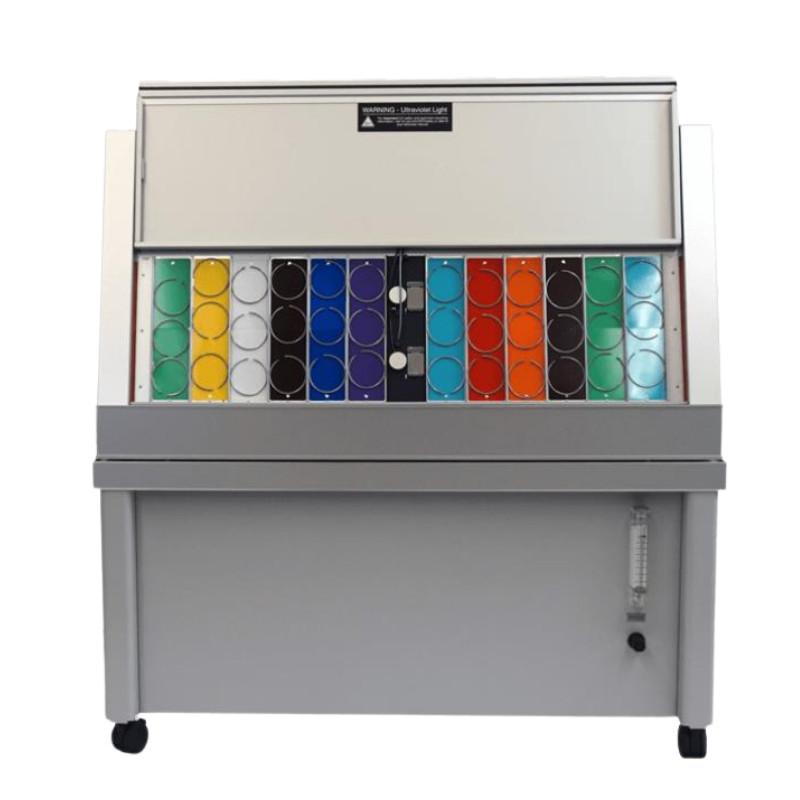
To further explore the mechanism of ultraviolet light on the aging of coatings, it is necessary to analyze it from multiple dimensions. At the molecular structure level, the high-energy photons of ultraviolet light are able to break the chemical bonds in the coating molecules. When the coating is irradiated with ultraviolet light, the carbon chains within the molecule are broken. For different types of coatings, there are differences in the location of their chemical bond breaks. Some coatings with aromatic ester structure are prone to break the C-O bonds of aromatic esters under the action of ultraviolet light. In addition to the C-O bond of the aromatic ester that breaks in the coating of polyurethane and other coatings, the C-N bond of the urethane bond is also difficult to resist the damage of ultraviolet light. At the same time, the cleavage of the chemical bonds initiates a series of complex chemical reactions, which rearrange the molecular structure of the coating and generate some hydrophilic groups. This change can be clearly observed from Fourier transform infrared spectroscopy (FTIR) analysis: with the increase of ultraviolet light irradiation time, the characteristic absorption peaks representing hydrophilic groups, such as the O-H expansion vibration absorption peak at about 3500 cm⁻¹, will be significantly enhanced, and the carbonyl C=O expansion vibration at about 1745 cm⁻¹ will also be strengthened and broadened, and these spectral signals intuitively indicate the increase of hydrophilic groups in the coating, resulting in a significant increase in the hydrophilicity of the coating.
In terms of physical structure, the influence of UV light on the coating cannot be ignored. With the help of scanning electron microscopy (SEM), it can be intuitively observed that after being irradiated with ultraviolet light, many holes gradually develop on the surface of the coating. These holes initially appear sporadically on the surface of the coating, but as the light time continues to increase, the holes continue to expand towards the coating plane and gradually extend into the interior of the coating. This change can also be supported by the electrochemical impedance spectroscopy (EIS) data, which can be seen from the analysis of the EIS data, with the development of the cavities, the resistance of the coating gradually decreases, and the porosity continues to increase, which means that the physical barrier effect of the coating is constantly weakening. After a certain amount of illumination, these holes communicate with each other and eventually form a channel through the coating, where the thickness of the coating is significantly reduced and its protective properties are drastically reduced.
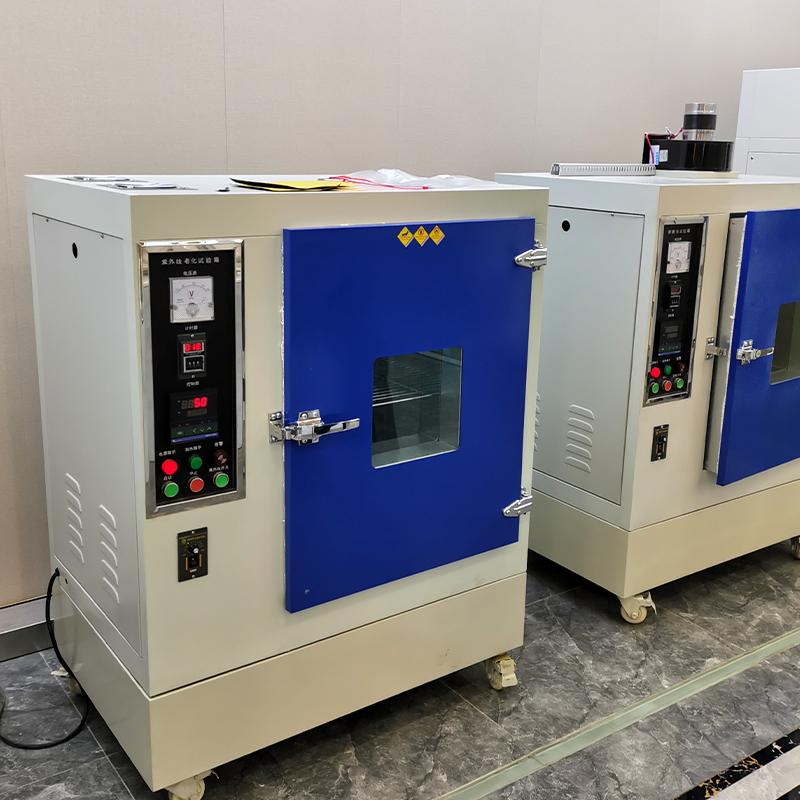
The change of the molecular structure and physical structure of the coating directly affects its adsorption performance for water vapor and SO₂ and other gases. It was found that the adsorption rate of the coating for water vapor and SO₂ was significantly increased after irradiation with ultraviolet light. For water vapor adsorption, on the one hand, the increase of coating pores provides more physical storage space for water vapor, so that water vapor can enter the coating through the "macroscopic" physical adsorption of pores. On the other hand, the newly formed hydrophilic group can form hydrogen bonds with water molecules, which further enhances the adsorption capacity of water vapor. After comparative analysis, the increase of porosity contributed more to the increase of water absorption of the coating. For the adsorption of SO₂, the mechanism is slightly different. SO₂ not only undergoes physical adsorption through pores, but also chemically reacts with the double-bonded α-H peroxide in the coating to form chemical adsorption. Under the irradiation of ultraviolet light, the content of double-bonded α-H peroxide in the coating increased, and the porosity also increased, which together led to the increase of SO₂ adsorption rate, and the contribution of double-bonded α-H peroxide was more prominent.
In summary, the aging effect of ultraviolet light on coatings is a complex and multi-dimensional process. It not only destroys the chemical structure of the coating at the molecular level, triggers carbon chain cleavage and hydrophilic group formation, but also changes the pore structure of the coating at the physical level, and ultimately leads to significant changes in the adsorption performance of the coating to water vapor and SO₂ and other gases. An in-depth understanding of these aging mechanisms has important theoretical guidance and practical value for the development of new coating materials with stronger anti-aging ability and the improvement of the durability and reliability of coatings in practical applications.
