With the continuous improvement of people's requirements for flour quality, the traditional method of judging the color of flour by the naked eye has obvious limitations, and quantitative analysis cannot be realized. Although the R457 whiteness measurement method, which was commonly used in the flour industry, was easy to operate, it was difficult to accurately distinguish the difference in the color of flour, resulting in different colors of flour with the same whiteness value when observed by the naked eye. The color Colorimeter, that is, the photoelectric reflectance photometer, can quickly and accurately measure color, convert color information into L*, a*, b* values for numerical expression, and can also calculate the color difference between two points, showing significant advantages in the determination of flour color.
Principles and types
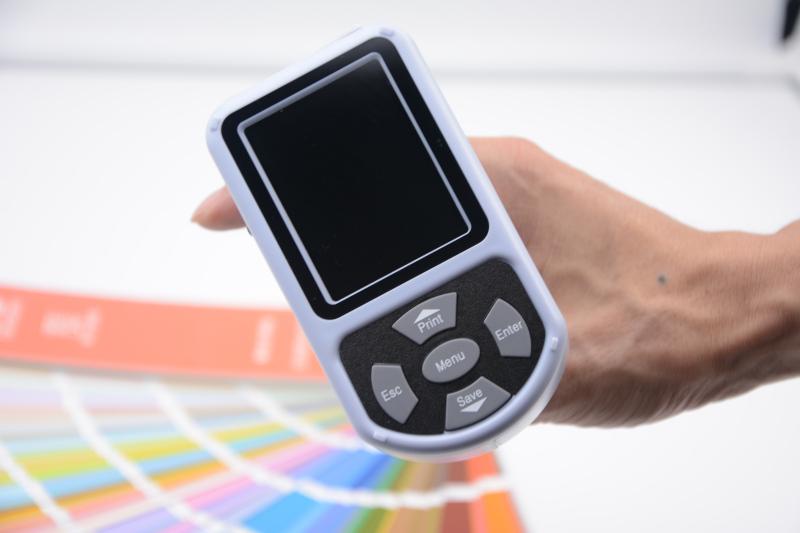
There are two main types of color Colorimeters: direct stimulation value measurement and spectrophotometry. The direct stimulus value determination method is based on the three-variable principle of judging color by the human eye, which has a simple structure and low price, and is widely used in the production department and quality inspection department, especially in the determination of color difference. The spectrophotometric method uses more photoelectric sensors, which can finely split the color light reflected by the sample, measure the reflectivity of each wavelength of light, and obtain the tristimulus value through data recording and integration calculation. At present, CIELab* is commonly used in the world to represent the whiteness of wheat flour, and the color Colorimeter has replaced the digital Whiteness Meter as the development trend of the industry.
Assay method
When using a Colorimeter to determine the color of flour, a sample is first made. An appropriate amount of flour is packed into a powder sample box and pressurized with briquettes to make a flat sample to ensure the accuracy of the measurement. During the measurement, the operation of zeroing and calibrating the standard is carried out according to the prompts of the instrument, and then the sample is placed for measurement, and finally the L*, a*, and b* values are obtained to characterize the color of flour.
Results & Conclusions:
Through the determination of the color of the main wheat varieties in many places in CHINA after milling, it was found that the L value of the main wheat varieties in CHINA ranged from 93 to 97, the a value ranged from 0.1 to 1.0, and the b value ranged from 4 to 12. The flour color tends to be red in the red-green direction and yellow in the yellow-blue direction, and the L value is reliable between 96.0 and 98.0. The naked eye observation of flour with good color is actually the result of the coordination and matching of L*, a*, and b* values, and a single index cannot accurately judge the color of flour, so it needs to be comprehensively considered. It can be seen that the traditional digital Whiteness Meter can not accurately express the color of flour, while the color Colorimeter can distinguish the key factors affecting the color of flour, accurately compare the color difference of different flours, and comprehensively replace the digital Whiteness Meter to determine the color of flour It is the general trend.
