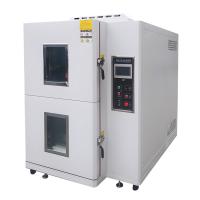
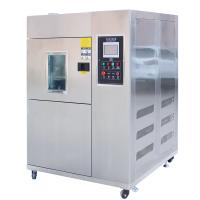
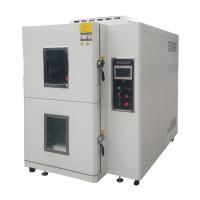
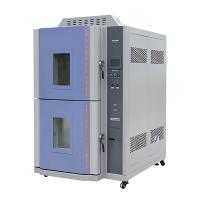
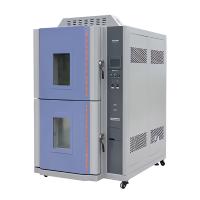
In the field of materials testing and product reliability verification, the thermal shock chamber is a key equipment for simulating extreme temperature environments, and plays an important role in evaluating the performance stability and reliability of products under different temperature conditions. At present, two-box and Three-Chamber thermal shock boxes are more common types on the market, and they have significant differences in structural design, working principle, performance characteristics and application scenarios. Choosing the right thermal shock chamber for your needs can not only ensure the accuracy of test results, but also improve testing efficiency and reduce costs. Next, we will take an in-depth look at the characteristics of two-box and Three-Chamber shock boxes to provide you with a strong reference for your choice.
1. Structural design differences
Two-box hot and cold shock box
The two-chamber thermal shock chamber consists of two separate chambers, a high-temperature chamber and a cryogenic chamber, connected by a movable sample carrier (usually a hanging basket). This structure design is relatively simple, small in size, and small in footprint, which is friendly to laboratories or production sites with limited space. During the test, the sample is placed in the hanging basket, and the hanging basket moves up and down between the high-low temperature boxes to realize the rapid switching of the sample in different temperature environments, so as to simulate the sudden temperature changes that the product may encounter in actual use.
Three-Chamber hot and cold shock box
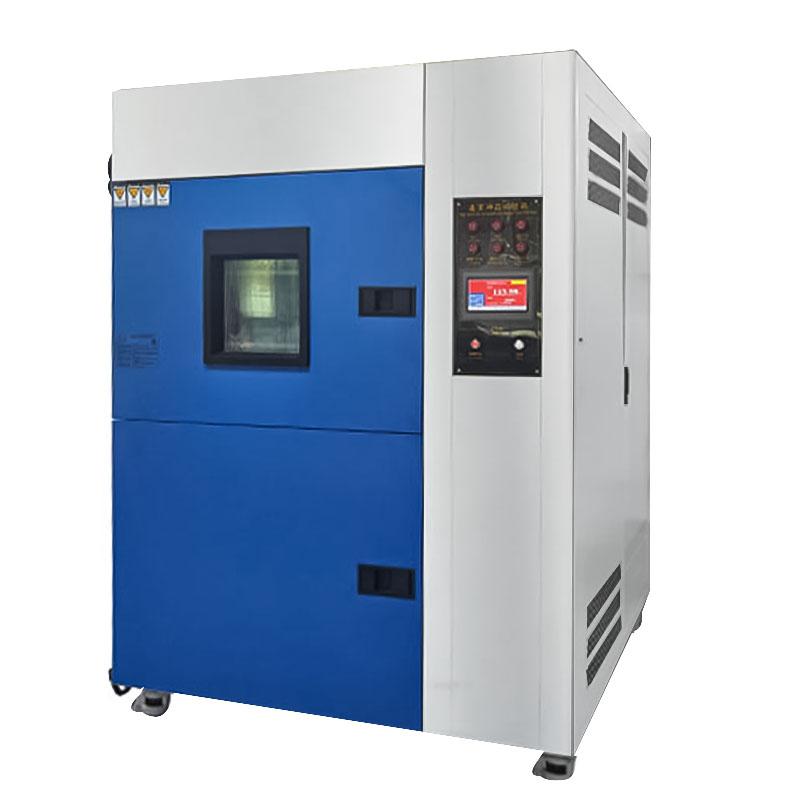
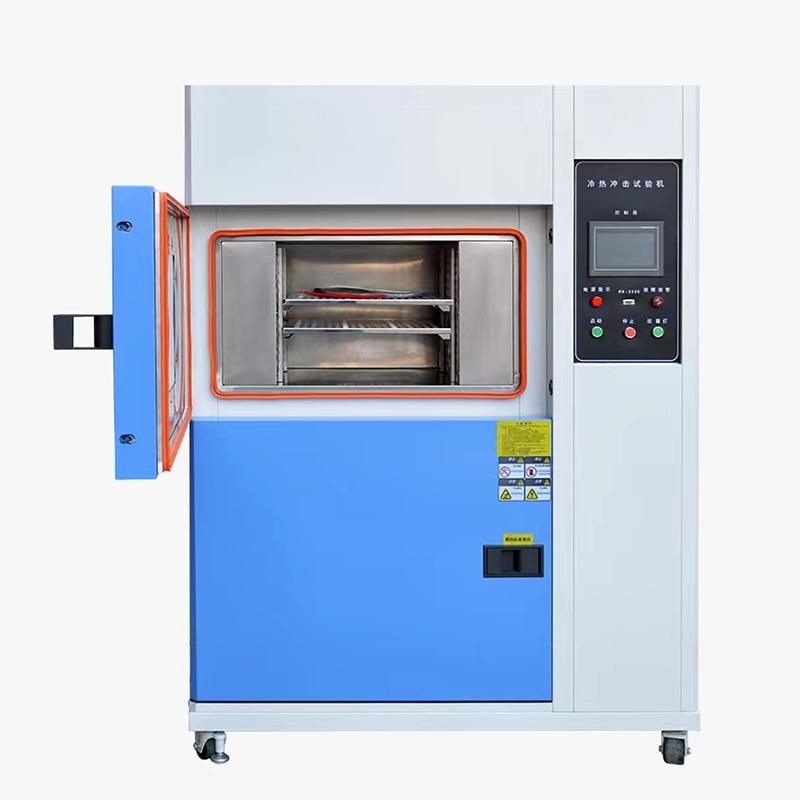
The three-chamber thermal shock chamber consists of three parts: a high-temperature chamber, a cryogenic chamber and an independent Test Chamber. The Test Chamber is located in the middle, and the high-temperature chamber and cryogenic chamber are located above or below it (the exact layout varies depending on the manufacturer's design). The sample is always placed in a stand-alone Test Chamber to remain stationary, and during the test, the air duct system is used to introduce high or low temperature air flow into the Test Chamber by controlling the opening and closing of the damper of the high temperature chamber and the cryogenic chamber, so as to achieve a temperature impact on the sample. Due to the addition of an independent Test Chamber area, its structure is relatively complex, and the overall volume and weight are also larger, which requires higher installation space and load-bearing.
Second, the working principle analysis
Two-box working principle
The principle of operation of the two-chamber thermal shock chamber is based on the physical transfer of the sample between high-low temperatures. When a temperature shock test is required, the control system issues a command that drives the basket to quickly transfer the sample from the current temperature chamber to another chamber. For example, if the sample is currently in a high-temperature chamber and a low-temperature impact test is to be performed, the gondola will quickly descend to the cryogenic chamber and expose the sample to the cryogenic environment instantaneously. This allows for fast temperature transitions, typically in a short period of time (e.g., less than 10 seconds) for the transfer of samples from one temperature zone to another. However, in the process of basket transfer, the high-low temperature boxes will be temporarily connected, so that part of the cold and heat loads will be transferred to each other, causing the temperature of the box to fluctuate, and it will take a certain time to return to the set temperature.
Three-Chamber working principle
The Three-Chamber thermal shock box uses independent air duct and airflow switching technology to achieve temperature shock. Before the test begins, the air is heated or cooled to a set temperature in the high-temperature chamber and the cryogenic chamber are respectively heated or cooled and stored. During the test, according to the preset program, the control system opens the corresponding damper, and uses the fan to quickly send the hot or cold air stored in the high temperature chamber or low temperature chamber into the intermediate Test Chamber through the air duct to impact the temperature of the sample. Because the sample is always in a stationary state, the additional stress effect of mechanical movement on the sample is avoided, and the temperature inside the high temperature chamber and the cryogenic chamber is relatively stable during the airflow switching process, so there is no need to restore the temperature frequently, which can more accurately control the temperature change rate and stability in the Test Chamber, and provide a more stable temperature shock process.
3. Comparison of performance characteristics
Temperature conversion speed
The two-box thermal shock box has obvious advantages in terms of temperature conversion speed by virtue of the direct and rapid transfer of the sample, which can make the sample experience a large temperature change in a very short time, and can quickly simulate the temperature mutation that may occur in actual use.
Although the temperature conversion speed of the three-chamber thermal shock box is slightly slower than that of the two-chamber type, it can also complete the temperature shock switching in a short time (generally within 30 seconds) by optimizing the air duct design and airflow control technology, which can meet most of the testing needs with high requirements for temperature shock. In addition, due to its relatively stable temperature change process, in some tests that require high stability and accuracy of the temperature shock process, such as the reliability test of precision optical devices and high-end electronic chips, the Three-Chamber equipment can better ensure the accuracy and consistency of the test results.
Temperature control accuracy
In terms of temperature control, due to the interference of the temperature of the chamber during the sample transfer process, the temperature is prone to obvious overshoot at the beginning of the high-low temperature residence stage, and there is generally no room temperature residence stage, only in the high temperature and low temperature state, which may not be suitable for some test scenarios with extremely strict requirements for temperature control accuracy. However, with the continuous advancement of technology, some high-end two-box equipment has improved the temperature control accuracy to a certain extent by adopting more advanced temperature control systems and thermal insulation materials.
The Three-Chamber thermal shock box has a room temperature residence stage, and in the high temperature, low temperature and room temperature residence stage, its temperature change curve is closer to the sinusoidal function, the change process is stable, and the temperature change in the actual environment can be more accurately simulated, and the temperature can be controlled within a very small error range.
Sample carrying capacity and applicability
Due to the limited structure of the hanging basket and the space of the box, the two-box thermal shock box usually has a limited sample carrying capacity, which is more suitable for testing samples with a small volume and a small number of samples. Moreover, due to the frequent movement of the sample during the test, it is not suitable for some samples with fragile structures and susceptible to mechanical shock, such as some delicate sensors, electronic components with fine solder joints, etc. However, for some large-volume, structurally stable samples, such as large metal structural parts in automotive parts, the two-box equipment can effectively test its performance reliability in the environment of sudden temperature changes through rapid temperature shock tests.
The three-chamber thermal shock chamber has an independent test area, and the test space is relatively large, which can accommodate more and larger volume samples for testing at the same time, which greatly improves the testing efficiency. At the same time, because the sample remains stationary during the test process, it avoids the potential risk of damage caused by mechanical movement, and has better applicability to high-precision samples that are sensitive to movement, such as high-end integrated circuit chips and microelectromechanical system (MEMS) devices, and can accurately evaluate their reliability in temperature shock environments without affecting the performance of the sample.

Fourth, the application of the scene analysis
The two-box thermal shock box is suitable for scenarios
1) In the field of electronic consumer products: In the R&D and production process of electronic consumer products such as mobile phones and tablets, it is necessary to conduct rapid temperature shock screening tests on a large number of parts and components to ensure the stability of the product when it encounters temperature changes in daily use. The fast temperature conversion speed and high testing efficiency of the two-box thermal shock box can meet the needs of batch testing of electronic products, help enterprises quickly find potential problems of products, shorten the R&D cycle, and reduce production costs.
2) Auto parts manufacturing: In the process of driving, parts and components will face various complex temperature environment changes. For some large and relatively strong auto parts, such as engine blocks, transmission shells, etc., the two-box thermal shock box can effectively test the thermal expansion and contraction performance of the material, the stability of the structure and the sealing performance by simulating extreme temperature impact, so as to ensure the reliability and durability of the parts in the actual operating environment of the automobile.
3) Basic materials research: In the performance research of basic materials such as metal materials and plastic materials, researchers need to quickly understand the changes in the physical and chemical properties of materials under rapid temperature changes. The two-chamber thermal shock chamber can provide rapid and violent temperature shock conditions, help researchers to explore the performance limits and failure mechanisms of materials more deeply, and provide important data support for the development of new materials and the performance improvement of existing materials.
Three-Chamber hot and cold shock box is suitable for scenarios
1) Aerospace and defense industry: The aerospace and defense industry has extremely high requirements for the reliability and safety of products, and any small failure can lead to serious consequences. In the testing of electronic equipment of aircraft, precision instruments of satellites and parts of military weapons and equipment, the Three-Chamber thermal shock box can simulate the working state of the product in extreme temperature environments such as high altitude and space by virtue of its accurate temperature control, smooth temperature shock process and good applicability to high-precision samples, so as to ensure that the product can still operate normally in complex and harsh environments, and provide a strong guarantee for the safe and reliable development of aerospace and national defense.
2) High-end electronics and semiconductor industry: In the fields of semiconductor chip manufacturing and high-end electronic equipment production, the performance and reliability of chips and electronic components directly affect the quality and performance of the entire product. The Three-Chamber thermal shock box can meet the requirements of high precision and high stability of chips and precision electronic components in the process of temperature shock testing, and can accurately detect key indicators such as the change of electrical performance of the chip under temperature changes, the reliability of solder joints and the integrity of the package, helping enterprises improve product quality and enhance market competitiveness.
5. Cost considerations
Equipment purchase costs
Due to the relatively simple structure of the two-box thermal shock box, the equipment procurement cost of the two-box thermal shock box is usually lower than that of the Three-Chamber thermal shock box. For companies or laboratories with limited budgets and low requirements for testing accuracy and sample carrying capacity, a two-box device is a more cost-effective option to effectively control procurement costs while meeting basic testing needs.
Due to its complex structural design, independent air duct system and high-precision temperature control system, the Three-Chamber thermal shock box requires the use of more high-quality materials and advanced technology in the equipment manufacturing process, resulting in high equipment procurement costs. However, for those industries that have strict requirements for test accuracy, sample stability and test efficiency, and have relatively sufficient budgets, such as aerospace and high-end electronics, the high performance and reliability provided by Three-Chamber equipment can bring higher value returns, and in the long run, it is conducive to improving product quality and enterprise competitiveness.
Operating and maintenance costs
During the operation of the two-chamber thermal shock chamber, the equipment needs to frequently adjust the temperature of the chamber due to the fluctuation of the chamber temperature caused by the sample transfer process, which may increase energy consumption. At the same time, mechanical moving parts such as hanging baskets are prone to wear and tear during long-term use, and need to be maintained and replaced regularly, and the maintenance cost is relatively high. In addition, due to the relatively low accuracy of temperature control, more tests may be required to ensure the accuracy of the test results, which indirectly increases the cost of testing.
When the Three-Chamber thermal shock box is in operation, the long-term operating cost may be relatively low due to the relatively stable temperature shock process, the temperature fluctuation of the box is small, and the energy consumption is relatively stable. And, because the sample is stationary, the wear and tear of the mechanical parts is reduced, and the maintenance effort and maintenance costs of the equipment are relatively low. However, due to its complex structure, once a failure occurs, it is difficult to repair, and the maintenance cost may be high, requiring professional technicians and specific maintenance equipment for maintenance.
6. Selection suggestions
When choosing a two-box and Three-Chamber thermal shock box, there are many factors that need to be considered. If your testing needs are focused on extremely high temperature change rates, small sample sizes and small quantities, limited budgets, and acceptable effects of mechanical shock during testing, then a two-chamber thermal shock box will be a good choice to complete the test task quickly and efficiently, provide you with valuable test data, and help you control costs.
If your test samples are high-precision, mobile-sensitive, demanding on temperature control accuracy, and need to test multiple samples or large samples at the same time, or your industry requires extremely high product reliability, such as aerospace, high-end electronics, etc., then the Three-Chamber thermal shock box can better meet your testing needs with its precise temperature control, smooth testing process and large sample carrying capacity, although the equipment purchase and maintenance costs are relatively high. However, the ROI is higher from the point of view of the accuracy and reliability of the test results and the improvement of product quality.
In short, only by having an in-depth understanding of the characteristics and scope of application of two-box and Three-Chamber thermal shock boxes, combined with their own actual testing needs and economic strength, can we make a suitable choice to ensure that the selected thermal shock box equipment can provide strong support for your product development, quality control and reliability verification work, and help enterprises gain an advantage in the fierce market competition.