The balance is a measuring instrument specially used in indoor use, its working principle is based on the gravity of an object or Newton's second law, and its core function is to determine the mass of an object, or to determine those other measures, values, parameters and properties that are mass functions. From this definition, we can clearly know that the application scope of balances includes measuring the gravitational mass of objects, such as lever-type isosmetric or unequal arm balances; It also covers the determination of the inertial mass of an object, such as an inertial balance.
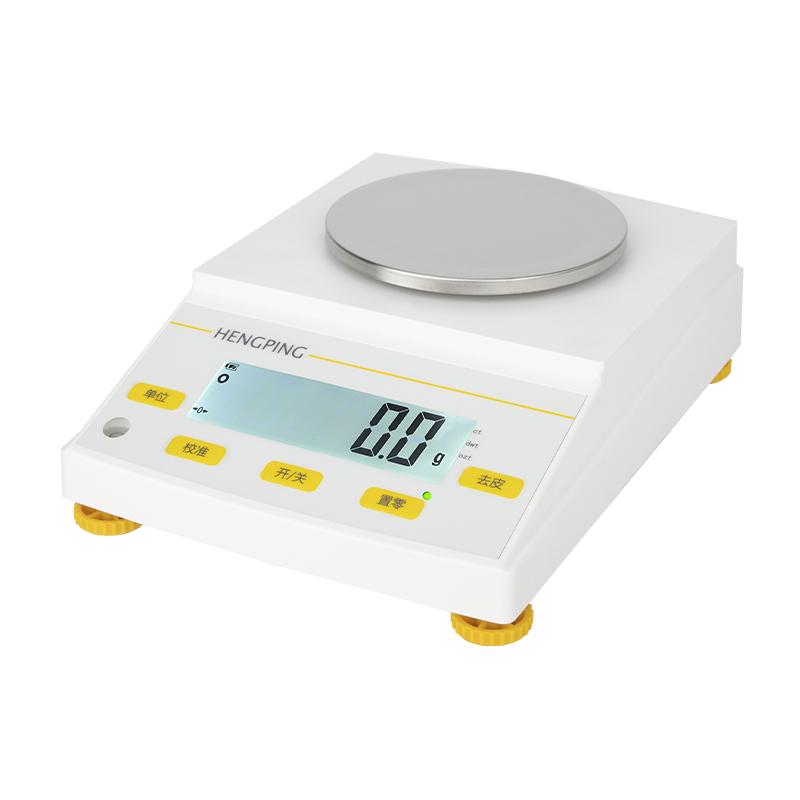
In many fields of the national economy, quality is the most basic and basic physical quantity, and its wide application has penetrated into all aspects and is closely related to everyone's life. The accuracy of the quality has a significant impact. It is not only directly related to the measurement accuracy and development of measurement disciplines such as force measurement, density, capacity, pressure, flow, radiation, electromagnetism, and length, but also has a direct impact on the development of national defense, scientific research, agriculture, industry, transportation, national statistics, security protection, culture, education and health, domestic and foreign trade, and is related to the interests of the state, collectives and individuals, as well as the social and economic benefits of the whole country and the construction of the four modernizations. It can be seen that quality plays a crucial role in all fields of the national economy. Under laboratory conditions, balances must be used to measure the quality of objects, so the role of balances in these fields is self-evident, providing key support for accurate measurement of quality in various fields and an important tool to ensure the smooth development of related work.
There are various ways to classify balances, and different classification standards allow us to understand and distinguish various balances from different perspectives.
Classification by use
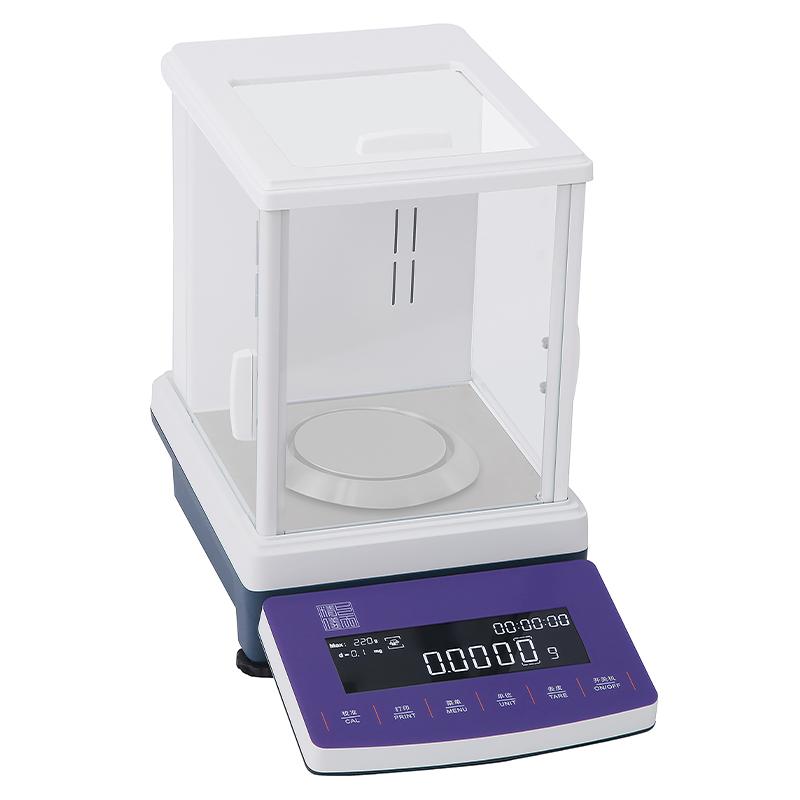
Balances can be divided into general-purpose balances and special balances. General purpose balances are mainly used for daily chemical analysis, physical analysis, industrial analysis, and quality testing with high precision and medium accuracy. It can be further subdivided into analytical balances and industrial balances and physical balances. The analytical balance can be further subdivided according to the difference in the index value of the minimum nominal scale. The minimum nominal scale index value of the constant analysis balance is greater than or equal to 0.1mg. The minimum nominal scale index value of the semi-micro analysis balance is in the range of 0.05~0.01mg. The minimum nominal scale index value of the microanalytical balance is in the range of 5~1μg; The minimum nominal scale index value of the ultra-trace analytical balance is less than 0.5 μg. Industrial balances and physical balances have lower accuracy and larger minimum nominal index values, which are indoor universal quality testing equipment. Special balances refer to balances that can only be used for a certain special purpose, which can be subdivided into standard balances and other special balances. The special purpose of standard balances is to verify weights and transmit mass values in accordance with the law. Other special balances are balances used for specific special purposes other than calibrating weights.
Classification by mode of operation
Balances are divided into non-automatic and automatic balances. Non-automatic balances require operator intervention during the measurement process. Automatic balances, on the other hand, do not require operator intervention during the measurement process and can complete the measurement work automatically.
Classification according to the principle of balance
There are several types of balances. Balances that use the principle of lever balancing, such as lever balances. Balances that adopt the principle of elastic force balance, such as torsion balances, spring balances, strain gauge balances, and hydraulic balances. Balances that use the principle of hydrostatic balance, such as barometric balances and liquid static balances. Balances that use the principle of electromagnetic force balance, such as magnetoelectric electronic balances and magnetic suspension electronic balances. A balance that uses the inertia of an object to measure mass, such as an inertial balance.
In addition, balances can also be classified according to their structural characteristics, and there are differences in appearance and components of balances with different structural characteristics, which also make them different in terms of usage scenarios and operation methods, further enriching the types of balances to meet different measurement needs.
