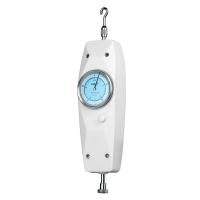
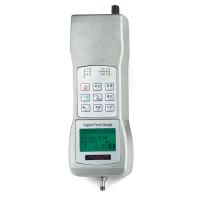
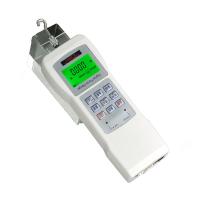
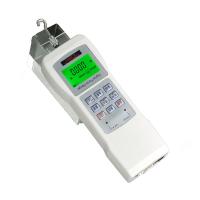
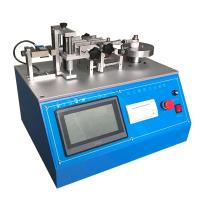
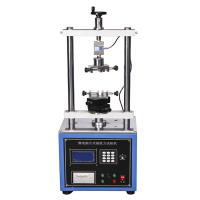
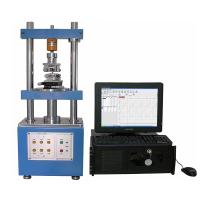
The hand-pressed tension and compression test bench is mainly divided into HST-J and HST-S types. This bench can cooperate with various types of dynamometers (push and pull dynamometers) for accurate tension and compression loads and insertion and withdrawal forces. , Destructive tests and other tests.
While displaying the force value, its displacement can also be displayed at the same time. And the stroke can be locked, and the comparison test (HST-S) under the same displacement can be carried out for different jobs.
Has the following characteristics:
1. Simple operation - manual operation
2. Stable operation - rack and pinion type rotation
3. Display preparation - digital display (HST-S)
4. The installation is stable - the base, the machine feet are large, and the body is heavy
This test bench is suitable for various brands of ( ) at home and abroad. The stroke size can be adjusted appropriately. The maximum stroke is 90mm.
Dimensions (length, width, height) 255×180×503mm, net weight 12kg
The parameters of the dynamometer that can be equipped with this bench are as follows:

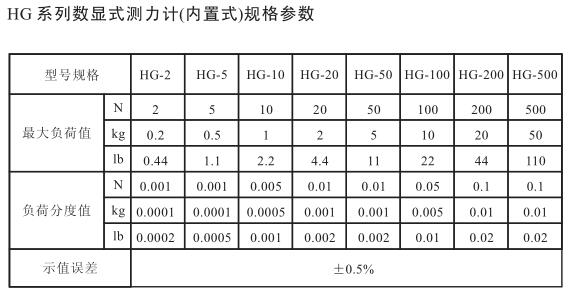
1. During the test, install the push-pull force gauge on the test bench, select a suitable fixture to install on the push-pull force gauge, rotate the test bench up and down to adjust the nut, make the fixture contact with the object under test, and then reset the digital scale to zero, that is Can be opened
start the test.
2. The value displayed on the push-pull force gauge is the measured force value.
3. Displacement: Subtract the displacement of the thrust gauge itself from the value displayed on the scale to get the displacement of the measured object (the displacement calculation method of the push-pull force gauge: the measured force value is divided by the range of the push-pull force gauge and multiplied by 10mm). Expressed in the formula as follows: