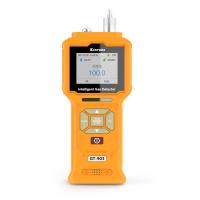
1. What is a VOC Detector?
A VOC Detector is an instrument specifically designed to detect the concentration of volatile organic compounds (VOCs) in the environment, typically displaying measurements in ppm (parts per million) or mg/m³ (milligrams per cubic meter). This type of equipment is widely used in:
• Industrial safety monitoring (e.g. chemical, petrochemical, printing industries)
• Ambient air quality assessment (indoor/outdoor VOC pollution detection)
• Occupational health protection (protection against workers' exposure to harmful VOC environments)
• Environmental compliance testing (meeting government emission standards)
VOC Detectors employ various sensing technologies, such as PID (photoionization detection), FID (flame ionization detection), electrochemical detection, and infrared detection, to ensure accurate and reliable monitoring data.
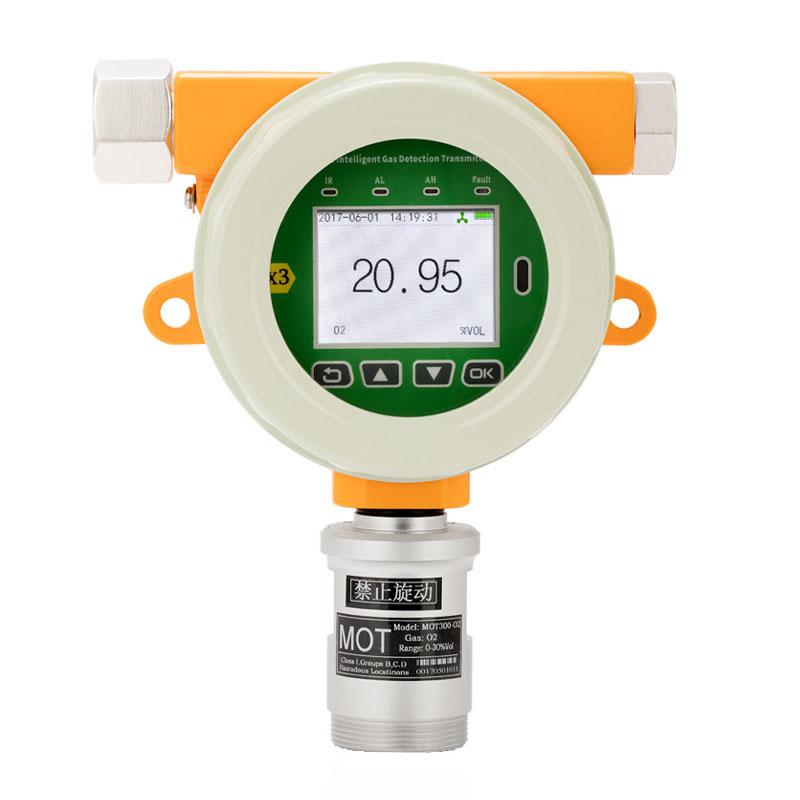
2. The main types of VOC Detectors
According to the detection principle, application scenarios and technical characteristics, VOC Detectors can be divided into the following categories:
1. Classification according to the detection principle
(1) PID (Photoionization Detector)
• Principle: Use ultraviolet light (usually 10.6eV or 11.7eV) to ionize VOC molecules and measure the ion current to calculate the concentration.
• Advantages: High sensitivity (can detect ppb level), fast response (within seconds), suitable for a wide range of VOCs.
• Application: Emergency monitoring, leak detection, indoor air quality assessment.
(2) FID (Flame Ionization Detector)
• Principle: VOCs are burned in a hydrogen flame to produce ions, and the concentration is calculated by measuring the ion current.
• Advantages: High sensitivity to hydrocarbons and wide linear range.
• Applications: Laboratory analysis, monitoring of stationary pollution sources.
(3) Semiconductor sensor Detector
• Principle: VOC gas reacts with semiconductor materials (such as tin dioxide) to change the conductivity and thus detect the concentration.
• Advantages: low cost, portability, suitable for simple monitoring.
• Disadvantages: Easily affected by temperature and humidity, low accuracy.
(4) Gas chromatograph (GC)
• Principle: VOC components are separated by column and then analyzed by Detector (e.g., FID/PID).
• Advantages: High accuracy for identification of complex VOC mixtures.
• Disadvantages: Large equipment and slow detection speed, suitable for laboratory analysis.
2. Categorize by application scenario
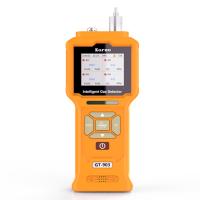
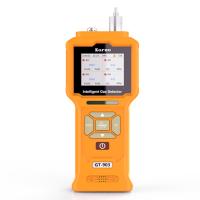
(1) Portable VOC Detector
• Features: Handheld device, battery powered, suitable for on-site rapid inspection.
• Applications: Leak investigation, emergency response, indoor air quality testing.
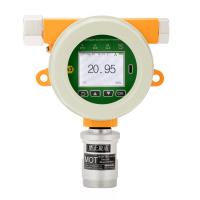
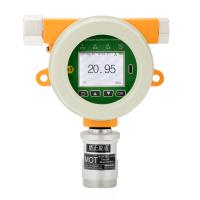
(2) Fixed VOC Detector
• Features: Long-term installation at the monitoring point, real-time continuous monitoring, data can be transmitted remotely.
• Application: Factory workshops, warehouses, laboratories and other fixed places.
(3) Online VOC monitoring system
• Features: 24-hour uninterrupted monitoring, automatic data storage and transmission, in line with environmental regulations.
• Application: environmental supervision, industrial emission monitoring.
3. The testing principle of VOC Detector
1. PID (Photoionization Detection) principle
• Core components: UV lamp (10.6eV/11.7eV), ion chamber.
• Process: UV light irradiates VOC molecules to ionize them into positive ions and electrons, forming a current signal with current intensity directly proportional to VOC concentration.
• Advantages: High sensitivity, fast response, suitable for low concentration detection.
2. FID (Flame Ionization Detection) principle
• Core components: hydrogen flame burner, ion collecting pole.
• Process: VOCs burn in a hydrogen flame to produce ions, forming an electric current signal whose signal strength correlates with the carbon content.
• Advantages: Accurate hydrocarbon detection with a wide linear range.
3. Semiconductor sensor principle
• Core components: metal oxide semiconductors (e.g., SnO₂).
• Process: VOC gas reacts with the semiconductor surface to change the conductivity and thus detect the concentration.
• Disadvantages: Susceptible to environmental factors and low accuracy.
4. Gas chromatography (GC) principles
• Process: After the sample is gasified, it is separated by the column, and then the concentration of each component is analyzed by the Detector.
• Advantages: High accuracy for complex VOC mixture analysis.
4. Application scenarios of VOC Detectors
1. Industrial safety (VOC leakage monitoring in chemical, petrochemical, printing industries)
2. Environmental monitoring (factory emissions, indoor air quality assessment)
3. Occupational health (preventing workers from being exposed to high concentrations of VOCs)
4. Scientific Research Laboratory (VOC Composition Analysis)