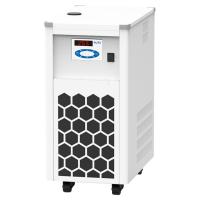
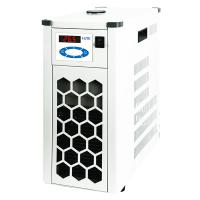
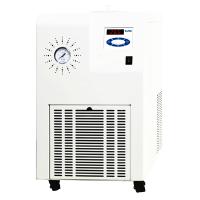
1. The core application field of cryogenic coolant circulation pump
1. Scientific research experiments: the "temperature steward" of experimental conditions
In basic research fields such as chemistry, biology, and materials science, strict temperature control is often required during experimental processes to ensure data reliability. Typical applications include:
• Chemical synthesis experiments: Some reactions need to be performed at low temperatures (e.g., -20°C to 0°C) to avoid side reactions or control the reaction rate.
• Biological experiments: cell culture, enzyme activity testing, etc. need to simulate a low-temperature environment (such as storing samples at 4°C or inhibiting biological metabolism below 0°C).
• Materials Science: Testing the mechanical properties or phase transition properties of metals, polymers, and other materials at extremely low temperatures (e.g., -40°C to -80°C).
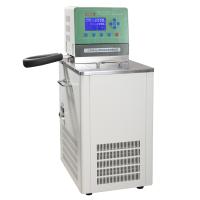
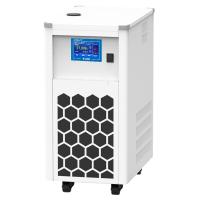
The cryogenic coolant circulation pump provides a continuous and stable low-temperature environment for the experimental vessel by connecting rotary evaporators, vacuum freeze dryers, reactors and other equipment, ensuring the reproducibility and accuracy of the experiments.
2. Industrial manufacturing: the "temperature control guard" of the production process
The industrial field has extremely high requirements for the continuous operation stability of equipment, and the cryogenic coolant circulation pump is mainly used for temperature control in key links:
• Semiconductor manufacturing: Processes such as lithography and etching require precise control of chip temperature (usually below room temperature) to avoid high temperature leading to wafer deformation or circuit accuracy deviations.
• Chemical production: Catalytic reactions, polymerization reactions, etc. are often accompanied by exothermic release, and it is necessary to maintain the temperature balance in the reactor through circulating cooling to prevent the formation of by-products.
• Machining: High-power equipment such as laser cutting and EDM generates a lot of heat during operation, requiring rapid heat dissipation to protect the life of core components.
In addition, this equipment also plays an important role in scenarios such as low-temperature storage of raw materials in the food industry.
3. Medical Devices: The "Cooling Partner" of Precision Instruments
The normal operation of medical imaging and treatment equipment depends on a stable low-temperature environment:
• Diagnostic imaging equipment: Nuclear magnetic resonance (MRI), electron microscopes, etc. need to reduce the operating temperature of magnets or electronic components through coolant to avoid thermal noise interfering with imaging quality.
• Treatment equipment: Microwave therapy devices, cryotherapy devices, etc. adjust the temperature of the treatment head by circulating coolant to ensure the safety and effectiveness of the treatment process.
In such applications, equipment has extremely high requirements for coolant purity, temperature fluctuation range (usually within ± 1°C), and cryogenic coolant circulation pumps need to have high sealing and corrosion resistance.
4. Other fields: "Customized solutions" for special scenarios
• Aerospace: Low-temperature testing and operating environment simulation of satellite electronic systems and spacecraft propulsion devices.
• Environmental Protection Testing: Low-temperature storage of air pollutant sampling equipment to prevent volatile substances from escaping.
• New energy: Simulate extreme low temperature conditions in battery thermal management system testing to evaluate battery performance degradation law.
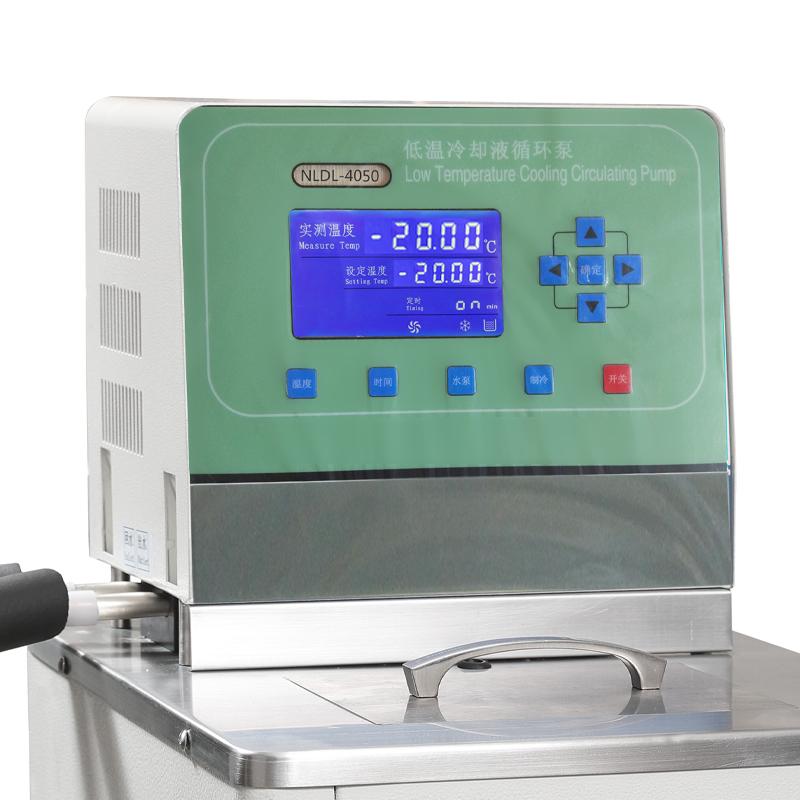
2. Scientific selection method of cryogenic coolant circulation pump
In the face of diverse application needs, the following key factors need to be considered when selecting to ensure that the equipment performance is highly matched with the actual scenario.
1. Temperature range: from "basic cooling" to "cryogenic challenges"
The temperature range is the primary parameter for selection. Conventional equipment can achieve cooling from -20°C to room temperature (for most laboratory and industrial scenarios), and if it involves ultra-low temperature experiments (such as -40°C, -80°C or even lower), you need to choose a model equipped with a special compressor or refrigeration circulation system.
2. Cooling capacity and heat load: avoid "small horse-drawn carts"
The cooling capacity (unit: W) directly determines the cooling capacity of the equipment and needs to be calculated according to the thermal power (heat generation) of the cooling object. For example, the heat load of the condenser of a rotary evaporator is about 500-1500W, and if the equipment with insufficient cooling capacity is selected, the cooling speed will be slow or even unable to reach the target temperature. It is recommended to provide the heat load parameters of the specific equipment or estimate the required cooling capacity based on experimental data (usually 1.2-1.5 times the redundancy design of the heat load).
3. Flow and head: ensure cycle efficiency
• Flow rate (L/min): affects the uniformity of heat dissipation, large capacity reactors require higher flow rates (≥ 15L/min), and small instruments only need 5-10L/min.
• Head (m): Determine the pump's ability to deliver coolant to high-level equipment, and choose a high-pressure pump type with a head ≥ 6m for long pipelines or complex circulation systems.
4. Material and Sealing: Adaptable to corrosive media environments
If the coolant contains organic solvents (e.g., ethanol, acetone), acid-alkali solutions (e.g., dilute hydrochloric acid, sodium hydroxide), preferentially choose equipment with contact parts of 316 stainless steel or polytetrafluoroethylene (PTFE), and ensure that the seals are made of low-temperature resistant materials such as fluoroelastomer or silicone rubber.
5. Intelligence and Safety: Improve operational convenience
Modern cryogenic coolant circulation pumps usually integrate microcomputer control systems, supporting precise temperature control (resolution ≥0.1°C, control accuracy ±within 2°C), multiple protections (power failure protection, overload protection) and remote monitoring functions to ensure stable operation of the equipment.
epilogue
As the basic equipment in modern science and industry, cryogenic coolant circulation pumps are used in a wide range of scenarios from micro experiments to macro production. Scientific selection should take actual needs as the core, comprehensively consider factors such as temperature range, refrigeration capacity, circulation parameters and environmental adaptability to ensure that the equipment can not only meet the requirements of current working conditions, but also have the reliability of long-term stable operation. By accurately matching equipment performance and usage scenarios, users can significantly improve experimental efficiency, ensure production quality, and provide solid temperature control support for technological innovation.