In scientific research, industrial production, and many professional fields, the precise use and proper maintenance of instruments are crucial, not only related to the accuracy of experimental data and the stability of production processes, but also directly affect the service life and work efficiency of instruments. The following will take a large-scale and precision Spectrophotometer as an example to provide an in-depth introduction to the key points of daily use and maintenance of the instrument.
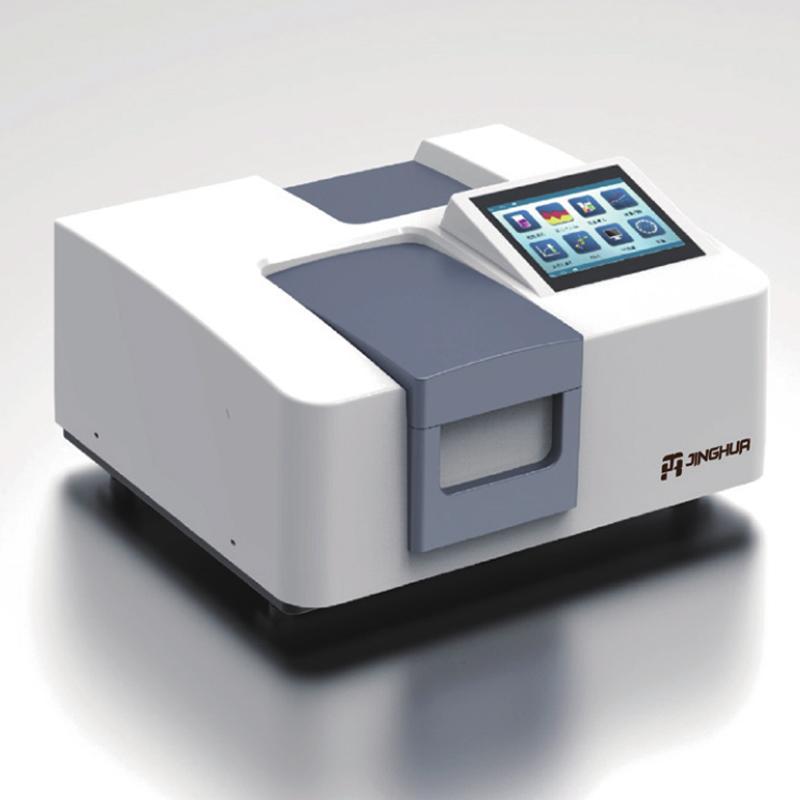
General rules for daily use and maintenance
Institutional norms
Institutional norms are the basis for ensuring that large-scale and precision Spectrophotometer s are always in excellent working condition. A special person should be designated to be responsible for the storage and use of the instrument, and at the same time formulate necessary rules and regulations such as the regular verification plan, maintenance plan and detailed daily use record system of the instrument. Dedicated management can enhance the sense of responsibility and ensure the standardization of instrument use; Regular verification can detect potential problems of the instrument in time and ensure the accuracy of measurement data. Maintenance programs help maintain stable instrument performance; Daily use records can provide a detailed basis for subsequent maintenance and troubleshooting.
Preparation before use
Preparation before use directly affects the reliability of test results. Before each use of the instrument, it is necessary to pre-power and warm up for about half an hour to allow the electronic system of the instrument to reach a stable state and avoid drift of the test results. When turning on the power, the power supply of the host should be turned on first, and then the light source power should be turned on after the host is stable to prevent the photomultiplier tube from being directly exposed to strong light. Before putting the test specimen, it is necessary to carefully adjust the zeroing, check and adjust the straightness of the baseline, pay attention to whether the movement of the Recorder and the switching of each component during the scanning process are normal, and confirm that everything is normal before testing. To reduce errors, it is recommended to scan and record in one direction from wavelengths farther away from the absorption peak of the sample to be tested, and special attention should be paid to cell pairing and placement when using a dual-beam Spectrophotometer .
The slit width needs to be adjusted as needed
The slit width setting of the Spectrophotometer needs to be adjusted according to the test needs. The slit width directly affects the spectral resolution and test sensitivity, and if high-resolution determination is required, narrow slit, high gain and slow scan mode should be selected. If the resolution is not required, in order to shorten the test time, wide slit can be used for fast scanning. Operators need to set up reasonably to obtain the best test results.
Operational details
Detail control during operation is critical to instrument protection. Various operating buttons and switches on the instrument should be rotated or pulled gently, and avoid collision, impact or hard twisting to prevent damage to precision parts. The working surface, light source and receiver of the precision optical parts in the instrument should not be directly touched by hand to avoid contaminants on the hands affecting the performance of the instrument. When testing liquid specimens or volatile substances, prevent specimens or solvents from spilling to avoid corrosion of the instrument.
Finishing maintains performance
Post-use finishing is an important part of maintaining instrument performance. After each use, the instrument should be wiped in time, the surface dust and stains should be removed, the accessories on the fashion should be removed, so that the instrument can be restored to the starting state before use, and then covered with a clean cloth cover or special cover to prevent dust from entering. After cleaning and treatment, the removed accessories should be properly stored in a special dryer or cabinet, such as rinsing the cuvette with distilled water after use, and then placed in the cuvette box after drying upside down to avoid corrosion or contamination of the residual test solution.
Targeted maintenance
Instruments that have not been used for a long time need to be maintained. Wipe the instrument and accessories thoroughly, and wipe the exposed metal surface with anti-rust grease (pay attention to avoiding the optical light surface) to prevent rust. Delicate and fragile parts such as gratings and prisms should be carefully removed (marked if necessary) and placed in a sealed vessel with desiccant. Monochromator parts with a constant temperature heating system should be connected to the constant temperature heating power supply regardless of whether they are used or not to maintain the stability of the optical components. At the same time, it is necessary to regularly check whether the instrument is moldy or rusty, replace the desiccant, power on the electronic system, and check frequently during the mildew season in the south.
Strengthen maintenance
Instruments that are used frequently require increased maintenance to extend their life. Lubricating oil should be added to each moving part regularly according to the requirements of the manual to reduce friction and wear of components. At the same time, check the cooperation and movement of each component, and adjust the parts that are easy to loosen, deform and wear such as the electronic system plug-in and light source mount in time. It should be noted that the optical system cannot be touched at will, and the optical parts cannot be removed without sufficient experience and tools.
Scientific
The management of accessories and spare parts is of great significance for the expansion of the instrument's functions and the extension of its life. Most of the special accessories and special spare parts of large Spectrophotometer s are special, not easy to purchase, and need to be carefully stored and maintained. Precision optical parts and accessories should be stored sealed piece by piece, and the desiccant should be changed frequently; Spare parts for photoelectric and thermoelectric receivers should be stored in a dry, dust-free place away from vibration to avoid strong light exposure and shock vibration; UV light source spare parts should not touch the quartz glass tube with your hands to prevent affecting the light energy output; The record paper should be properly kept to prevent reading errors caused by moisture deformation.
summary
To sum up, the use and maintenance of instruments need to start from various aspects such as system specifications, preparation and sorting before and after use, operation details, maintenance at different frequencies of use, and accessory management.
