Fluorophotometer is an analytical instrument designed by using the characteristics of molecules or atoms of substances to emit fluorescence after being excited by light, which can be divided into three categories: fluorescence photometry, atomic fluorescence spectrometry and X-ray fluorescence spectroscopy, which play an important role in many fields.
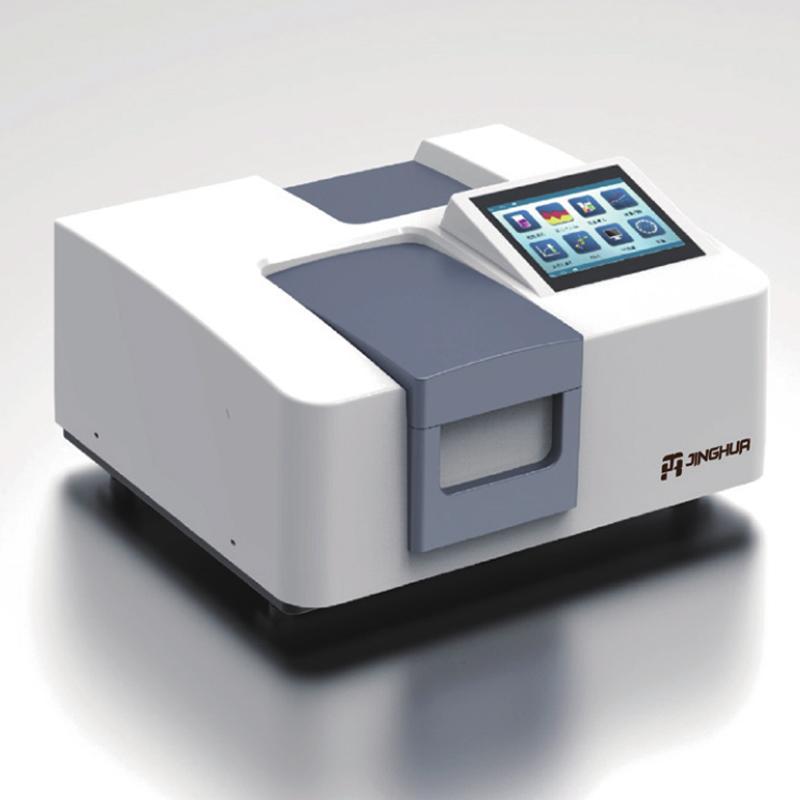
Fluorescence photometric analysis
After absorbing ultraviolet or visible light, a substance emits visible light with a longer wavelength, and the fluorophotometer achieves ultra-trace analysis based on this principle. Its core advantages are high sensitivity (detection limit up to 10⁻¹¹~10⁻¹²g/mL), strong selectivity (can combine excitation and emission spectra to identify substances), and can also provide a variety of physical parameters such as excitation spectroscopy and fluorescence lifetime. However, it is strict in terms of test conditions, and trace amounts of transition metal ions may cause fluorescence to "extinguish", limiting the application to a certain extent. This method is widely used in environmental protection, food industry, and other fields, and is an important tool for ultra-trace analysis.
Atomic fluorescence analysis
Based on the characteristics of metal atoms emitting fluorescence after absorbing characteristic light, the metal elements in the sample form ground-state atomic vapor after atomization, and fluorescence is produced when the absorbed energy is excited and then transitions back to the ground state, and its intensity is related to the element content. The method has high sensitivity, good selectivity and simple operation, but due to the weak fluorescence intensity, it requires a high radiation light source and a highly sensitive detection system, and the instrument is complex and easily affected by external conditions. It is mainly used to determine the content of metal elements in specimens, and is widely used in heavy metal analysis in food and other fields.
X-ray fluorescence spectroscopy
Incident X-rays bombard the sample atoms, causing the inner electrons to escape, and the outer electrons are replenished to release X-rays (fluorescence), the wavelength of which is determined by the atomic number of the element, according to which qualitative and quantitative analysis can be carried out. The method is suitable for the determination of trace to high content components without damaging the sample, and can be used with a computer to realize automatic analysis and determination of more than 30 elements within minutes. It is suitable for elemental analysis with atomic number 9 (fluorine) ~ 92 (uranium), and light elements need to be determined under vacuum conditions.
summary
Fluorophotometers focus on sensitivity, selectivity and application range through different principles of fluorescence analysis methods: fluorescence photometry is good at the analysis of ultra-trace organic matter, atomic fluorescence spectrometry focuses on the determination of metal elements, and X-ray fluorescence spectroscopy is suitable for rapid detection of multiple elements. Despite their limitations, they together constitute an indispensable tool in modern analytical chemistry, playing a key role in scientific research, industry, environmental protection, and other fields, driving the development of trace and ultra-trace analysis techniques.
