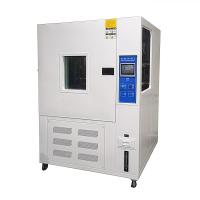
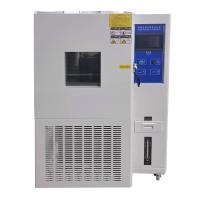
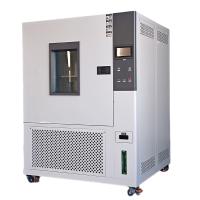
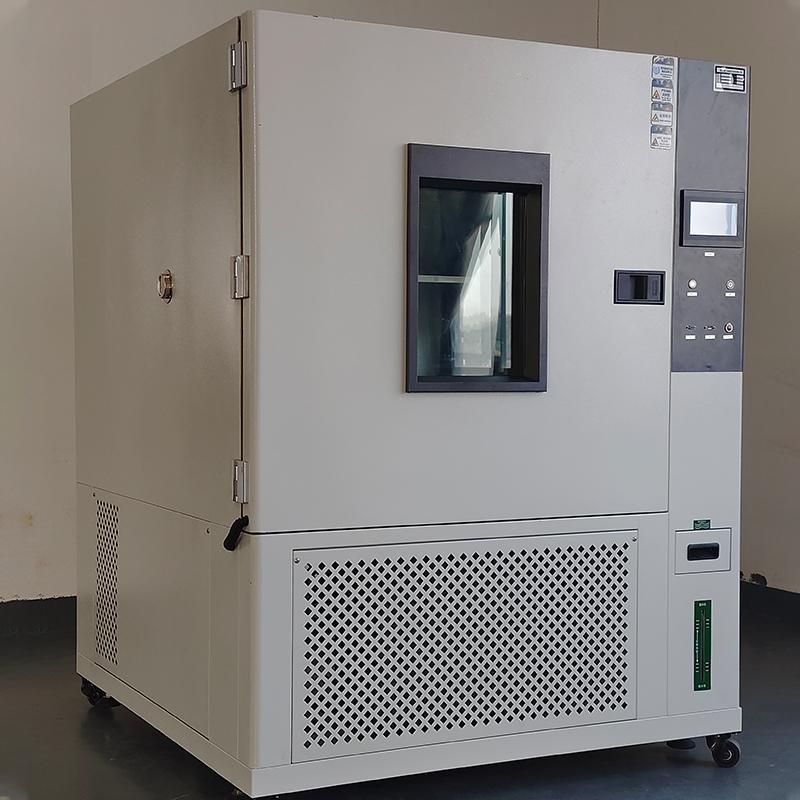
GB/T 10586-2006 "Technical Conditions for Damp and Heat Test Chambers" clearly stipulates the technical requirements and inspection methods of "damp heat Test Chambers" (that is, what we often call constant temperature and humidity Test Chambers). It is the criterion for manufacturers to design, produce and inspect equipment, and it is also the core basis for users to purchase, accept and regularly calibrate equipment.
You can understand this standard as the "factory manual" and "quality certificate" of the constant temperature and humidity Test Chamber.
1. Interpretation of the core content of the standard
The standard mainly stipulates the following major contents:
1. Conditions of use
It specifies the environmental requirements for the equipment to work normally, such as:
Ambient temperature: 5°C~35°C
Ambient humidity: not greater than 85%RH
Power supply conditions: voltage fluctuation range ±10%, frequency fluctuation range ±1%
This means that a qualified device does not meet nominal indicators everywhere and must operate in a relatively good environment.
2. Technical performance requirements (this is the core part)
This part specifies the performance indicators that the equipment must achieve when it is not loaded (without samples). Here are the key parameters and their interpretations:
| Performance parameters | Standard requirements (according to standard text) | Popular interpretation |
| Temperature deviation | ±2℃ | The device sets a temperature point (e.g. 85°C) and the maximum difference between the measured average temperature and the set temperature at any point in the workspace. This represents the control accuracy of the system. |
| Temperature fluctuations | ±0.5℃ | At the center of the workspace, half the difference between the maximum and minimum values of temperature change over time (i.e., ± 0.5°C means 1°C up and down). This represents temperature stability. |
| Temperature uniformity | ≤2℃ | The maximum difference between the instantaneous average temperature at any two points in the workspace after the set temperature is reached and stabilized for the first time. This represents the uniformity of temperature throughout the cabinet and is the golden indicator of the performance of the cabinet. |
| Humidity deviation | +2/-3% RH | When the humidity ≥ 75%RH, the deviation range between the measured humidity and the set humidity is ranged. |
| Humidity fluctuations | ±2% RH | Similar to temperature fluctuation, it refers to the short-term change of humidity at the center of the workspace. |
| Humidity uniformity | — | The body of the standard does not specify a specific value for humidity uniformity, but it hints at its importance. A recommended value of 3% RH is provided in Appendix B ≤(Informative Appendix). This is a very important negotiation indicator when purchasing and accepting. |
Special Note:
Heating/cooling rate:The standard specifies an "average rate every 5 minutes". This is the basis for the linear temperature rise and fall rate (e.g. 3°C/min, 5°C/min). It is different from "instantaneous rate" or "full average rate" and is a more realistic reflection of the performance of the device during program operation.
Wind velocity:The wind speed in the working space should not be greater than 1.7m/s to avoid the additional impact of "air cooling" or "wind heat" on the specimen and ensure the accuracy of the test.
3. Safety and structural requirements
Insulation resistance: The insulation resistance of live components to the box shell should not be less than 1MΩ to ensure the safety of electricity.
Sealing: The box door (door seal), lead hole, etc. should be well sealed to prevent air leakage and moisture, which is the basis for ensuring performance.
Observation window: A transparent and anti-fog observation window should be set up to facilitate viewing the sample status during the test.
Lead holes: The box wall should be equipped with special holes for specimen power or signal elicitation.
4. Inspection method
The standard details how all of the above performance metrics will be tested, including:
Number and location of measurement points: Arrange 9 or more temperature and humidity sensors inside the studio.
Accuracy of measuring instruments: The accuracy of measuring instruments (such as platinum resistance, humidity sensors) must be an order of magnitude higher than the indicators of the equipment being tested.
Test Steps: Detailed the stable conditions for testing, data logging time, and calculation methods.
This ensures that the test results are comparable and unbiased across all manufacturers and inspection bodies.
2. What does this standard mean to you?
Basis of procurement contract: You can write the main technical parameters of this standard (especially temperature uniformity, humidity deviation, and temperature rise and fall rate) into the technical terms of the procurement contract, and indicate "acceptance according to GB/T 10586-2006 standard".
Criteria for acceptance of equipment: After the new equipment arrives and is installed, it must be tested on site. You can request suppliers or entrust a third-party organization to measure the key indicators according to the methods specified in this standard, and the data can only be signed after the data is qualified.
Baseline for regular calibration: Performance may drift after a period of use. Calibration should be carried out regularly (usually once a year) in accordance with the methods of this standard to ensure the continued reliability of the test data.
summary
GB/T 10586-2006 "Technical Conditions for Damp Heat Test Chambers" is a foundational technical document, which is:
The technical threshold that a "qualified" damp heat Test Chamber should meet is defined.
Unified measurement methods for performance and quality.
It protects the legitimate rights and interests of buyers and sellers.
Whether you are purchasing, using, or maintaining equipment, a deep understanding of this standard is crucial. I hope this interpretation will be helpful to you!
The constant temperature and humidity Test Chambers sold in Nanbei Chao Mall meet the GB/T 10586-2006 standard.