The environmental test equipment can artificially adjust environmental factors, and the core is used to assess the environmental adaptability of the product, which is the key device to analyze the impact of the product on the environment. Before World War I, Europe started research on product performance due to problems with products in extreme climate zones; During World War II, the contradictions intensified, and various countries built laboratories and set specifications, and subsequently carried out mechanical environment research due to transportation needs, and now the application has expanded to spaceflight, marine development and other fields. In the mid-50s of the 20th century, it developed into an independent "environmental science" with multiple branches, and with the expansion of the scope of human activities, the types of experiments increased, and environmental laboratories and environmental test equipment were divided according to the scale.
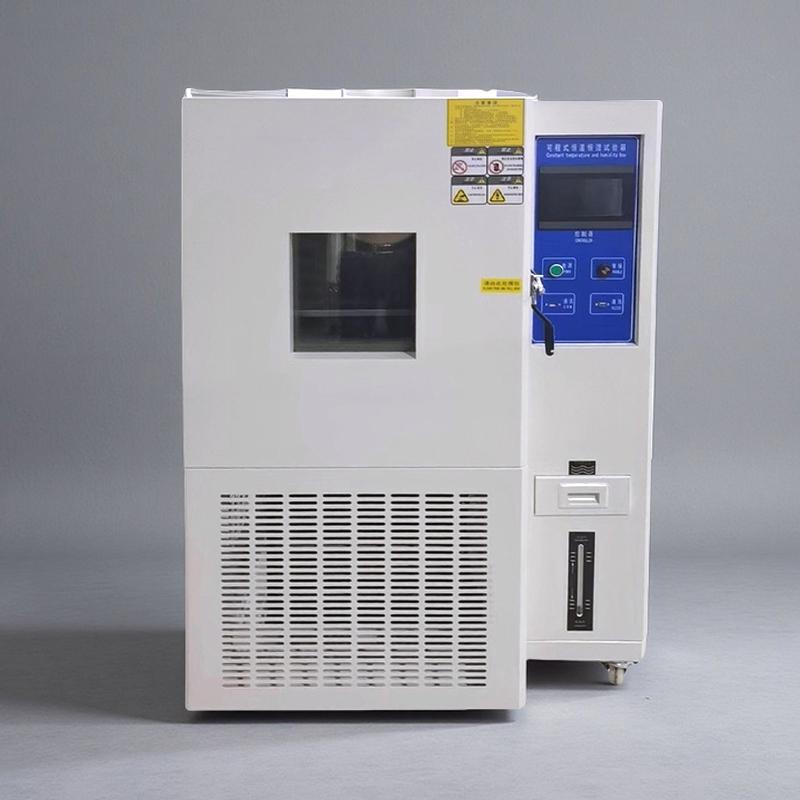
Environmental test equipment
According to the environmental factors simulated by the equipment, environmental test equipment can be roughly divided into climate and environmental test equipment (including biological environment test equipment), mechanical environmental test equipment, special environmental test equipment and climate mechanical comprehensive test equipment.
Types of environmental test equipment
There are many types of environmental testing equipment, and different types of equipment are used to simulate specific environmental conditions to meet the testing needs of various products.
High-low Temperature Test Chamber
It is mainly suitable for reliability tests of high-low temperatures of industrial products. It is widely used in electronic and electrical engineering, automobiles and motorcycles, aerospace, ships and weapons, colleges and universities, scientific research units and other fields, and can test the performance indicators of related product parts and materials under the condition of high temperature and low temperature (alternating) cycles.
Constant temperature and humidity Test Chamber
It is used to test the properties of materials in various environments, and can test the heat, cold, dry, and moisture resistance of various materials. It is especially suitable for investigating the moisture resistance of electronic products, components, parts and their materials under different temperature and humidity conditions, and can also be used as adaptability test equipment for storage, transportation and use in high-low temperature environments.
oven
This is a drying equipment that works by using electric heating to raise the temperature to achieve the drying effect. It is widely used in metal processing and food drying, especially in occasions where the drying speed is not required.
Salt spray Test Chamber
Also known as salt spray corrosion Test Chamber, it is mainly used to assess the salt spray corrosion ability of product materials and their protective layers, as well as to compare the process quality of similar protective layers, and also to assess the salt spray corrosion resistance of some products. It is commonly used for salt spray corrosion testing of parts, electronic components, metal materials and industrial products.
UV aging Test Chamber
Using fluorescent ultraviolet lamps as the light source, the materials are accelerated in the weathering resistance test by simulating the ultraviolet radiation and condensation phenomenon under natural sunlight, so as to obtain the weather resistance results of the materials. It can simulate environmental conditions such as ultraviolet rays, rain, high temperature, high humidity, condensation, and darkness in natural climates, and reproduce these conditions in combination.
Xenon lamp aging Test Chamber
Also known as the "Sunlight Radiation Protection Test Device", it uses xenon arc lamps that can simulate the full sunlight spectrum to reproduce destructive light waves in different environments, which can provide corresponding environmental simulation and accelerated tests for scientific research, product development and quality control. According to the different test standards and methods, it can be divided into air-cooled xenon lamps, water-cooled xenon lamps, and desktop xenon lamps, and their differences are mainly reflected in the temperature, humidity, accuracy, and time of the test.
Ozone aging Test Chamber
It is mainly used for the testing of rubber products, such as vulcanized rubber, thermoplastic rubber, cable insulation sheath and other products. Under static tensile deformation, the product is exposed to a closed Test Chamber with a constant ozone concentration and a constant temperature, and the specimen is tested at a predetermined time, and the ozone aging resistance of rubber is evaluated by observing the degree of cracking or other changes in the surface of the specimen.
High-low temperature humidity heat Test Chamber
It is suitable for aerospace products, information electronic instrumentation, materials, electricians, electronic products, various electronic components, etc., and can test its performance indicators in high, low temperature or humid and hot environments, and is widely used in industrial and mining enterprises, laboratories, scientific research units, etc. for high-low temperature environment testing and testing.
High-low temperature alternating damp heat Test Chamber
It is a necessary testing equipment in aviation, automobiles, home appliances, scientific research and other fields, used to test and determine the parameters and performance of electricians, electronics and other products and materials after the temperature environment changes of high temperature, low temperature, alternating humidity or constant tests.
In addition, there are specific types of environmental test equipment such as rain Test Chambers that simulate rain environments, which together constitute a rich and diverse environmental test equipment system, which are widely used in electronics, automobiles, aerospace, scientific research and many other fields, helping enterprises effectively evaluate the reliability and durability of products in the process of product development and quality control.
Selection and use requirements
When selecting environmental test equipment, it is crucial to fully understand the technical performance, size specifications and environmental test standards to be followed. For the selection of environmental laboratory equipment, special design is usually required and detailed design technical schemes are proposed. For products that can be tested in the Test Chamber, specific equipment selection work is required. In this process, it is necessary to understand the compilation method of commonly used environmental test equipment models, as well as the code of the climatic and environmental test equipment group and its meaning.
The climate environment equipment model is composed of the class code (Chinese pinyin initial) and the main parameters (temperature, volume, power): volume < 1m³ first mark 0, ≥ 1m³ according to the actual value; The temperature is measured in 10°C; Power is measured in 0.1kW.
Clearly mastering the compilation method of climate environment test equipment models will provide convenience for the selection of equipment in the actual use process, and help to quickly and accurately select equipment that meets the test needs.
summary
This paper focuses on the overview of environmental testing technology and development, first expounding the definition of environmental testing technology, the development process from before World War I to the continuous expansion of application fields, and its development into independent "environmental science". Then, the classification of environmental test equipment is introduced, and the functions and application scenarios of a variety of common equipment are listed in detail. Finally, the key elements of equipment selection and the method of compiling the model of climatic and environmental test equipment are described. The core knowledge of environmental testing technology and equipment is presented as a whole, providing a comprehensive reference for personnel in related fields to understand the field and rationally select equipment.
