In the field of industrial production and scientific research, environmental testing equipment is a core tool for evaluating the environmental resistance of products and materials. This article will focus on two types of commonly used equipment, namely damp heat test equipment and rust and grease damp heat test equipment, and introduce their uses, structures, usage methods and maintenance points in detail.
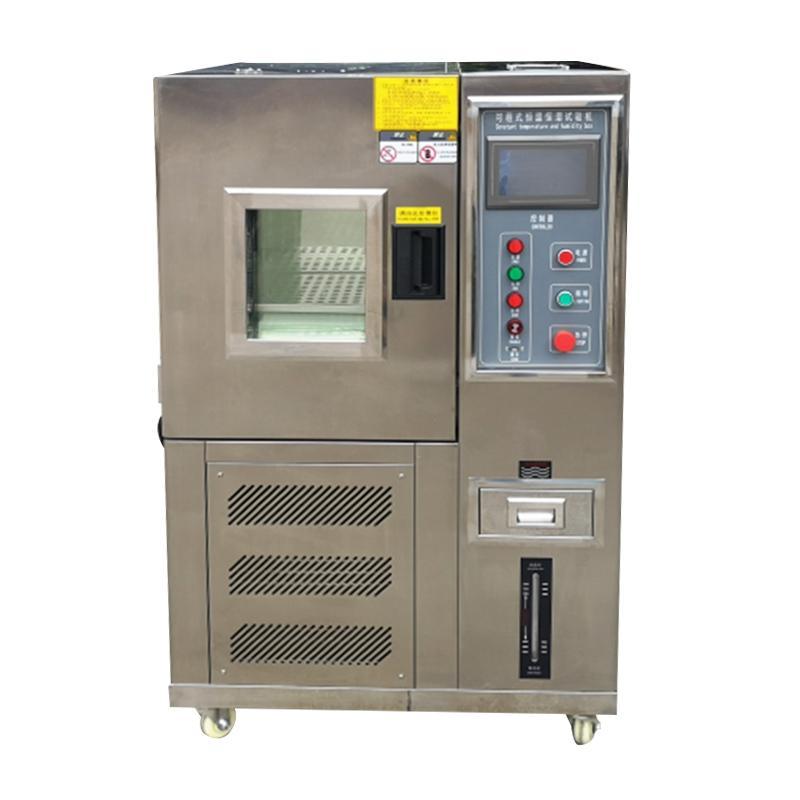
Damp heat test equipment
Uses and scope of use
The core of the damp heat test equipment is used to assess the performance stability of mechanical products, instruments, electrical and electronic products, components and materials in a constant temperature and high humidity environment, and to simulate the moisture influence caused by water vapor adsorption or absorption in actual use.
There are two main categories of equipment
It does not come with a cold source type - such as a constant temperature and Humidity Chamber, hot flash box, etc., with a narrow temperature and humidity range (multi-focus high temperature and high humidity scenarios), suitable for stability testing under a single environmental condition, and users can choose according to temperature and humidity accuracy and studio size.
With cold source type (low-temperature constant temperature and Humidity Chamber) - the temperature and humidity adjustment range is wider, and it can realize four types of tests: high temperature and high humidity, high temperature and low humidity, low temperature and high humidity, and low temperature and low humidity.
Structural principles
The mainstream constant temperature and Humidity Chamber consists of the main engine (including stainless steel workshop, air conditioning room, refrigeration unit) and electrical control cabinet:
The air conditioning room controls the temperature and humidity through evaporators, heaters, and humidifiers with airflow circulation, and the double-layer partition reduces the temperature difference;
The refrigeration unit is responsible for low temperature and dehumidification, and the auxiliary components are convenient for monitoring and testing;
The temperature (Rt) and humidity (Rf) sensors collect signals, compare the set values, and control the components to achieve constant temperature and humidity.
Technical indicators and usage methods
Technical indicators
It is necessary to comply with the national standard GB-5170.5-85 "Constant Humidity and Heat Test Equipment for Basic Parameter Verification Methods of Environmental Test Equipment for Electrical and Electronic Products", and different models have differences in temperature and humidity range (such as common temperature 20-80°C and humidity 40%-95% RH for types without cold source), control accuracy (temperature fluctuation ±0.5°C, humidity fluctuation ±3% RH), and chamber size (ranging from tens of liters to hundreds of liters), which need to be selected according to needs.
How to use:
Before the test, the specimen should be preheated and then gradually humidified to avoid condensation on the surface of the specimen affecting the test results.
When reading humidity, observe the intersection of the medium isotherm (horizontal direction) and the isohumidity line (upper density and lower sparse curve) of the direct reader, which is the relative humidity at the current dry bulb temperature. The red setting pointer is set when dehumidifying, the green setting pointer is adjusted when humidifying, and the zero calibration screw is used to calibrate the instrument.
During the low temperature and high humidity test, the dehumidifier can be used instead of the chiller to continue working, and the humidifier can maintain a high humidity environment with the heater to balance the temperature.
Common faults and maintenance
The equipment needs to be connected to a special power supply, with the red wire connected to the phase wire, the black wire connected to the middle wire, and the green/yellow wire grounded to avoid the risk of leakage;
Water storage bottles should be cleaned and filled with distilled water regularly, and tap water is prohibited (to prevent scale from blocking pipelines);
The cartridge humidity timing force is moderate to prevent the sensor probe from breaking;
Before closing the humidifier switch, it is necessary to confirm: the temperature is close to the set value, the water level of the Water Tank is normal, and the temperature of the Water Tank is slightly lower than the target temperature;
check the water volume of the water storage bottle every day to avoid water interruption and burning the tank; At the same time, check the working status of the water pump and rubber pipe to ensure that the nozzle is not blocked.
Anti-rust grease damp heat test equipment
Uses and scope of use
This equipment is specially designed to test the protective performance of anti-rust grease, and accelerates the evaluation of whether the protective film formed by anti-rust grease on the metal surface can effectively resist corrosion by simulating high humidity and high temperature environments, and is suitable for quality testing of lubricating oils, rust inhibitors and other products.
Structural principles
The equipment is an upper and lower box structure.
Core composition
Working room - welded with nickel-plated copper plate, corrosion-resistant and easy to clean, with a specimen rotating frame (uniform contact test environment), foaming device (generating a high-humidity atmosphere), oil pan (collecting dripping grease), and electric heating pipe (auxiliary heating); The front wall has an observation window to facilitate the observation of the specimen status.
Electronic control and air circuit system - the left side of the upper box is equipped with an operation panel, integrated temperature control, alarm and other buttons; The compressed air output by the Air Compressor is filtered out by the gas rotor flow meter (control flow rate 0.8m³/h) and sprayed out by the nozzle in the 200mm water layer at the bottom of the box, forming a high-humidity environment after foaming.
Temperature control system - using adjustable electrical contact mercury thermometer + electronic relay temperature control, with over-temperature alarm protection; The main heating power is divided into four levels (to reduce temperature inertia), and it is also equipped with auxiliary heating (to shorten the heating time when the ambient temperature is low).
How to use:
Before the first use, the glass rotor flow meter (to ensure accurate flow) and pressure reducing valve (to stabilize air pressure) need to be calibrated;
After connecting the power supply, the voltmeter on the operation panel should display 380V, close the power supply and alarm switch, and automatically stop after the alarm bell rings for 30 seconds (normal self-test);
Press the start button, the Air Compressor works, automatically stop when the pressure reaches 6×10⁵Pa, at this time, slowly unscrew the flow meter valve to stabilize the flow rate at 0.8m³/h;
Heating stage: first raise the working room temperature to the target temperature + 0.5°C, adjust the electrical contact mercury thermometer to trigger the over-temperature alarm (verify the protection function), and then fix the magnet; When the temperature reaches 42-45°C, fine-tune the thermometer to make the temperature rise smoothly to 49±1°C; Auxiliary heating is only automatically put in when the temperature is raised for the first time, and it is cut off after the temperature reaches the standard, and the auxiliary heating button needs to be manually pressed for secondary adjustment.
Common faults and maintenance
The equipment should be installed on a dry and level indoor floor at 5-35°C to avoid environmental impact on test accuracy.
It is forbidden to disassemble the box parts or modify the circuit to prevent equipment failure;
During long-term testing, the deionized water (or distilled water) of the humidification tank should be continuously replenished, and the water cut-off alarm device should be normal.
Regularly check the water level of the humidification tank, the working status of the ventilator, water pump, and chiller, and deal with abnormalities in a timely manner.
Before starting the machine, it is necessary to check the integrity of the temperature control element, add distilled water to the water cup of the wet bulb temperature sensing element and tie the yarn belt, and confirm that all switches are in the "off" position and the circuit is not short-circuited;
If there is an alarm of "overtemperature in the room", it is necessary to stop the machine to check the solenoid valve and temperature control components of the chiller; When the "Water Tank is short of water" alarm, the water level control line can be checked without stopping for a short time.
summary
Although the damp heat test equipment and the anti-rust grease damp heat test equipment have different application scenarios (the former focuses on the humidity and heat resistance of various types of products, and the latter focuses on the protection effect of rust and grease), they both focus on precise environmental control as the core to provide reliable data support for product quality testing and research and development. In practical applications, it is necessary to select adaptive equipment according to testing needs, strictly follow the use process, and pay attention to daily maintenance (such as regularly checking circuits, replenishing distilled water, calibrating temperature control components, etc.) - this is not only the key to ensuring the accuracy of test results, but also an important measure to extend the service life of equipment and reduce the risk of failure, and ultimately help enterprises and scientific research institutions improve product reliability and meet the requirements of industry quality standards.
