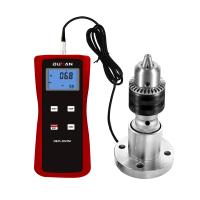
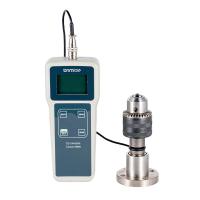
In mechanical engineering, torque is a critical parameter for evaluating the performance of rotating machinery, from miniature bearings to large marine engines. As a special measuring equipment, the principle, type, selection and calibration of the torque meter directly affect the accuracy of the measurement results.

1. Torque and torque measurement principle
Definition and classification
The calculation formula is M=FL (F is the force, L is the force even arm), counterclockwise is positive, clockwise is negative, and the total torque is the sum of the algebras of each torque. According to the function, the driving torque (generated by the power machinery) and the braking torque (generated by the working machine and the brake) are divided; According to numerical stability, static torque (numerical stability) and dynamic torque (fluctuating over time, such as torsional vibration) are divided. In the International System of Units, the unit of torque is Newton-meter (N·m), and the torque range in different scenarios varies greatly, with a difference of up to 13 orders of magnitude.
Three major measurement principles
1. Torsion shaft transmission method - using the elastic torsion shaft to transmit the physical change of torque, such as the torsion angle causing changes in inductance, resistance and other parameters, stress causing changes in magnetic resistance and birefringence, strain changing the resistance of the strain gauge, and then converting these changes into electrical signals to transmit to the instrument.
2. Reverse force balance method - measure the balance torque of the uniform speed body to determine the spindle torque, to ensure that the friction torque of the test device is small, only need to measure the balance force F and the arm L, no need to process signal transmission.
3. Energy conversion method - based on energy conservation, the torque is indirectly calculated through the conversion parameters (such as motor voltage, current) and rotation speed between the mechanical energy of the power machine and other energy, and the accuracy is affected by the energy conversion efficiency.
2. Types and characteristics of torque meters
According to the measurement principle, torque meters are divided into three categories:
1. Torque transmission - with the torsion shaft as an elastic element, monitoring its torsion angle, stress and other changes, small and light, can be stringed into the transmission system, widely used, but the contact type has large friction, short life, large error, and the non-contact type has high requirements for installation and environment.
2. Reverse force balance - including electricity, hydropower, eddy current dynamometer, etc., through the measurement of balance torque, the structure is large, the price is high, the inertia is large, the dynamic is poor, and the dynamic torque cannot be measured, but it can be used as a loading device, without additional loading machinery, suitable for large-scale power machinery laboratory testing.
3. Energy conversion - use energy conversion to indirectly measure torque, no need to touch rotating parts, easy installation, resistant to harsh environments, widely used in motors and hydraulic machinery, but the accuracy depends on energy conversion efficiency, suitable for medium accuracy and fast measurement scenarios.
3. Selection and scope of use of torque meter
Core performance metrics and selection
Torque range: It is necessary to match the mechanical torque to be measured, and try to make the measured torque within the range of 30%~100%, divided into four categories of micro, small, medium and large torque, each of which is subdivided according to a specific series.
Working speed range: considering the highest, lowest and zero speed, different types of torque meters have different speed limits, and high speeds require special lubrication.
Resolution: The sensitivity is about 1/10 of the accuracy level, and it is selected according to the measurement accuracy requirements.
Average and dynamic characteristics: Measure pulsating torque with good average characteristics, measure dynamic torque with good dynamic characteristics such as transmission, and balance class cannot measure dynamic torque.
Long-term stability and environmental adaptability: The long-term stability of the transmission class is poor and requires regular maintenance; The equipment needs to adapt to the environment such as -40~+100°C temperature and vibration acceleration ±100g, and has the ability to resist interference and corrosion.
Measuring test system
Passing class
The sensor is installed in an open or closed test system to ensure that the three axes are concentric, and the small torsion shaft can be directly entered into the transmission system, and the attached sensor is used for large parts of deformation.
Reaction balance class
Docking with the machine under test, the brake or engine is equipped with a balance bracket to ensure that the shaft is concentric, the structure is huge, and the machine under test needs to be disassembled and installed, which is suitable for laboratory testing.
4. Calibration and calibration of torque meter
Two calibration methods
Absolute calibration method - direct calibration with standard torque devices (such as torque correctors), high requirements for the accuracy of force arms and weights, high calibration accuracy, suitable for the initial calibration or measurement verification of high-precision torque meters.
Relative calibration method - connect the standard torque meter with the standard instrument, bear the same torque, use the standard instrument reading as the benchmark calculation error, eliminate the influence of gravitational acceleration, easy to operate, suitable for on-site calibration or batch rapid calibration.
calibration procedure
1. Preparation: Select the calibration method and system, check the instrument, install the marked instrument, and ensure that the environment meets the standard.
2. Operation: Loading is divided into 10 levels, graded according to the full scale and other intervals, loading and unloading cycles 3 times, reading after stabilization, checking relevant errors, calculating accuracy levels, and issuing reports. summary
5. Summary
As the core equipment of torque measurement, the principle, type, selection and calibration link of the torque meter are interlocked, which directly determines the reliability of the measurement results. From the measurement principle based on torsion shaft transmission, reaction force balance and energy transformation, to the differentiated characteristics of the three types of torque meters, to the selection logic of indicators such as range, speed, and dynamic characteristics, as well as the strict calibration process, each step needs to be accurately controlled in combination with actual application scenarios. In the fields of industrial production, scientific research and experiments, only by deeply understanding its core knowledge can we choose and make good use of the torque meter to provide reliable data support for the performance evaluation of rotating machinery.