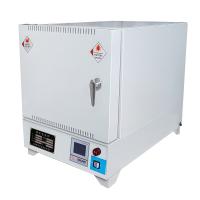
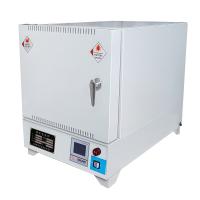
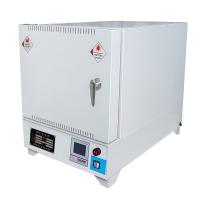
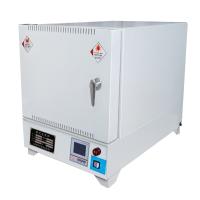
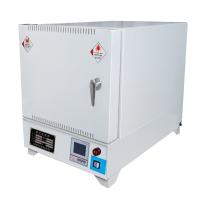
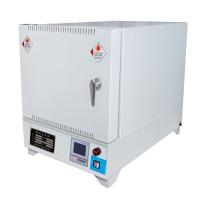
Ash muffle furnace is a high-temperature heating equipment dedicated to laboratories, and its core purpose is to determine the ash content of samples. The organic matter in the sample is burned and decomposed and escaped through the high-temperature environment, and the residual inorganic matter is ash, which is widely used in laboratory scenarios such as material testing, chemical analysis, and quality inspection.

type
According to the core parameters and structural differences, ash muffle furnaces are mainly divided into three categories
According to the heating method, it can be divided into resistance wire heating type (room temperature -1200°C, suitable for conventional testing) and silicon-molybdenum rod heating type (fast heating up to 1600°C, suitable for high melting point samples)
According to the temperature control accuracy, it can be divided into ordinary temperature control type (±5°C) and intelligent high-precision type (±1°C, suitable for quality inspection and scientific research)
According to the material of the furnace, it can be divided into refractory brick hearth type (durable, suitable for industrial batch testing) and ceramic fiber hearth type (light and energy-saving, suitable for laboratory small-batch testing).
Test principle
The ash muffle furnace works based on the high-temperature oxidative decomposition method: the pretreated sample is put into the crucible and placed in the furnace chamber, the burning temperature is set at 550-900 °C according to the standard, and the organic matter is burned out through the air, and the inorganic matter remains in the crucible. After cooling, weigh the residue mass and calculate the ratio between it and the original mass of the sample to obtain the ash content. The equipment maintains temperature stability through the temperature control system to ensure accurate detection results.
Fields of application
Ash muffle furnaces play a key role in many fields: the chemical industry is used for ash detection of polymer materials such as plastics and rubber to verify purity and formulation stability; The quality inspection industry meets the testing requirements of food and other national standards to ensure product safety; The coal industry is used to analyze coal and coke ash and evaluate fuel quality; The building materials industry detects the ash content of cement, ceramics and other raw materials to control production quality.
Common faults and solutions
If the heating does not reach the set temperature, it is mostly due to the heating wire breakage, the temperature control parameter is offset or the thermocouple contact is poor, and the heating wire needs to be replaced, the calibration parameters or the thermocouple is fixed
The cracking of the furnace is mostly due to the rapid temperature rise and fall or the aging of the material, so the stepped temperature rise and fall or replace the furnace chamber
The deviation of temperature control accuracy may be due to the aging of the thermocouple or the tight sealing of the furnace, and the thermocouple needs to be replaced or the seal strip should be repaired
Frequent equipment tripping is mostly due to circuit overload or short circuit of heating elements, and it is necessary to check the power supply line or replace the faulty element.
How to choose
The selection should be combined with testing needs, standard requirements and usage scenarios, focusing on five aspects: the temperature range matches the sample burning needs; The temperature control accuracy is selected according to the requirements of detection accuracy; furnace size adaptation to inspection batches; The furnace material is selected according to durability or energy saving needs; Priority is given to models with safety functions such as over-temperature alarm and couple break protection to ensure operational safety.
summary
Ash muffle furnace is the core equipment of ash detection, relying on the principle of high-temperature oxidation and decomposition, widely used in chemical industry, quality inspection and other fields. It has a variety of types and can be adapted to different usage scenarios, and it is necessary to master common troubleshooting methods during use. When selecting, focusing on core dimensions such as temperature and temperature control accuracy, combined with actual needs, can we ensure the accuracy and efficiency of testing work and provide strong support for scientific research and production quality control.