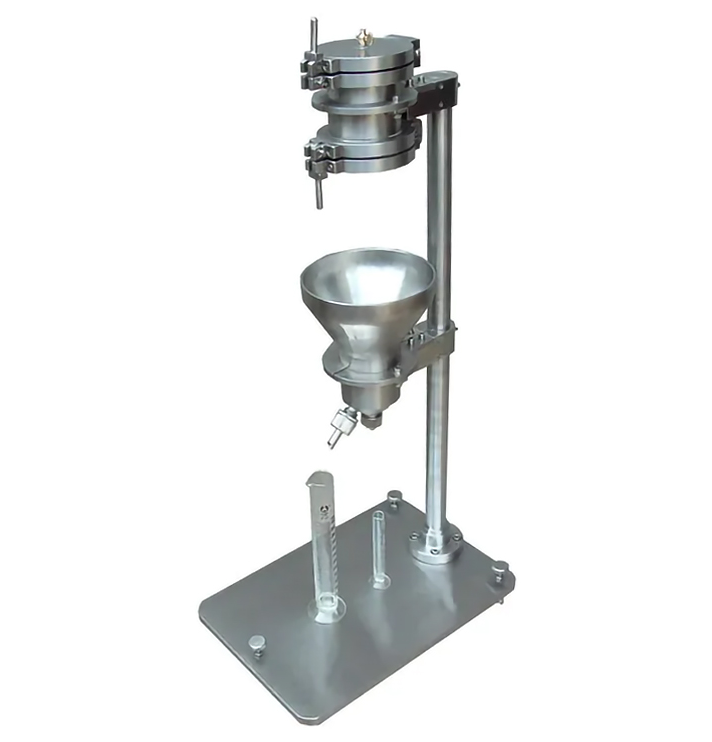
The freeness meter is a laboratory-specific analytical instrument for measuring the freeness and water filtration performance of pulp suspension fibers, and the freeness value obtained through the test can directly reflect the pulp pulping degree, which is the key equipment for the paper industry to evaluate the quality of pulp and optimize the production process.
type
1. Score according to the test standard
The first is the Canadian standard ionometer (CSF), which follows mainstream standards such as TAPPI T227 and ISO 5267, and is suitable for the detection of the vast majority of plant fiber pulp, which is the most widely used type in the global paper industry, and the test results are measured in mL. The second is the Schaubel-Rigler ionometer, which meets European standards such as DIN 54358, and the screen plate specifications and test parameters are different from CSF, which are mainly used in relevant enterprises and scientific research institutions in Europe.
2. By degree of automation
The manual type of ionometer has a simple structure, requires manual operation of the whole process, and has low cost, suitable for small paper mill quality inspection rooms or teaching laboratories. The automatic freedance meter integrates automatic sample injection, temperature control, data recording and other functions, which can reduce human error and have high testing efficiency, which is suitable for batch testing scenarios of large paper enterprises and quality inspection centers.
Test principle
The core test principle of the ionometer is the water filtration method, taking the most widely used Canadian standard freemance meter (CSF) as an example: first prepare a quantitative and fixed-concentration pulp suspension, and place it in a constant temperature environment of 23°C±1°C to ensure the stability of the fiber dispersion; Then pour the suspension into the test cylinder equipped with a standard sieve plate at the bottom, open the drain valve, under the action of gravity, the water in the pulp flows out through the sieve plate, and the fibers are intercepted to form a filter layer. Finally, the drainage volume in a specific time is recorded, which is the freeness value of the pulp.
The freeness value is positively correlated with the pulp water filtration speed, the longer the fiber, the lower the pulping degree, the smaller the water filtration resistance, and the higher the freeness value. On the contrary, the finer the fiber and the higher the beating, the lower the freeness value.
Fields of application
Ionization meter is mainly used in the paper industry and related fiber material research fields: in the pulp production link, it can monitor the effect of the pulping process, adjust the process parameters by measuring the change of pulp freeness before and after pulping, and ensure the quality of the pulp; In the process of papermaking process optimization, it can guide the adjustment of pulp formula, match the production needs of different paper varieties, and improve the quality of paper molding. In the raw material quality inspection and acceptance process, the freeness of the pulp of the incoming commodity can be detected to determine whether the raw materials meet the production standards; In addition, it can also be used in the laboratories of universities and scientific research institutes to study the free characteristics of different fiber raw materials and help the development of new environmentally friendly pulp materials.
Common faults and solutions
The screen plate is clogged and the drainage speed slows down
The reasons are mostly pulp fiber residues and impurities adhering to the pores of the screen plate. When solving, you can use a special nylon brush to gently brush the sieve plate, and regularly remove the sieve plate and put it in the ultrasonic cleaner for 10-15 minutes to clean, while avoiding testing pulp with high impurity content without pretreatment.
Large fluctuations in readings and poor repeatability
Mainly due to uneven pulp sampling, large temperature fluctuations in the test environment or unbalanced placement of instruments. When solving, the pulp suspension should be fully stirred before the test to ensure that the fibers are evenly dispersed; Maintain a constant temperature in the laboratory and test the pulp suspension after the constant temperature; Adjust the horizontal foot of the instrument in time to ensure that the test tube is vertical.
The level gauge shows an abnormality
Most of them are caused by level sensor contamination or poor line contact. When solving, wipe the sensor probe with anhydrous ethanol, check and replug the fixed sensor connection cable, if the problem is still not solved, you can contact the manufacturer to calibrate the level gauge.
Leaking drain outlet
It is usually caused by the aging of the drain valve gasket or the bending of the drainage pipe. Replace aging gaskets when resolved, straighten out drain pipes to avoid bending or blockage, and check whether valve switches are in place before testing.
How to choose
First, to match the test standards, the Canadian standard ionometer (CSF) is preferred for domestic and international trade scenarios, and the Schauber-Rigler type can be selected for related businesses in the European market;
second, to clarify the automation requirements, large enterprises and batch testing scenarios choose automatic types, small factories and teaching laboratories choose manual types are more cost-effective;
The third is to pay attention to accuracy and data function, scientific research level testing needs to choose instruments with high-precision sensors, support automatic data recording and export, and basic accuracy models can be selected for conventional quality inspection;
Fourth, confirm compatibility, if you need to test waste pulp, grass pulp and other pulp with high impurity content, give priority to the model that is not easy to clog and easy to clean;
Fifth, consider after-sales and maintenance, give priority to brands with easy procurement of accessories and after-sales guarantee services to reduce long-term use costs.
summary
As the core instrument of pulp performance testing in the paper industry, the type of ionometer can be flexibly selected according to testing standards and automation needs, and is suitable for different scenarios from teaching and scientific research to large-scale production. Based on the testing principle of water filtration method, it intuitively reflects the water filtration performance and pulping degree of pulp through the freeness value, providing key data support for pulp production process adjustment, raw material quality inspection and research and development of new fiber materials. In practical applications, do a good job in the prevention and treatment of faults such as screen plate cleaning and environmental temperature control, and at the same time combine industry standards and scientific selection of usage scenarios, which can effectively ensure the accuracy and stability of test results, and ultimately help papermaking enterprises improve product quality, optimize production processes, and promote technological upgrading and sustainable development of the industry. 、
