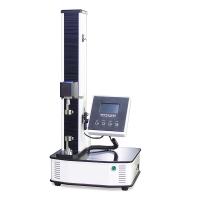
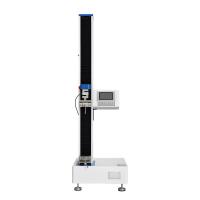
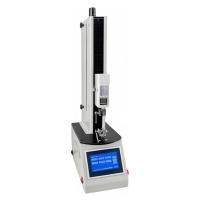
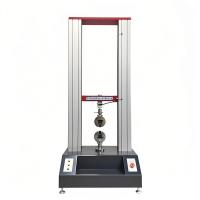
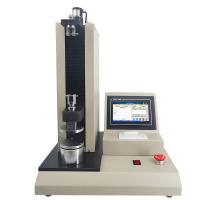
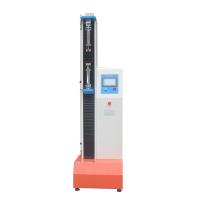
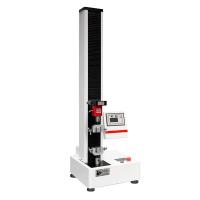
The selection of tensile testing machine directly determines the accuracy, efficiency and applicability of material mechanical property testing, and blind selection can easily lead to test data deviation, equipment idle or excessive investment. The core logic of the selection is to accurately match the equipment parameters around the sample characteristics and testing needs, among which the sample material, test range, and accuracy standards are the three core dimensions. Based on practical experience in the industry, this paper dismantles the selection principles of each dimension to help enterprises and inspectors avoid selection misunderstandings.
Adapt to sample materials, match core structures and fixtures
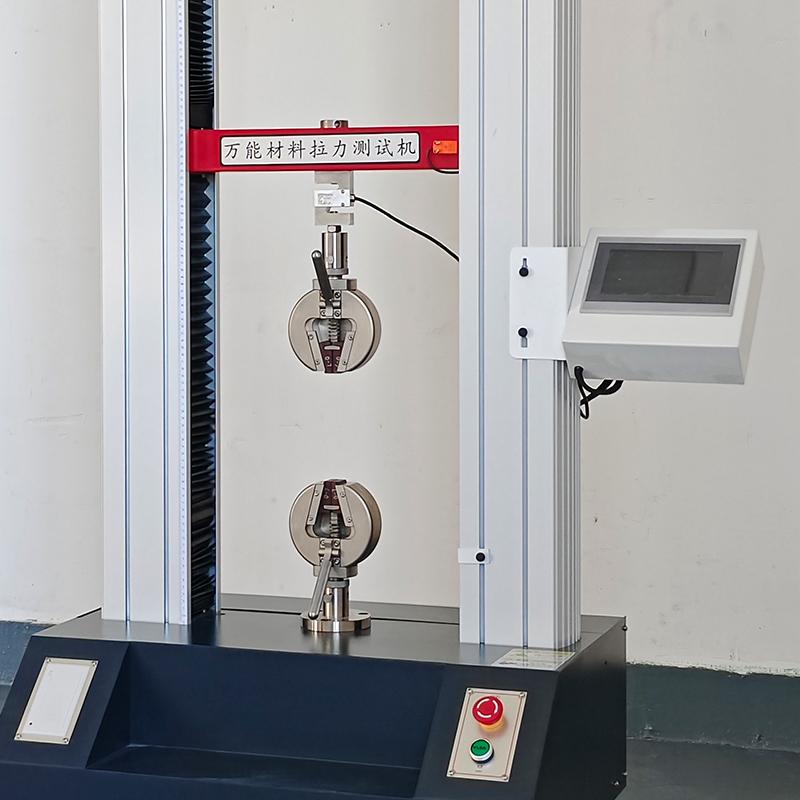
The physical characteristics of the sample material determine the structural type, fixture and drive mode of the testing machine, which is the primary prerequisite for selection. Metal materials have high strength and toughness, and often require high-force testing, so the double-column frame + hydraulic drive system is preferred, with wedge clamps or hydraulic clamps, to ensure that the specimen is firmly clamped and the force is uniform, and avoid slipping or local damage during the test.
Flexible materials such as plastics and rubber are prone to large deformation during testing, so it is necessary to choose a model driven by a servo motor, which has a wide range of speed regulation and sensitive response, and can adapt to different deformation rate requirements; The fixture should be equipped with a flat plate fixture or a pneumatic fixture, with an anti-slip liner to prevent damage to the surface of the specimen during clamping, and at the same time ensure the stability of the force during the deformation process. Textile and film materials have thin and low strength, so it is advisable to use a single-column small force tester, with a special film fixture, to accurately capture the mechanical response under small loads.
Accurately calculate the range and reserve reasonable redundancy space
The range selection should be based on the estimated maximum force of the sample, taking into account safety and test accuracy, and avoiding the impact of too large or too small a range on data reliability. First, it is necessary to estimate the maximum tensile force when the sample breaks through preliminary tests or industry standards, and on this basis, reserve 20%-30% of the redundant range, which not only prevents overload damage to the equipment sensor, but also avoids the insufficient test accuracy of small force samples on large-range equipment.
For example, if you test a plastic specimen with a maximum force of about 5kN, you can choose a 10kN range model to meet the needs. If the maximum force of metal materials is estimated to be 100kN, a hydraulic testing machine with a range of 150kN should be selected. It should be noted that if the same laboratory needs to test samples of multiple materials and different force ranges, it can give priority to multi-range switching models to improve equipment versatility and reduce procurement costs.
Anchor precision requirements to match core component grades
Accuracy is the core guarantee of testing data, and it is necessary to match the force value accuracy, displacement accuracy and deformation measurement accuracy according to industry standards and test purposes. The accuracy of the force value is directly determined by the force sensor, and the 0.5 level accuracy sensor can be selected for conventional industrial inspection to meet the needs. For scientific research testing or high-precision material testing, high-precision sensors of 0.3 and above are required.
The displacement accuracy mainly depends on the drive system and control system, and the displacement accuracy of servo motor drive models is usually better than that of hydraulic drive models, which can meet most precision testing needs. For tests that need to calculate elastic modulus and yield strain, it must be equipped with an extensometer, and a level 1 precision extensometer is used for conventional tests and a 0.5 level extensometer is used for high-precision scenarios to ensure the accuracy of deformation measurement. At the same time, it is necessary to confirm the sampling frequency of the equipment control system, and high-frequency sampling can capture the instantaneous changes of the specimen under force deformation to improve data integrity.
summary
The selection of tensile testing machine needs to be based on "material adaptation, range matching as the core, and accuracy as the key", and the three can be considered in order to achieve the accurate fit between equipment performance and testing needs. Before selection, it is necessary to fully sort out the characteristics of the sample, clarify the test standards and accuracy requirements, and avoid blindly pursuing high-parameter or low-priced equipment. Reasonable selection can not only ensure the reliability of testing data, but also extend the service life of equipment, improve testing efficiency, and provide strong support for product quality control and research and development.