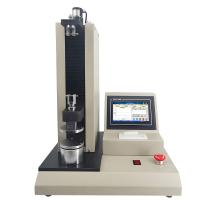
The stress-strain curve is a visual characterization of the stress-strain relationship between a material under unidirectional tensile load, and is the core basis for interpreting the mechanical properties of a material. By analyzing the shape, characteristic points and change laws of curves, the key properties such as strength, stiffness, plasticity, and toughness of materials can be quickly judged, providing an important reference for material selection, structural design and quality inspection. Starting from the basic composition of the curve, this paper disassembles the characteristics and corresponding performance indicators of each stage to help accurately interpret the material properties contained in the curve.
1. The basic composition and stage division of stress-strain curve
The typical stress-strain curve of metal materials can be divided into four core stages, each stage corresponds to different stress deformation states of the material, and the curve morphology is significantly different. The first stage is the elastic stage, the curve grows linearly, at this time the deformation of the material under force is elastic deformation, which can be completely restored to its original state after unloading, without residual deformation, and the slope of this stage is the elastic modulus.
When the stress reaches the yield point, the curve enters the yield stage, and some materials will appear a "yield platform", that is, the stress is basically unchanged but the strain continues to increase. Then the curve enters the strengthening stage, due to plastic deformation, the internal grains of the material are refined, dislocated and proliferated, and the stress needs to be increased to continue to produce deformation, and the curve shows an upward trend until the maximum stress value is reached. Finally, in the stage of necking and fracture, after the stress reaches the peak, the specimen is locally necked and thinned, the bearing capacity decreases, the curve gradually decreases, and finally the specimen breaks, completing the whole stress process.
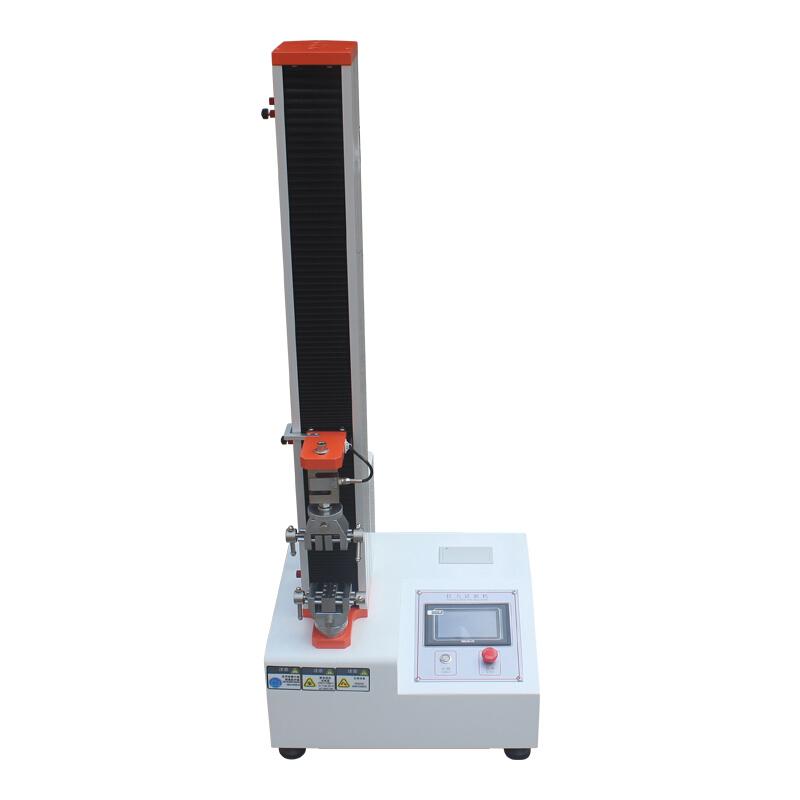
2. Interpretation of key feature points and corresponding performance indicators of the curve
(1) The core index of the elastic stage: elastic modulus
The elastic modulus is the slope of the elastic stage curve, calculated as E=σ/ε (σ is stress, ε is strain), which characterizes the ability of the material to resist elastic deformation. For example, steel has a much higher modulus of elasticity than plastic, making it more suitable for structural parts that can withstand loads and require strict deformation. The elastic modulus is an inherent property of the material, which is not affected by the size of the specimen and the test conditions, and is an important stiffness index for material selection.
(2) Core indicators of the yield stage: yield strength
Yield strength is the critical stress when a material begins to produce plastic deformation, and is a key index to judge the bearing capacity of a material. For materials with obvious yield platforms (such as mild steel), the stress corresponding to the yield platform is the yield strength; For materials without obvious yield platforms (e.g., aluminum alloys, plastics), the non-proportional elongation strength (Rp0.2) is commonly replaced, that is, the stress when the specimen generates 0.2% plastic deformation. The yield strength determines the maximum working stress that the material can withstand in practical applications, avoiding the failure of the structure due to plastic deformation.
(3) Core indicators of strengthening and fracture stage
The maximum stress value in the strengthening stage is the tensile strength, which is the maximum stress that the material can withstand before breaking, reflecting the ultimate bearing capacity of the material. It should be noted that the tensile strength is not the upper limit of the actual working stress of the material, and in most scenarios, the yield strength should be used as the design load to avoid the material entering the plastic deformation stage.
The plastic indexes corresponding to the fracture stage are mainly elongation and cross-sectional shrinkage. The elongation after fracture is calculated by the ratio of the elongation of the gauge after fracture to the original gauge, and the shrinkage rate of the section is calculated by the ratio of the reduction of the cross-sectional area to the original area.
3. Analysis of differences in stress-strain curves of different materials
The stress-strain curves of different types of materials vary greatly, reflecting significant differences in properties. The curve of the metal material is complete, the elastic stage is obvious, the yield platform is clear, and the plasticity and strength are balanced. The curve of ceramic materials has no yield stage, and the elastic stage is directly broken, with extremely poor plasticity but high elastic modulus and high hardness. Plastic materials have a short elastic stage, are prone to large plastic deformation after yield, and some materials do not have a significant strengthening stage, with low tensile strength but good toughness.
Understanding these differences can quickly judge the material type through the curve: if the curve has no yield platform and the strain before fracture is very small, it is likely to be a brittle material (such as ceramic); If the curve has a large strain after yield and there is no obvious necking, it is mostly plastic materials (such as plastic and copper).
4. Precautions for interpreting the curve
When interpreting the stress-strain curve, it is necessary to combine the test conditions (such as test speed and ambient temperature), and the curve shape may change under different conditions, resulting in the deviation of the performance index. For example, the high temperature environment will reduce the elastic modulus of the material, reduce the yield strength, and shorten the curve yield platform. High-speed stretching will make the plasticity of the material deteriorate and the fracture strain will be reduced. At the same time, it is necessary to ensure that the sample preparation meets the standards to avoid abnormal feature points in the curve caused by sample defects, which will affect the judgment of the index.
summary
The stress-strain curve is a "visual instruction" of the mechanical properties of a material, and its morphology and characteristic points at each stage directly correspond to the core indicators such as stiffness, strength, and plasticity of the material. Master the method of curve stage division and index interpretation, combined with material types and test conditions, and accurately extract material performance information, providing a scientific basis for engineering application, product development and quality control. Whether you are a novice or an experienced inspector, proficiency in interpreting stress-strain curves is the key to improving your ability to analyze the mechanical properties of materials.