ASTM E8/E8M is the core standard for room temperature tensile testing of metal materials formulated by the American Society for Testing and Materials, which is used to determine key mechanical property parameters such as yield strength, tensile strength, and elongation, and the results are an important basis for material selection, product design, and quality control in aerospace, automotive, construction, and other fields.
Standard core differences
ASTM E8 and E8M are exactly the same as the technical requirements, except that the unit of measurement and the gauge of the round specimen are different. E8 is in inch-pound units, and the gauge of the round specimen is 4 times the diameter (4d); The E8M is SI with a gauge of 5 times the diameter (5d). The test should follow the principle of unit independence, prohibit mixed calculations, the test environment is limited to 10°C-38°C, and environmental parameters need to be marked under special working conditions.

Sample preparation requirements
The specimen is divided into round specimens and flat specimens, which need to match the material morphology of rods, plates, wires, etc., and the dimensions meet the standard tolerance. The work hardening layer should be removed on the surface to avoid interfering with the intrinsic properties of the material during the processing process. After preparation, the cross-sectional size and gauge length should be accurately measured, and powder metallurgy materials can be exempted from gauge requirements, but the pressing density should be consistent with the projection area.
Test equipment specifications
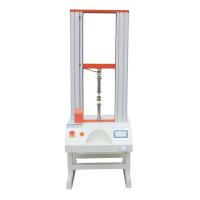
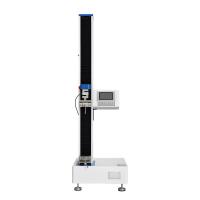
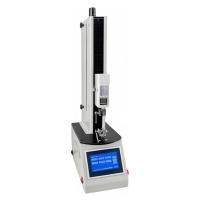
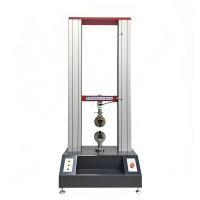
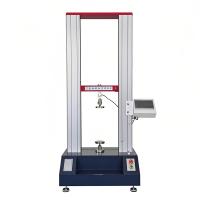
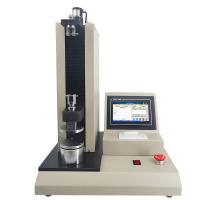
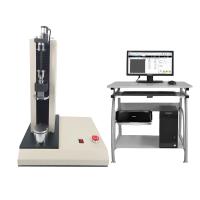
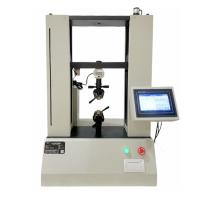
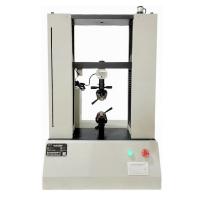
The core equipment includes universal testing machine, extensometer, special fixture and data acquisition system. The load capacity of the testing machine should match the tensile strength of the specimen, and the wedge clamp should be given priority to ensure that there is no slippage in the clamping. In the small deformation stage, the strain should be measured with a contact extensometer, and the extensometer should be removed before the specimen breaks. The test software needs to record force-displacement data in real time and generate stress-strain curves.
Experimental execution process
It is recommended to use closed-loop strain rate control (Method B) to keep the strain rate at 0.015±0.006 mm/mm/min to ensure the repeatability of the results. Stress rate control (Method A) and beam speed control (Method C) are suitable for specific scenarios and require pre-calibration of equipment stiffness. After the specimen yields, the loading rate can be increased until it breaks, and the data is recorded completely.
Key points of the results analysis
The parameters are calculated based on the stress-strain curve: the yield strength is taken as the stress value corresponding to the plastic elongation of 0.2%, the tensile strength is the ratio of the maximum load to the initial cross-sectional area, and the elongation and section reduction rate reflect the ductility of the material. The test report should include specimen information, equipment parameters, loading method and test data, and abnormal results should be checked for specimen defects, equipment calibration deviations and other factors.
summary
The ASTM E8/E8M standard provides systematic and standardized full-process guidance for metal tensile testing, with the core value of achieving comparability of test results across laboratories. In practical application, it is necessary to strictly follow the standard requirements to control the specimen preparation, equipment accuracy and test process, and at the same time combine the special product standards to supplement the test conditions, in order to provide reliable mechanical property data support for material qualification judgment and process optimization.