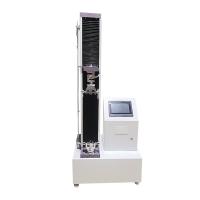
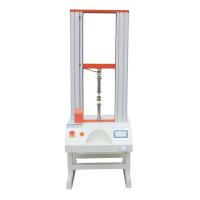
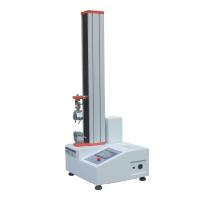
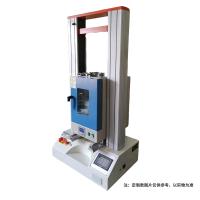
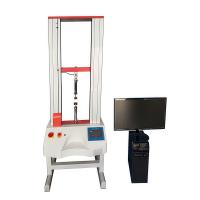
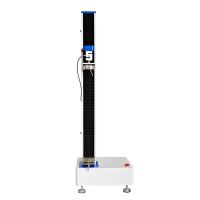
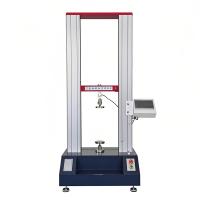
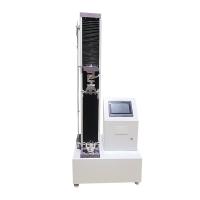
The tensile testing machine is the core equipment for material mechanical property testing, electronic and hydraulic are the two mainstream types, the two are significantly different in driving principle and performance characteristics, and are suitable for different test scenarios and needs. Scientific selection is the key to ensuring the accuracy of test data and improving test efficiency, and the following is an analysis from two aspects: core performance differences and core selection basis to provide professional reference for equipment selection.
The core driving principle and performance characteristics are different.
The electronic testing machine uses the servo motor as the power source, and the rotational motion is converted into linear loading through the ball screw, and the transmission structure is clean and compact. The force value covers 0.1N~300kN, the accuracy can reach 0.5 levels, the displacement and speed control are flexible, the speed regulation range is wide, the operating noise is low and there is no oil pollution, and the daily lubrication of the lead screw is low. The hydraulic testing machine relies on the hydraulic pump station and cylinder drive to transmit the load through hydraulic oil, and the core advantage is large load output, and the test force of a single machine can reach thousands of kN, which is suitable for large tonnage testing. Strong loading stability, suitable for long-term load preservation, large deformation test, accuracy is mostly level 1, hydraulic oil needs to be changed regularly, oil circuit is tested, maintenance and energy consumption costs are higher, and there is a possibility of oil leakage.
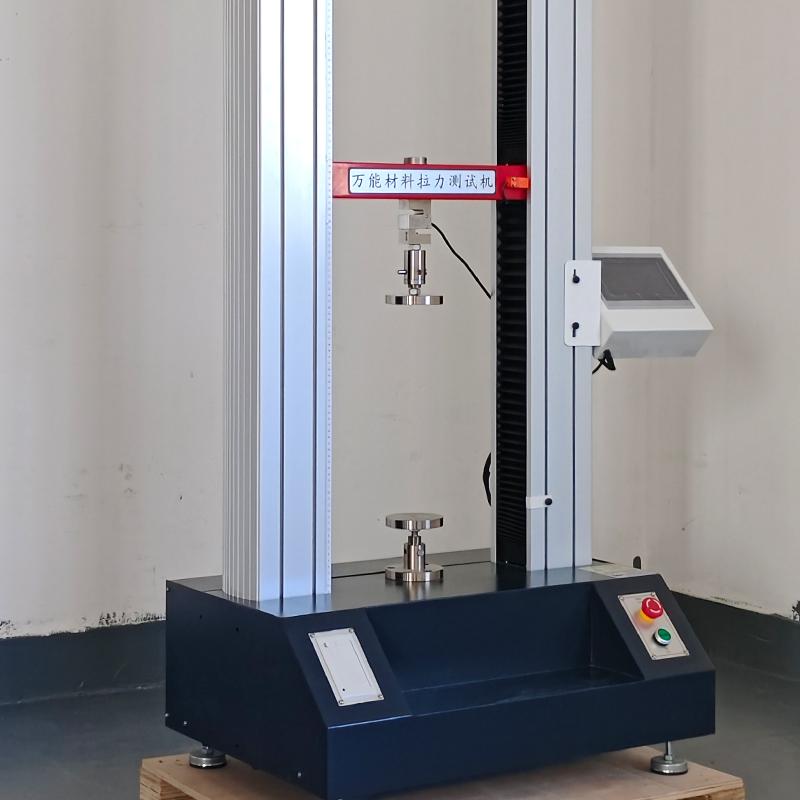
Select according to the test material and load requirements.
When testing medium and low load precision materials such as films, fibers, plastics, and medical devices, electronic testing machines are preferred, which can accurately capture key mechanical properties such as material yield and fracture and meet precision testing standards. To test high-strength, large-load materials such as steel, concrete, and large structural parts, or to carry out destructive testing of heavy components, the hydraulic testing machine is a reliable choice, and the ultra-large testing force can avoid test failure caused by insufficient load, and adapt to the large tonnage test standard.
Select according to the requirements of the use environment and accuracy.
Scientific research laboratories, electronic clean workshops and other scenarios with high requirements for environmental cleanliness and testing accuracy, electronic testing machines are more suitable, and the characteristics of no oil pollution meet environmental requirements, and high precision can ensure the reliability of test data. Industrial scenarios such as construction sites and metallurgical production sites have higher requirements for equipment load capacity and relatively loose accuracy requirements, and the performance advantages of hydraulic testing machines are easier to play.
Choose according to full life cycle cost and expansion requirements.
Under the range of the same force value, the initial purchase cost of the hydraulic testing machine is low, but the later maintenance and energy consumption costs are high, and the functional expansion is weak, which is suitable for special testing of fixed large tonnage. The initial purchase cost of the electronic testing machine is slightly higher, and the long-term use cost is lower, and the modular design makes it easy to realize the expansion of functions such as stretching, compression, and bending, which is suitable for scenarios with a variety of materials and multiple test project expansion needs.
In summary, electronic and hydraulic tensile testing machines are not substitutions, but complementary technical routes, and both have their own performance advantages and applicable scenarios. The core of the selection is to meet the load requirements, accuracy standards, and usage environment of actual testing, while taking into account the full life cycle cost of the equipment and future functional expansion needs. Only by highly matching the performance of the equipment with the actual testing needs can we give full play to the testing value of the tensile testing machine, provide accurate and reliable mechanical data support for material research and development, quality testing, and engineering applications, and ensure the smooth development of related work.