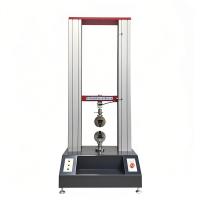
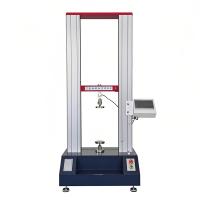
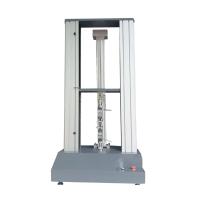
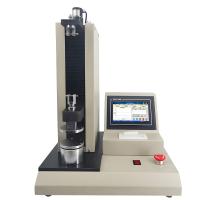
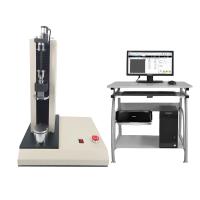
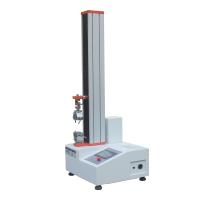
The tensile machine is the core equipment for material mechanical property testing, and its structural design directly affects the test accuracy, bearing capacity and applicable scenarios. Single-column and double-column tensile machines rely on different structural characteristics to adapt to differentiated test requirements, and the following analyzes the advantages and disadvantages and selection logic from the core dimensions.
Core structural differences
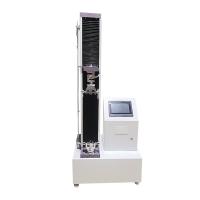
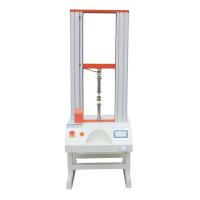
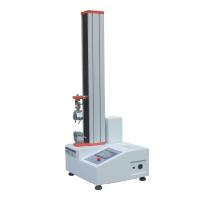
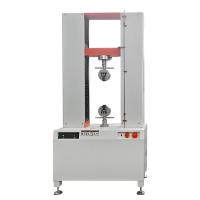
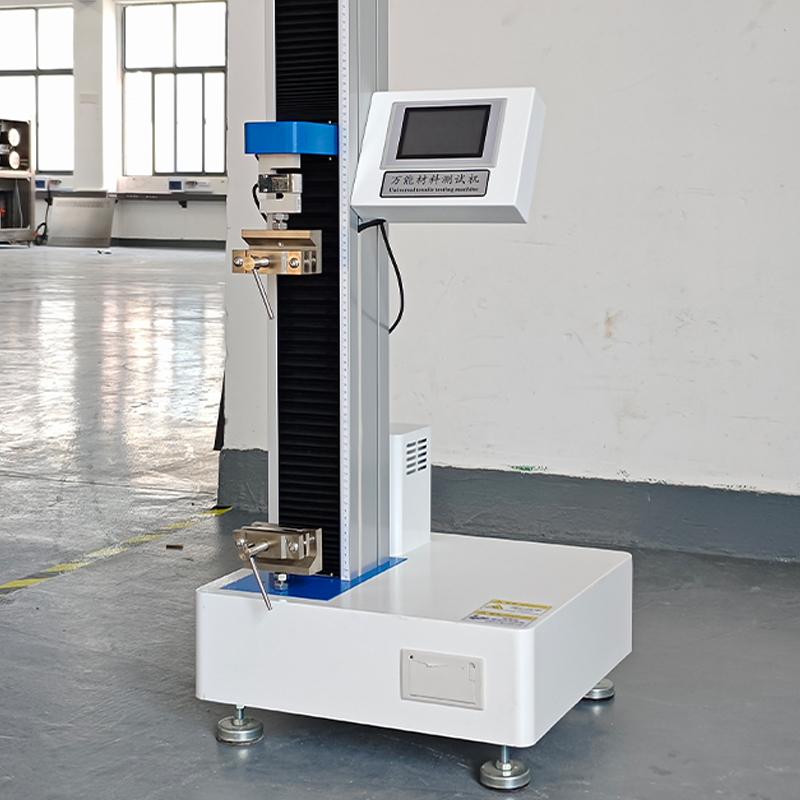
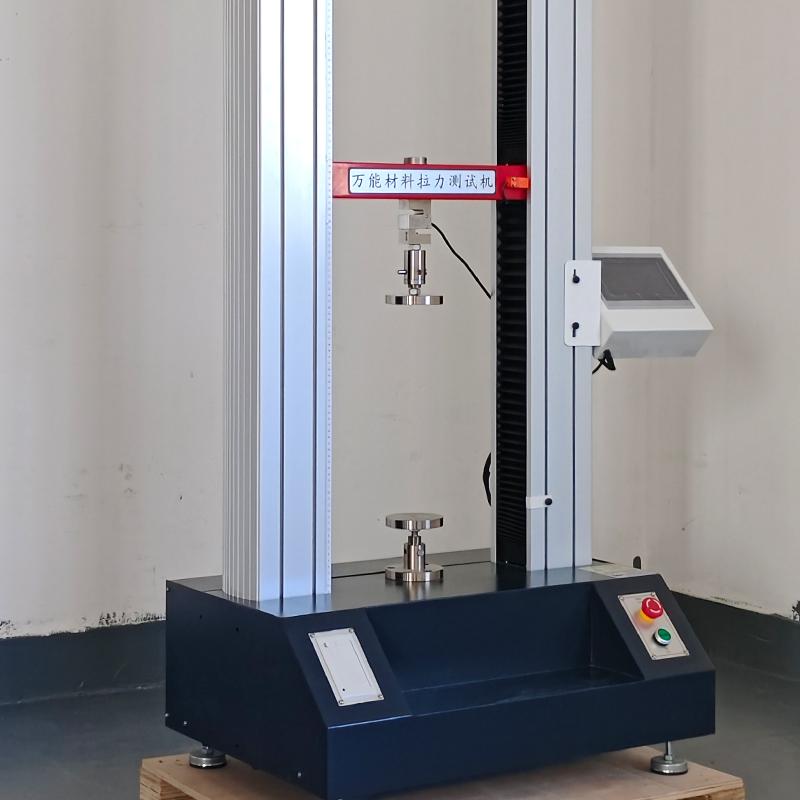
The single-column tensioning machine adopts a "C" type single-column frame, a single column connects the upper and lower beams and is driven by a single ball screw, and the whole is an open layout; The double column tensioning machine is a portal symmetrical double column structure, which is driven by double ball screws and synchronous toothed belts to form a closed and stable stress system, and the structural form of the two directly determines the difference in performance.
Advantages and disadvantages of the structure of the single-column tensioning machine
advantage
The three-sided open design is convenient for clamping, observation and extensometer installation, and the floor area is ≤0.5 square meters can be deployed on the desktop, and the procurement cost is 30%-50% lower than that of the double-column model with the same load, and the maintenance is convenient. At the same time, the whole machine weighs about 150kg, does not require a special foundation, is flexible and portable, and is suitable for frequent sample change scenarios with small and medium-sized loads.
Flexible space: three-sided open design, easy to clamp, observation and extensometer installation, covering an area of ≤0.5 square meters, can be deployed on the desktop.
Cost controllable: simplified structure, 30%-50% lower purchase cost than the same load double-column model, fewer maintenance parts, and low difficulty.
Strong portability: The whole machine weighs about 150kg, no special foundation is required, and it is easy to relocate.
Disadvantages
Insufficient rigidity leads to limited load, more than 10kN is easy to produce lateral deformation, coaxiality deviation may exceed 0.1mm to affect high-precision testing, the maximum load is usually ≤ 5kN, only suitable for low-strength materials such as thin sheets and wires, and the test width is limited, which cannot accommodate large-sized specimens.
Insufficient rigidity: Lateral deformation is easy to occur when the load exceeds 10kN, which affects the high-precision parameter measurement, and the coaxiality deviation may exceed 0.1mm.
Load Limitation: The maximum load is usually ≤ 5kN, and it is only suitable for low-strength materials such as sheets and wires.
Space Limitations: The test width is limited and cannot be adapted to large specimens.
Advantages and disadvantages of the structure of the double-column tensioning machine
advantage
The rigidity and adaptability are outstanding, the symmetrical support of the double column makes the lateral force resistance up to 3 times that of the single-column model, no deformation under high load and stable test accuracy, the load range covers 5kN to tens of tons, can be adapted to metal, composite materials and other high-strength materials, while the working width and stroke are sufficient, and can accommodate large and heavy specimens.
Excellent rigidity: double column symmetrical support, the ability to resist lateral force is 3 times that of the single-column model, no deformation under high load, and the test accuracy is stable.
Wide load range: can cover 5kN to tens of tons, suitable for testing high-strength materials such as metals and composites.
Sufficient space: The working width and stroke are larger, and can accommodate large and heavy specimens.
Disadvantages
The cost and space requirements are high, and the complex structure leads to the procurement and maintenance costs far exceeding that of the single-column model, and the volume is huge, the weight reaches several tons, and it needs to be installed on a special foundation, covering a large area and lacking flexibility, and is not suitable for space-limited scenarios.
Higher cost: The complex structure leads to significantly higher procurement and maintenance costs than single-column models.
Large space requirements: large volume, weight of several tons, need special foundation, large area and poor flexibility.
Selection suggestions
Precise selection according to test requirements
When the test force ≤ 5kN, the specimen size is small, and the space is limited and the budget is tight, the single-column model can meet small and medium-sized load scenarios such as flexible packaging and textiles
The test force > 5kN, involving high-strength materials or large-sized specimens, or with strict requirements for accuracy and stability, and the twin-column model is more suitable for precision testing scenarios such as aerospace and machinery manufacturing.
To sum up, there is no absolute advantage or disadvantage between single and double column tension machines, and the core is to adapt to the scene. The former focuses on economy and flexibility, while the latter focuses on high load and high precision, and can be selected according to the needs to maximize the test performance.