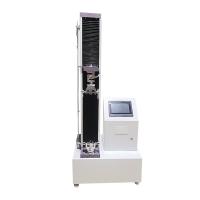
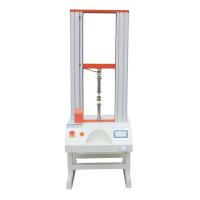
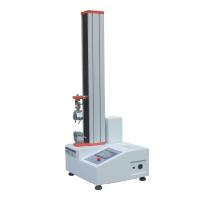
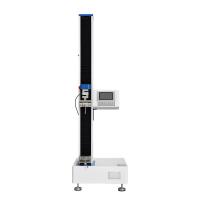
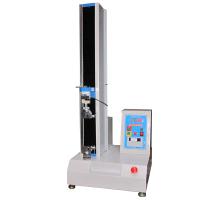
The extensometer is the core instrument for measuring the deformation of the specimen in the mechanical test of materials, and its performance directly determines the accuracy of key mechanical indicators such as elastic modulus and elongation. According to the contact mode, it can be divided into two categories: contact and non-contact, and the characteristics and applicable scenarios of the two are significantly different.
1. Contact extensometer
(1) Core types and characteristics
1. Strain gauge type (mainstream model): the deformation of the specimen is converted into an electrical signal through the strain gauge, the measurement accuracy is within ± 0.5%, it supports axial, transverse separate or synchronous measurement (Poisson's ratio can be calculated), and is suitable for the tensile and compression bending test of metals, plastics, rubber and other materials, with stable structure, moderate cost, and the most widely used.
2. Mechanical type: Relying on mechanical lever to transmit deformation, the reading is intuitive, no power supply is required, suitable for simple on-site detection or sensitive to electronic equipment scenarios, but low accuracy and slow response cannot meet the needs of high-precision testing.
(2) Advantages and disadvantages
Advantages: stable measurement, controllable cost, convenient operation, suitable for most routine tests.
Disadvantages: The contact between the probe and the specimen will produce a slight force, which may interfere with the deformation of soft materials (film, foam), and is greatly affected by the surface roughness and temperature changes of the specimen.
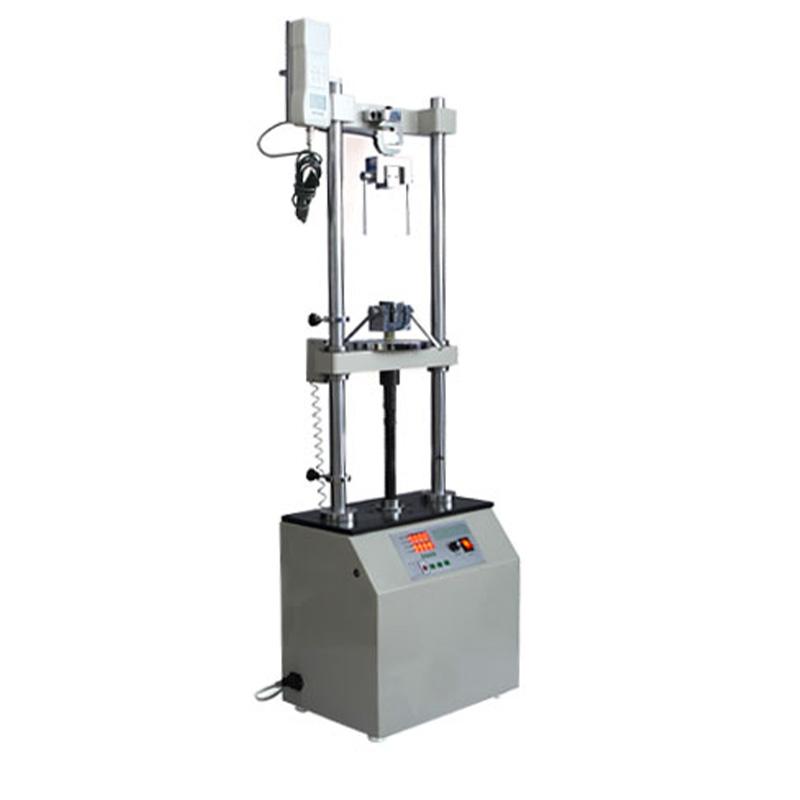
2. Non-contact extensometer
(1) Core types and characteristics
1. Laser: based on the principle of laser interference, extremely high accuracy (±0.1%), fast response, no contact damage, can be used in extreme environments such as high temperature, low temperature, vacuum, etc., suitable for aerospace materials, superalloys and other high-precision tests, sensitive to environmental vibration, dust, high equipment cost.
2. Video type: through the high-speed camera to capture the displacement of the marking point on the surface of the specimen, it can realize full-field deformation monitoring, suitable for non-uniform deformation tests such as composite materials and biological materials, convenient operation, strong visualization, lower cost than laser type, but slightly lower accuracy, greatly affected by lighting and marking clarity.
(2) Advantages and disadvantages
Advantages: No contact damage, suitable for soft and brittle materials, high precision, fast response, can cope with extreme environments and complex deformation measurement.
Disadvantages: The overall cost is higher than that of the contact type, and the requirements for the test environment (vibration, light, dust) are more stringent.
3. Core suggestions for scientific selection
1. Select according to material characteristics - soft, brittle, and surface-sensitive materials (film, glass, fiber) prefer non-contact materials; For conventional metals, plastics and other materials without special requirements, contact strain gauge extensometers can be selected.
2. Select according to the test needs - laser type for scientific research-grade high-precision and extreme environment tests; It is necessary to select the video type for full-site deformation monitoring; Industrial routine sampling inspection, on-site simple testing can choose contact type (strain gauge/mechanical type).
3. Consider the environment and cost - avoid laser in humid, dusty, and vibrating scenarios; The budget is limited, and the non-contact type is selected for the budget is sufficient and the pursuit of non-damage and high precision.
summary
Contact and non-contact extensometers have their own adaptation scenarios, and the contact type takes stability and economy as the core advantage, covering most conventional tests. The non-contact type is characterized by interference-free and high accuracy, which solves the measurement needs of special materials and complex environments. The selection should be guided by the core requirements of the test, and the material characteristics, precision standards, environmental conditions and budget should be integrated to ensure the accuracy of the test data, and at the same time achieve a balance between cost and efficiency, and provide reliable support for material mechanical analysis.