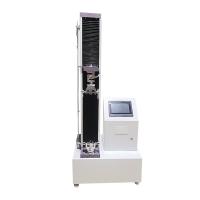
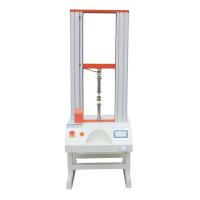
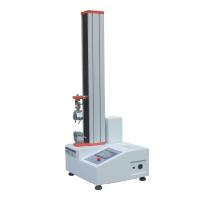
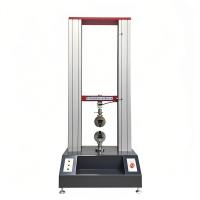
Tensile testing is the core means of material mechanical property evaluation, widely used in metals, textiles, polymers and other fields, and the test results directly determine material selection, quality control and engineering safety. At present, the global core general tensile testing standard system is ISO, ASTM, JIS, GB, which is complementary and has its own focus, adapting to the needs of different regions and industries.
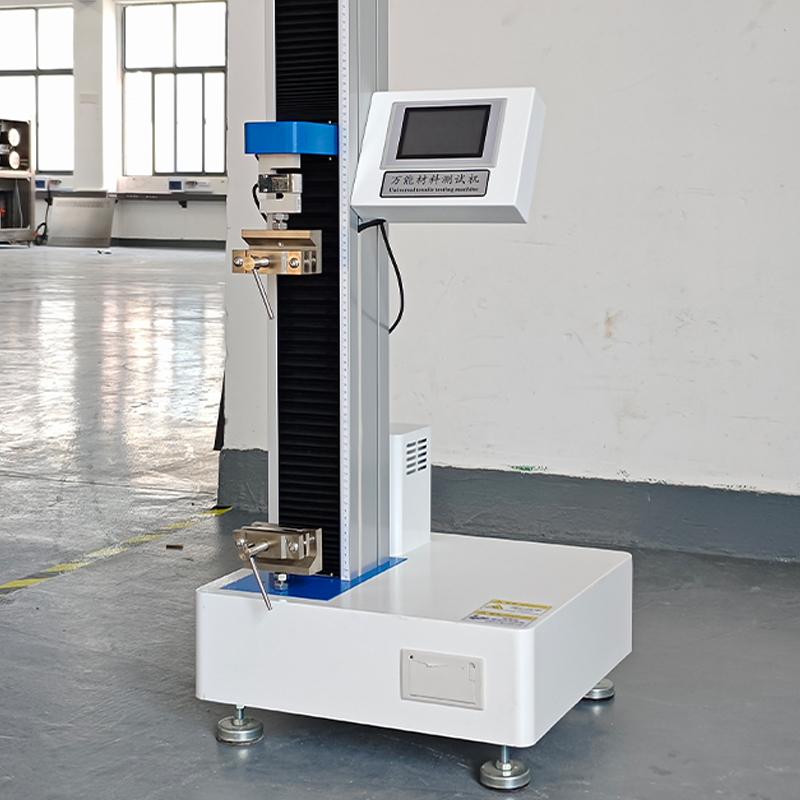
ISO (International Organization for Standardization) standard system
Core positioning: strong global universality, focusing on promoting mutual recognition of global test results, is the core reference for many countries to formulate their own standards;
Leading institutions: ISO/TC 164 (metal mechanics test), ISO/TC 38 (textiles) and other professional committees;
Core standards: ISO 6892 series (metal room temperature tensile), ISO 13934 series (textile tensile fracture);
Key features: pay attention to uniformity, clarify the requirements of proportional specimens and test rate, unify the test environment (20±2)°C and relative humidity (65±2)%, and adapt to cross-border trade and international cooperation.
ASTM (American Society for Testing and Materials) standard system
Core positioning: practicality and refinement, mainly serving North America and industries exported to the United States;
Leading Institution: ASTM E28 (Mechanical Test Methods Committee);
Core Standards: ASTM E8/E8M Series (Metal Stretching), ASTM D5035 Series (Textile Stretching);
Key features: flexible specimen specifications and parameters, a variety of non-proportional specimens are provided, extensometer accuracy requirements are high, and the textile tensile rate (300mm/min) is higher than ISO standards.
JIS (Japanese Industrial Standards) standard system
Core positioning: take into account the versatility and refined needs of Japanese manufacturing, and adapt to domestic and export Japanese products;
Formulating Organization: Japan Industrial Standards Research Council (JISC);
Core standards: JIS Z2241 (metal stretching), JIS L1096 (textile stretching);
Key features: Derived from ISO 6892 series, basically consistent with ISO and GB systems, integrating some ASTM characteristics, using non-proportional specimens, strong test repeatability, stability, suitable for precision manufacturing, electronics and other industries.
GB (National Standard of the People's Republic of China) standard system
Core positioning: our country's statutory test basis, based on domestic industrial needs, taking into account international compatibility;
Formulating body: National Standardization Administration Committee (SAC);
Core standards: GB/T 228.1 series (metal stretching), GB/T 3923 series (textile stretching);
Key features: Most of the equivalent/modified ISO standards are adopted, and the technical content is highly consistent with ISO, combined with domestic actual adjustments (such as giving priority to the use of proportional specimens adapted to our country's metal specifications), reducing the testing cost of enterprises and connecting with international competition.
summary
The four major systems have their own focuses: ISO leads the global unified benchmark, ASTM highlights regional adaptability, JIS focuses on precision manufacturing, and GB is based on domestic and international docking. In practical applications, it is necessary to select adaptation standards based on product application regions, industry requirements and target markets to ensure that the test results are effectively applied. With the integration of the manufacturing industry, the trend of coordination and unification of the four major systems is obvious, which will promote the standardization and international development of material testing technology.