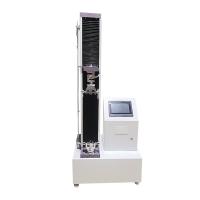
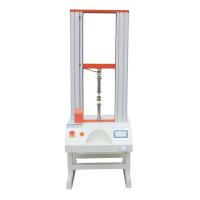
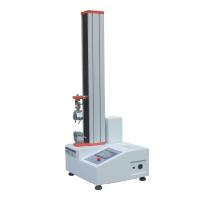
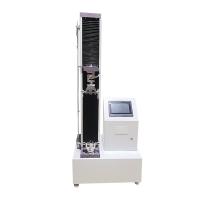
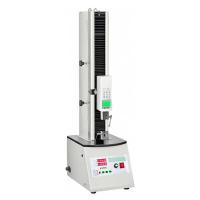
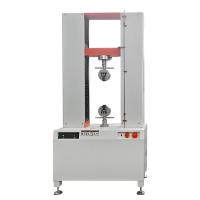
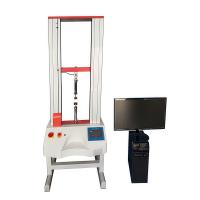
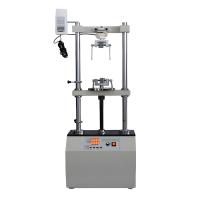
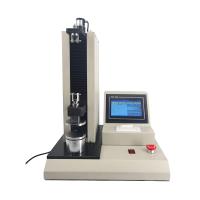
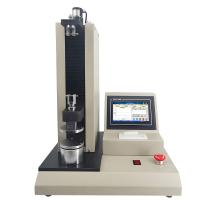
The tensile testing machine is the core equipment for material mechanical property testing, and the fixture, as its key component, directly determines the detection accuracy, specimen applicability and test safety. The core function of the fixture is to firmly clamp the specimen, evenly transmit the tensile force of the testing machine, ensure that the specimen is normally deformed or broken in the preset direction, and avoid data distortion and specimen slippage caused by improper clamping. The following will analyze the common fixture types in points, combined with the structure and applicable scenarios, and take into account both practicality and professionalism.
Wedge clamp: Universal core clamp
The wedge fixture is the most widely used general-purpose fixture in industrial inspection, and its self-tightening structure is suitable for a variety of medium and high-strength materials. Its core structure includes wedge block, jaws, base and elastic elements, which are driven by the movement of the crossbeam of the testing machine to slide during work, and use the principle of inclined supercharging to convert the axial tension into radial clamping force. The jaws can be replaced according to the material of the specimen, and materials such as high manganese steel, carbide, and rubber are suitable for different hardness materials such as metals, ceramics, and plastics. This fixture is suitable for a variety of specimens such as plates, rods, and pipes, especially for high-strength metals such as steel and aluminum, and is widely used in machinery manufacturing, building materials and other industries.
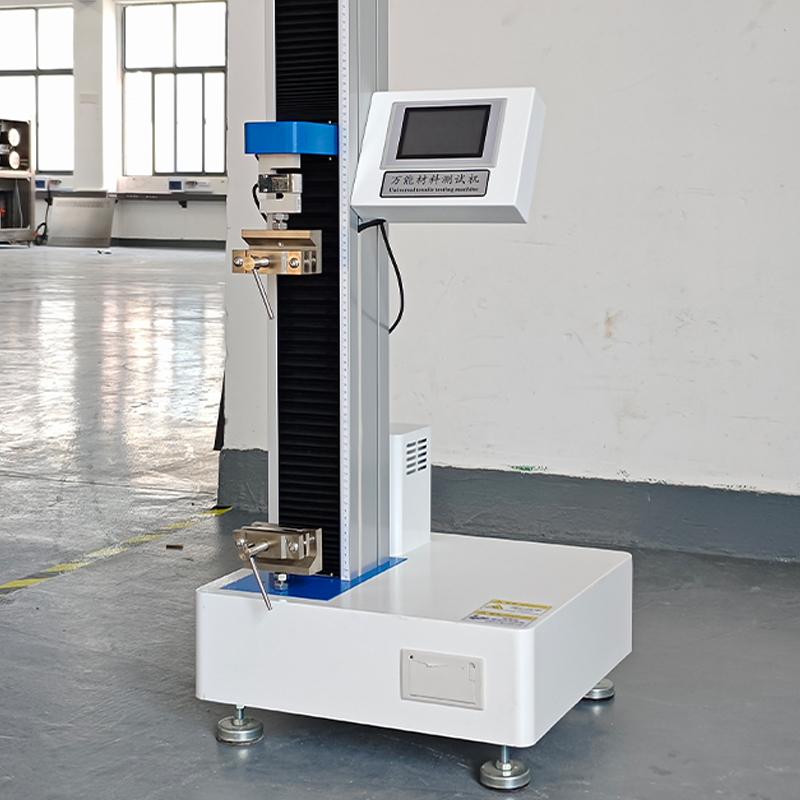
Threaded clamps: Precision manual clamps
The thread fixture is manually adjustable, and its core advantage is high clamping accuracy and versatility, making it suitable for the inspection of small, thin-walled or brittle specimens. Its structure is composed of a plier body with internal threads, a threaded ejector rod and a jaw, and the jaw spacing is adjusted by rotating the ejector rod, and the clamping force can be manually and accurately controlled to avoid damage to brittle specimens such as glass and ceramics. The jaw design is diverse, and it can be replaced with flat, V-shaped, and curved styles, and is suitable for special specimens such as thin sheets, filaments, and small blocks. It should be noted that this fixture has low adjustment efficiency and is not suitable for large-scale testing, and is mainly used in laboratory precision testing, scientific research tests and other scenarios, such as mechanical testing of electronic components and precision parts.
Flat clamp: Convenient thin sheet special fixture
Flat clamps, also known as flat clamps, have a simple structure and convenient operation, and the core is suitable for flat and sheet specimens. It is composed of two parallel clamping plates, clamping bolts and bases, the tightening bolts drive the upper plate to move down, and the pressure between the plates is used to clamp the specimen, and the clamping surface is flat to ensure uniform force, avoiding local stress concentration leading to early fracture of the specimen. The jaws can be laid with flexible materials such as rubber and flannel, and are suitable for flexible or brittle materials such as plastic sheets, paper, and fabrics. The fixture has low cost but limited clamping force, and is not suitable for high-strength and large-thickness specimens, and is mainly used in light industry, textile, packaging and other industries.
Wire fixture: special type wire detection fixture
Wire fixture is a special fixture designed for wire and wire specimens, which solves the problem of easy slippage and damage of wire. Its structure is divided into three types: V-groove, wedge-shaped groove and roller type, among which the V-groove type is the most widely used, and the symmetrical V-groove uses friction to firmly clamp the wire to avoid excessive clamping force to break the specimen; The roller type can accommodate the slight rotation of the wire when stretching, reducing the impact of torsion on the data. The clamping range of this fixture is adjustable, suitable for metal wires, plastic wires, fiber wires, etc. with a diameter of 0.1mm-10mm, such as steel wires, copper wires, optical fibers, etc., and is mainly used in wire and cable, metal wire processing, textile fiber and other industries for special testing.
summary
The tensile testing machine can also be equipped with special fixtures such as special-shaped, high-temperature, and low-temperature according to needs. In actual testing, the selection of fixtures should be combined with the material, shape, strength and test standards of the specimen, and priority should be given to ensuring firm clamping and uniform force. Mastering the characteristics and applicable scenarios of various fixtures is the key to improving the accuracy of testing data and ensuring testing safety.