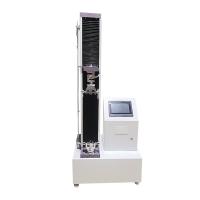
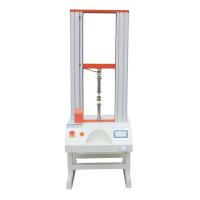
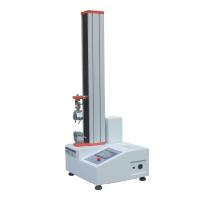
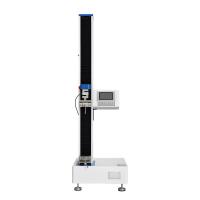
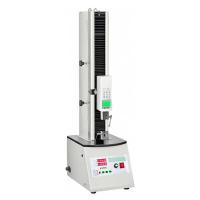
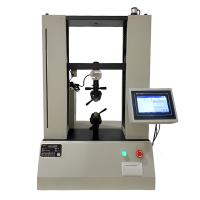
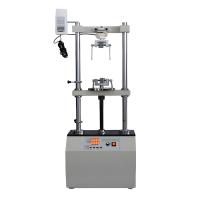
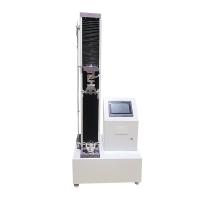
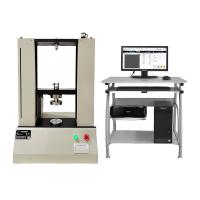
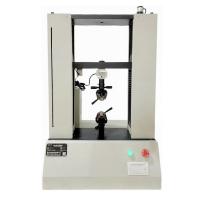
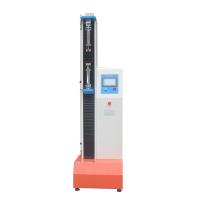
The tensile testing machine is the core precision equipment for material mechanical property testing, and its operation stability and detection accuracy directly determine the reliability of the test data. Standardized routine maintenance checks are key to extending the service life of equipment and avoiding downtime. This article sorts out the maintenance checklist according to weekly, monthly and annual levels, clarifies the key points, processes and precautions of each cycle, and provides practical guidance for equipment management personnel.
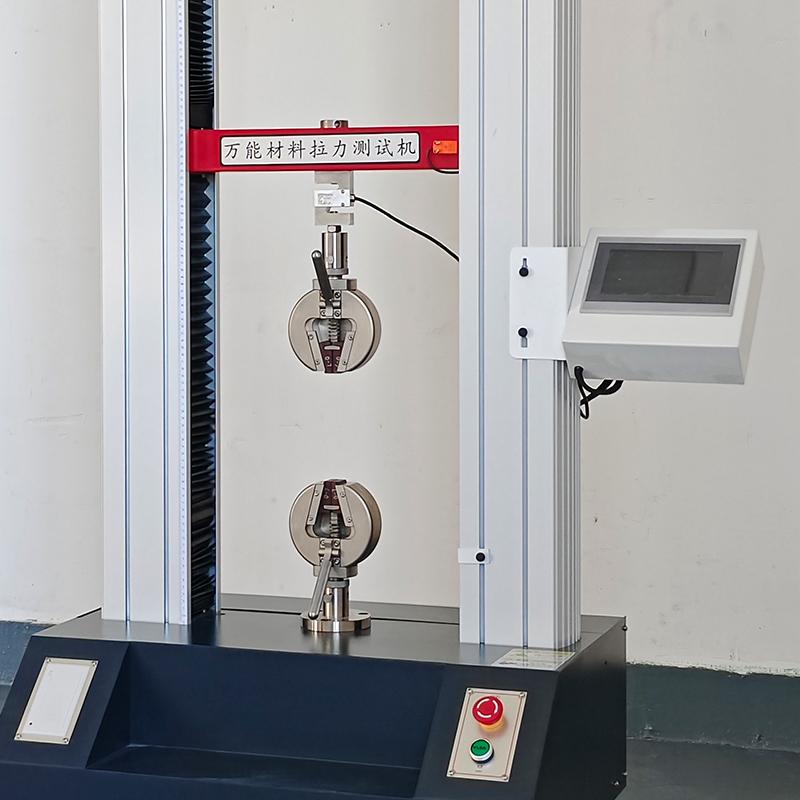
1. Weekly maintenance and inspection
Weekly maintenance does not require professional disassembly, and the core is to remove minor hidden dangers in time to ensure the normal operation of the equipment.
1. Cleaning and maintenance: wipe the surface of the fuselage, operation panel, beam and fixture with a dry soft cloth to remove dust, specimen debris and oil stains; Clean the sensor probe to avoid dust influence value detection accuracy.
2. Fixture inspection: check the integrity of the jaws, the firmness of the clamping, whether there is looseness, wear or deformation, polish the wear parts in time, and tighten the bolts on the loose parts; Check the clamp connection wire to prevent poor contact.
3. Operation troubleshooting: Run the equipment without load for 1-2 minutes, listen to whether the motor and lead screw running sound is stable, check whether the operation panel parameters are normal, and stop the machine in time to troubleshoot and record when abnormal.
2. Monthly maintenance and inspection
Monthly maintenance is on a weekly basis, focusing on core component depth inspection and precision calibration.
1. Transmission system: check the lubrication of the lead screw and guide rail, and add and replace special lubricating oil in time; Adjust the timing belt tension to avoid over-loosening or over-tightening affecting the transmission accuracy.
2. Electrical system: check whether the power cord and control line are aging and damaged, and whether the joints are loose and oxidized; Use a multimeter to detect electrical parameters such as motors and sensors to ensure compliance with standards.
3. Accuracy and safety: no-load calibration force value, displacement accuracy, and timely adjustment when the deviation exceeds the range; Check the sensitivity of the limit switch and clean the cooling fan and vents inside the device to prevent the device from overheating.
3. Annual maintenance and inspection
The core of annual maintenance is to thoroughly investigate potential hidden dangers.
1. Dismantling of core components: check the wear of transmission components such as lead screws, guide rails, and bearings, and replace them in time when the wear is serious; Overhaul fixtures and jaws, and replace aging and deformed parts.
2. Comprehensive inspection of electrical system: troubleshoot faults such as control cabinet lines and relays, and replace aging components; Calibrate or replace sensors and encoders with reduced accuracy.
3. Overall calibration and archiving: comprehensively calibrate parameters such as force value, displacement, speed, etc., and check the safety protection device; Do a good job of comprehensive cleaning and lubrication, sort out maintenance records, and establish equipment operation files.
Supplementary Notes
After each maintenance, the maintenance time, content, problems and handling measures should be recorded in detail; When the equipment is idle for a long time, it should be run once a week without load and cleaned and lubricated once a month to avoid rust and aging of components. Standardized implementation of hierarchical maintenance can effectively reduce the incidence of failures and ensure the accuracy and reliability of detection data.