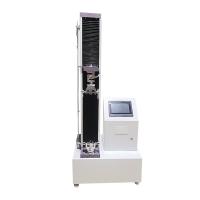
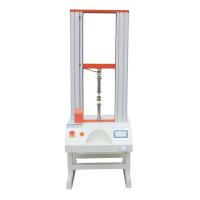
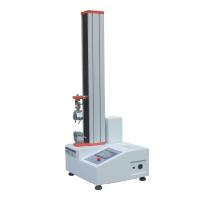
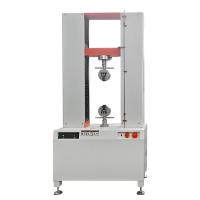
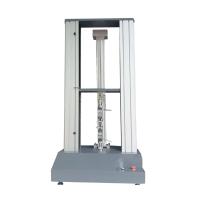
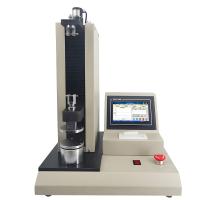
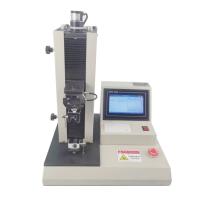
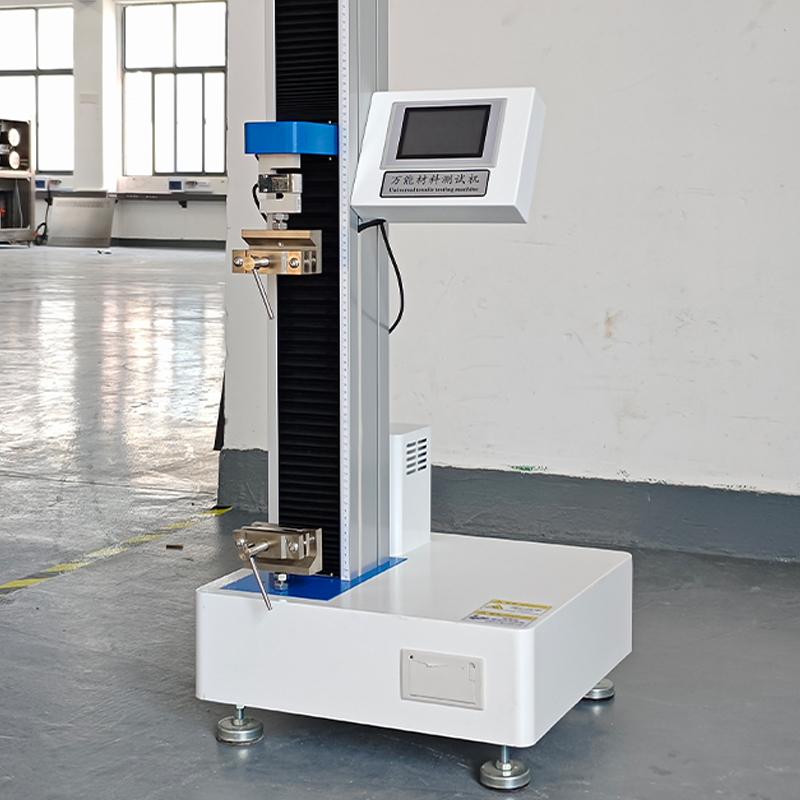
As the core equipment of material mechanical property testing, the load sensor is its "core sensing element", which directly determines the accuracy and reliability of the test data. Based on practical experience, this paper sorts out its common fault phenomena, diagnostic steps and daily maintenance points in points to provide reference for equipment maintenance personnel.
Common fault phenomena and triggers
No load is displayed or shown as zero
There is no feedback on the force value after the pulling machine is started, and the value is still zero after the load is applied. The main causes include abnormal power supply (insufficient voltage, power line break/poor contact), signal transmission failure (signal line breakage, joint loose oxidation), strain gauge damage (falling off, short circuit/breaking), and communication failure (loose interface, wrong parameter setting).
The load shows instability and fluctuations
The force value fluctuates frequently when there is no load, and the value drifts beyond the allowable error under constant load. It is mostly caused by poor grounding due to electromagnetic interference, elastomer fatigue damage, loose and oxidation of terminal blocks, and abnormal strain gauge resistance due to drastic changes in environmental temperature and humidity.
The load shows that the deviation is too large
The difference between the actual load and the displayed value exceeds the standard, or the deviation is obvious in the short term after calibration. The main reasons are calibration failure (long-term uncalibration, improper method, insufficient weight accuracy), aging strain gauges, loose installation eccentricity, and incomplete force transmission caused by load transfer mechanism stuck.
Sensor error or alarm
The control system displays fault codes and issues alarms, and the equipment cannot be tested normally. It is mostly caused by internal circuit damage, sensor overload (exceeding the rated load), and wiring errors (positive and negative poles are reversed, signal wires and power lines are confused).
Troubleshooting steps
1. Appearance inspection and foundation inspection - check the installation status of the sensor (bolt tightening, centered position), terminal block (clean the oxide layer, confirm the correct connection) and appearance (no cracks in the elastomer, no strain gauge falling off); At the same time, check the power supply to ensure that the voltage meets the rated requirements and does not fluctuate.
2. Static test and signal troubleshooting - start the equipment in a no-load state, and observe whether the force value is stable and zeroed normally. If abnormal, disconnect the sensor from the control system, measure the power supply voltage and output signal with a multimeter, and check the strain gauge bridge resistance value; At the same time, turn off the surrounding high-power equipment, check the grounding line, and eliminate electromagnetic interference.
3. Dynamic testing and load calibration - apply a constant load and observe whether the displayed value is stable and consistent with the actual load. If the deviation is too large, use standard weights to calibrate according to the process and adjust the signal amplification ratio; If it is still abnormal after calibration, check the transmission mechanism such as the tie rod and clamp to rule out the lag problem.
4. Internal troubleshooting and fault location - If the above steps do not troubleshoot the fault, disassemble the sensor to check the internal circuit, strain gauge bridge and other components; For damaged parts that cannot be repaired, replace the same model and accuracy sensor, and recalibrate after replacement.
Daily maintenance points
Clean the sensor regularly to avoid dust, oil, and water vapor intrusion; strictly follow the rated load test to prevent overload; calibrate every 6-12 months to ensure accuracy; Keep the test environment stable, avoid drastic changes in temperature and humidity and strong electromagnetic interference, and extend the service life of the sensor.
summary
The faults of the load sensor of the tension machine are mainly concentrated in power supply, wiring, strain gauges, electromagnetic interference, etc., and follow the standardized four-step diagnostic process to quickly locate and deal with the fault. At the same time, doing a good job in daily cleaning, calibration and load control can not only reduce the incidence of failures, but also ensure the reliability of the test data of the tensile machine, and provide strong support for the testing of material mechanical properties.