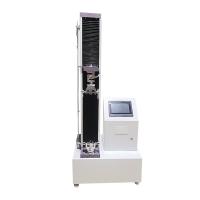
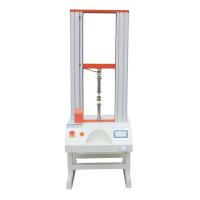
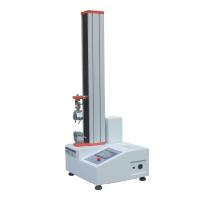
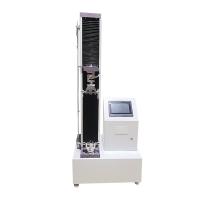
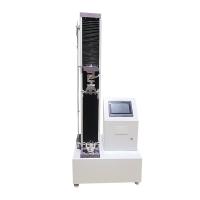
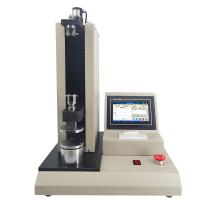
In aerospace, new energy, high-end manufacturing and other fields, materials often need to be served under high temperature working conditions, and their high-temperature mechanical properties directly determine the safe life of products. The rationality of the selection of the tensile testing machine depends on the adaptability of the high-temperature chamber and the reliability of precision control.
High temperature box matching
The high-temperature chamber is the key to restoring the high-temperature test scenario, and the selection needs to focus on the three cores of temperature adaptation, structural design, and functional adaptation to ensure that it matches the test requirements.
Accurate matching of temperature range: combined with material characteristics to select the range, rubber and plastic materials are routinely selected to -70°C~150°C, and can be customized to 200°C under special working conditions; Metals and alloys are recommended to be -40°C~500°C, and high-strength alloys can be customized above 1000°C.
Strict control of temperature uniformity and stability: The uniformity error in the box needs to be ≤±2°C, and the temperature stability is ±0.1°C at <600°C and ±1°C at >600°C, and local deviations are avoided through multi-point temperature measurement sensors.
Structure and function adaptation: the cavity adopts double-layer vacuum insulation structure, and the surface temperature is ≤ 50°C; The seal is made of high-temperature resistant silicone rubber strips, and the easily oxidized materials need to be equipped with airtight chambers; Reserved lead holes, equipped with observation windows, and track translation structure to improve connection flexibility.
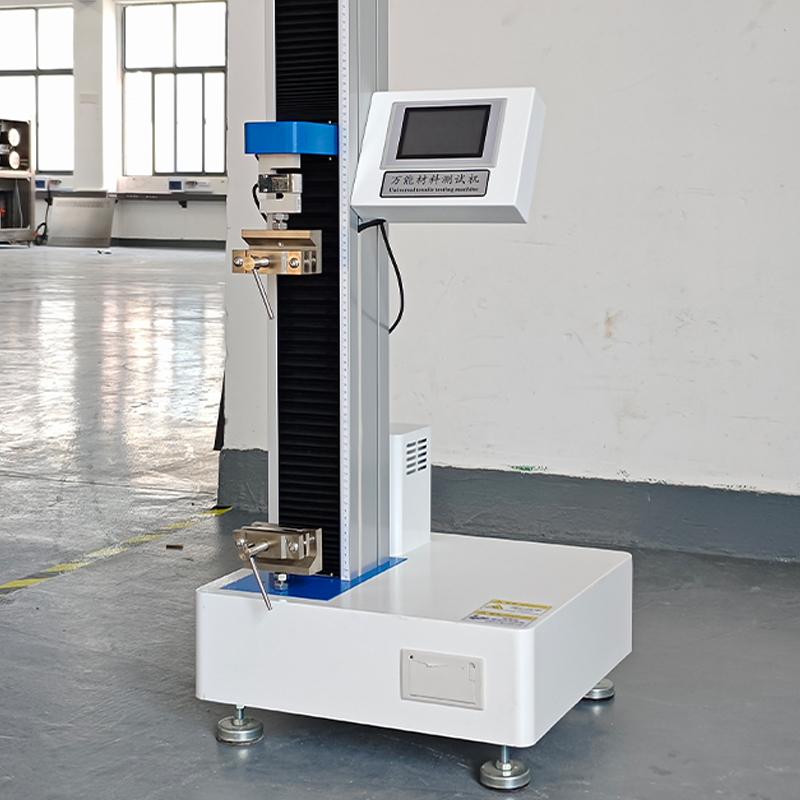
Precision control
The high-temperature environment is prone to errors, and it is necessary to coordinate control from the three dimensions of force measurement, temperature control, and transmission to ensure accurate data.
Selection of force measurement system: Priority is given to S-type or spoke strain gauge load sensors with temperature compensation, with an accuracy of ≥± 0.5 (0.2 levels ± high-precision experiments), a range of 120% of the expected maximum force, and a sampling frequency of ≥ 100Hz.
Temperature control and transmission coordination: the temperature control adopts PID electric heater + overlapping refrigeration system, with PT100 sensor, supporting programmed temperature control; The transmission is made of high-precision ball screw and servo motor, with a displacement resolution of 0.001mm and infinitely adjustable speed.
Fixture adaptation: Inconel718 and other high-temperature resistant alloy fixtures are selected for high-temperature environments, and the thermal insulation structure is designed; Wedge fixtures are used for metal specimens, and non-slip flexible fixtures are used for rubber and plastic specimens to avoid slipping or fracture errors.
Additional considerations for selection
Comply with industry standards: Rubber and plastic materials must comply with GB/T 528, GB/T 1040 and other standards, metal materials must comply with GB/T 228, ISO 6892 and other standards, and support multi-standard switching and custom report export.
Considering practicality and after-sales: with protection functions such as over-temperature and overload, priority should be given to brands with timely after-sales response and sufficient wearing parts; The scientific research scenario focuses on high precision, and the production quality inspection scenario focuses on stability.
In summary, the selection of high-temperature tensile testing machine needs to be based on high-temperature box support, precision control as the core, combined with material characteristics and usage scenarios, in order to achieve accurate testing and standardization, and provide support for material research and development and quality control.