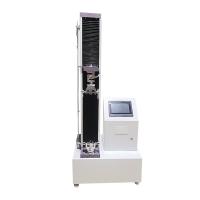
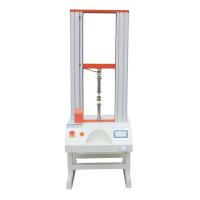
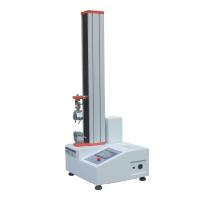
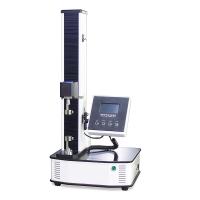
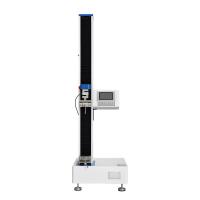
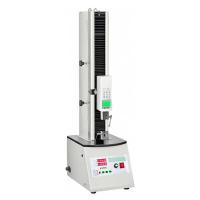
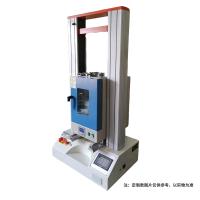
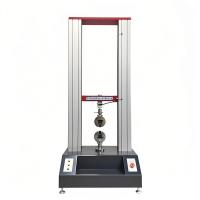
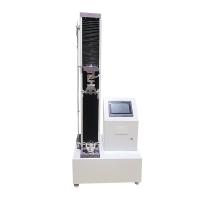
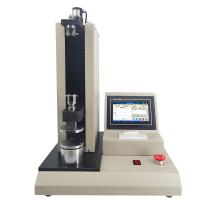
In the fields of cold chain logistics, aerospace, rail transit, polymer materials, etc., a large number of materials need to be served for a long time under low temperature working conditions, and their low temperature mechanical properties are directly related to product safety and life. The key to the selection of low-temperature tensile testing machine is to match the special requirements of each system of the equipment in the low-temperature environment.
The core requirements of the refrigeration system in the low-temperature environment
The refrigeration system determines the accuracy and stability of the low-temperature environment simulation, which is the primary consideration for selection, and needs to be combined with the test temperature adaptation:
Refrigeration method adaptation: conventional low temperature (-10°C to -80°C) is cooled by overlapping compressor, which is efficient and stable; Deep low temperature (-80°C to -196°C) with liquid nitrogen-assisted cooling and precision injection control system.
Temperature uniformity and stability: The uniformity error in the box is ≤± 2°C, the temperature fluctuation ≤± 0.5°C, and it is equipped with a multi-point temperature measurement sensor to avoid temperature deviation affecting the data.
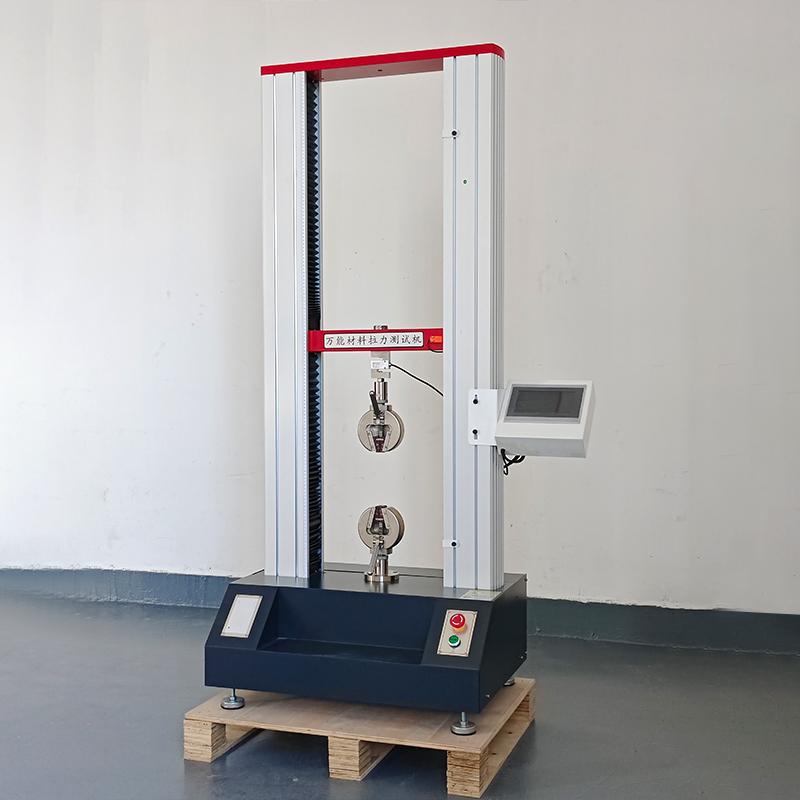
The requirements for measurement and control accuracy in low-temperature environments
Low temperature can easily lead to material shrinkage and component stuttering, so it is necessary to strengthen the accuracy of the measurement and control system to ensure reliable data:
Force measurement system: S-type or spoke type strain gauge sensor with low temperature compensation is selected, with an accuracy of 0.5 level ≥± (high-precision ± 0.2 level), and the range is 120% of the expected maximum force.
Displacement control: using high-precision ball screw and servo motor, with low-temperature adaptive grease, displacement resolution up to 0.001mm, speed 0.001~500mm/min infinitely adjustable.
Requirements for structural protection and fixtures in low-temperature environments
Structural protection and fixture adaptation directly affect the life of equipment and test safety, and should be paid attention to:
Structural protection: The cavity adopts a double-layer vacuum insulation structure with a special thermal insulation layer; The seal is made of low-temperature resistant material to prevent cold loss and frosting of the cavity.
Fixture adaptation: choose stainless steel or high-strength alloy fixtures, and design anti-slip, anti-cold and brittle structure; Wedge fixtures are used for metal specimens, and flexible fixtures are used for polymer specimens.
Additional attention should be paid to the selection of the type
Comply with industry standards: The device must comply with GB/T 228, ISO 6892 and other standards, and support multi-standard switching and custom report export.
Taking into account safety and after-sales: with multiple protections such as over-temperature, overload, and liquid nitrogen leakage; Give priority to brands with timely after-sales response and sufficient wearing parts to balance cost performance.
summary
The core of the selection of low-temperature tensile testing machine is to adapt to the special adaptation needs of the equipment in the low-temperature environment. It is necessary to take the stability of the refrigeration system, reliable measurement and control accuracy, structural protection in place, and reasonable fixture adaptation as the core, while taking into account the compliance with industry standards and practical economy, combined with the comprehensive consideration of specific test scenarios and material characteristics, in order to accurately detect the low-temperature mechanical properties of materials, provide scientific and reliable technical support for material research and development and product quality control, and ensure the operational safety and service life of products under low temperature working conditions.