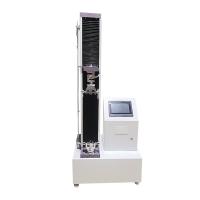
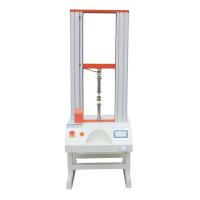
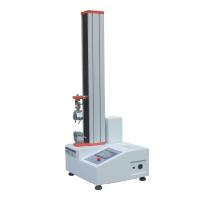
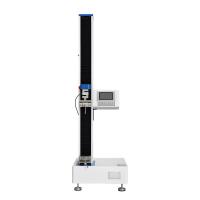
The tensile testing machine is the core equipment of material mechanics testing, and the conventional standard model can meet most general material tests, but in the special scenarios of industrial production and scientific research, its range, fixture and other parameters cannot match individual needs, at this time, customized models become the preferred solution. This article clarifies its core applicable scenarios, explains the customization process in detail, and provides professional reference for enterprises and scientific research institutions to select.
Core applicable scenarios: These situations require the selection of customized models
The core value of customized tensile testing machine is to adapt to special needs and solve test pain points.
Testing of special materials/special-shaped specimens is a common requirement. Conventional models are suitable for standard specimens such as plates and wires, and if special-shaped parts (such as automobiles, aerospace special-shaped parts) or special materials (ultra-high temperature alloys, flexible composite materials, etc.) are tested, exclusive fixtures need to be customized and the fuselage structure adjusted. For example, to test aviation carbon fiber specimens, it is necessary to customize a wide-sided anti-stress centralized fixture and a high-precision displacement control system; To test micro components, it is necessary to customize the miniature clamping mechanism to prevent damage.
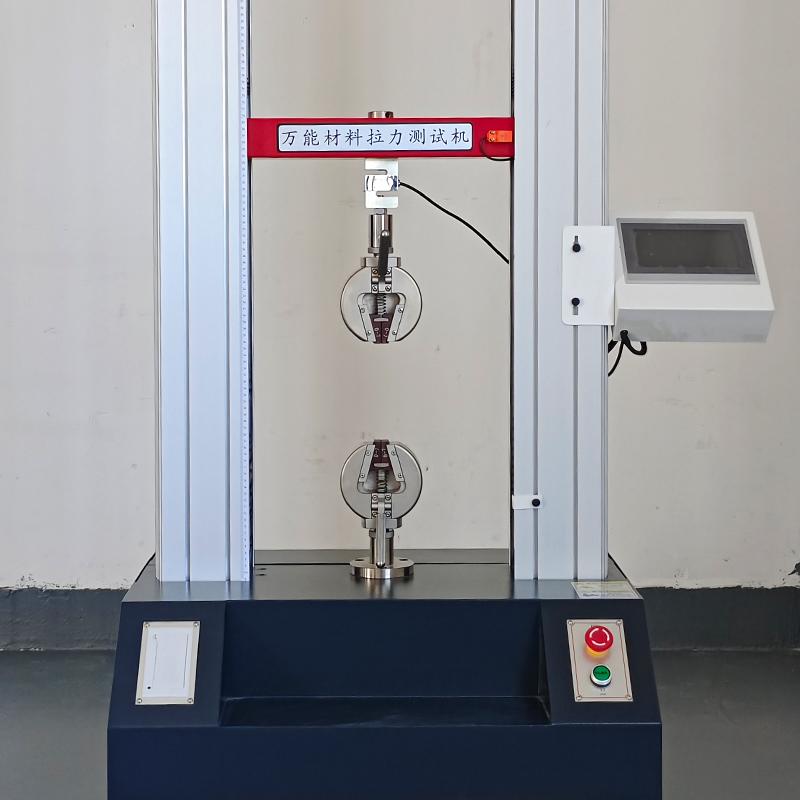
Special test environments and high-precision scenarios need to be customized and adapted. In extreme environments such as high and low temperature, humidity and heat, corrosion, etc., the body material and sealing of conventional models cannot be tolerated, and it is necessary to customize the weather-resistant and corrosion-resistant fuselage and test cabin. In scientific research or high-end manufacturing, if the force value accuracy is required to ≤± 0.05%FS, or it is necessary to add compound functions such as torque and bending, and it is also necessary to customize and upgrade the parameters.
Large-scale mass production and automation integration scenarios need to be customized to improve efficiency. In industrial mass production, if it is necessary to realize the integration of automatic sample feeding, testing, data storage and sorting of non-conforming products, conventional models cannot meet the production capacity, and it is necessary to customize automatic integrated models with assembly line docking mechanisms to reduce manual intervention. When enterprises need to connect equipment with existing systems, they also need to customize data interoperability.
Detailed explanation of the complete process of customized tensile testing machine
Customization should follow the five steps of "clear requirements - scheme design - prototype trial production - acceptance and delivery - after-sales guarantee" to ensure that the model matches the needs and avoids rework.
The first step is to communicate and sort out the needs. The demander informs the supplier of the sample parameters, test items, range, accuracy, environmental requirements, and additional requirements such as automation and data docking. Suppliers sort out the core indicators, issue confirmation forms, and clarify the scope, cycle and cost.
The second step is the scheme design review. The supplier designs and customizes the plan according to the confirmation form, and clarifies the parameters and standards of the fuselage, fixtures, control system, etc.; The two parties jointly reviewed, optimized the plan to reach a consensus, and signed a customized contract.
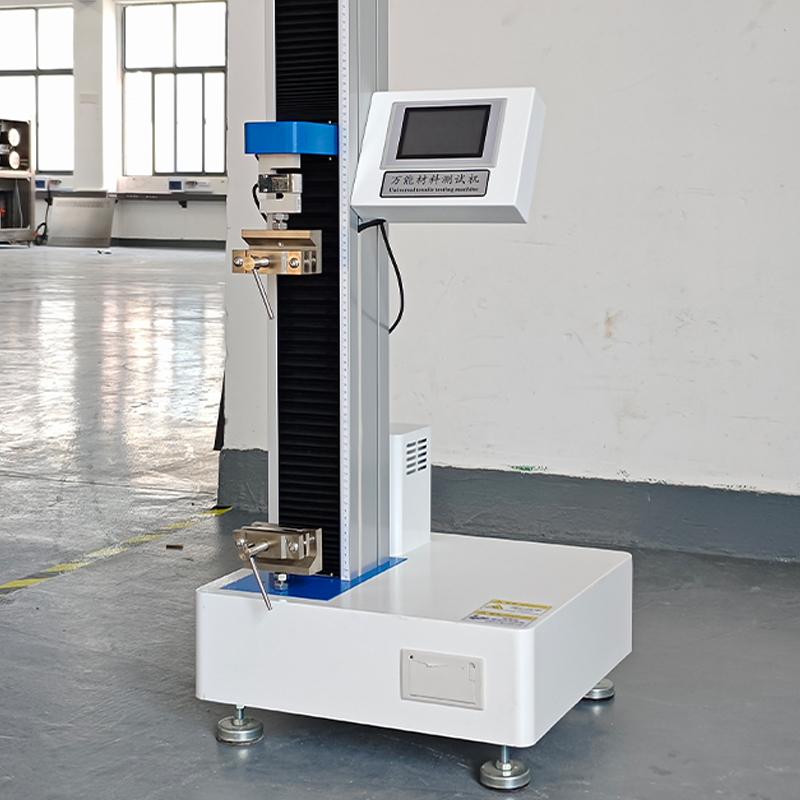
The third step is to prototype trial production and commissioning. After completing the trial production of the prototype, the supplier simulates the actual scenario to verify the performance through no-load, load testing and accuracy calibration, and solves problems such as adaptation and data deviation.
The fourth step is on-site acceptance and delivery. After the prototype is qualified, the demand party is notified for acceptance, and the demand side is tested and verified according to the contract indicators; After acceptance, it will be delivered, and the supplier will provide training, instructions, calibration reports and other materials.
The fifth step is after-sales guarantee maintenance. After delivery, the supplier provides services such as installation and commissioning, fault repair, and regular calibration, responds to needs in a timely manner, and provides parameter optimization suggestions according to equipment usage to ensure stable operation.
summary
The core of customized tensile testing machine selection is to accurately match the needs. Only by clarifying customized scenarios and following standard processes can we solve the pain points of conventional models, provide accurate and efficient support for material testing, and help enterprises improve quality and make breakthroughs in scientific research.