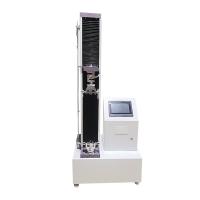
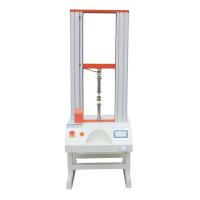
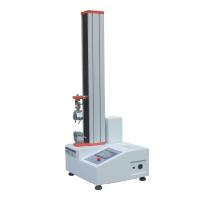
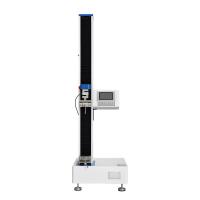
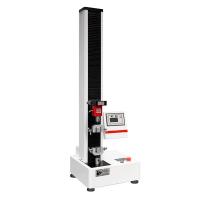
In the field of material mechanical property testing, tensile testing machines are the core equipment, widely used in metal processing, non-metallic materials, building materials, university laboratories and other scenarios. At present, the domestic testing machine market has a large price span and significant performance differences, and users often face the problem of "mismatch between budget and demand". This paper combines industry standards and market measured data to analyze the performance differences of models by price point, providing users with scientific budget planning for selection and maximizing the input-output ratio.
Combined with market research, the tensile testing machine can be divided into three echelons according to the price, and each echelon has obvious differences in core indicators such as force measurement accuracy, driving mode, and functional adaptability, adapting to different scenarios and budget needs.
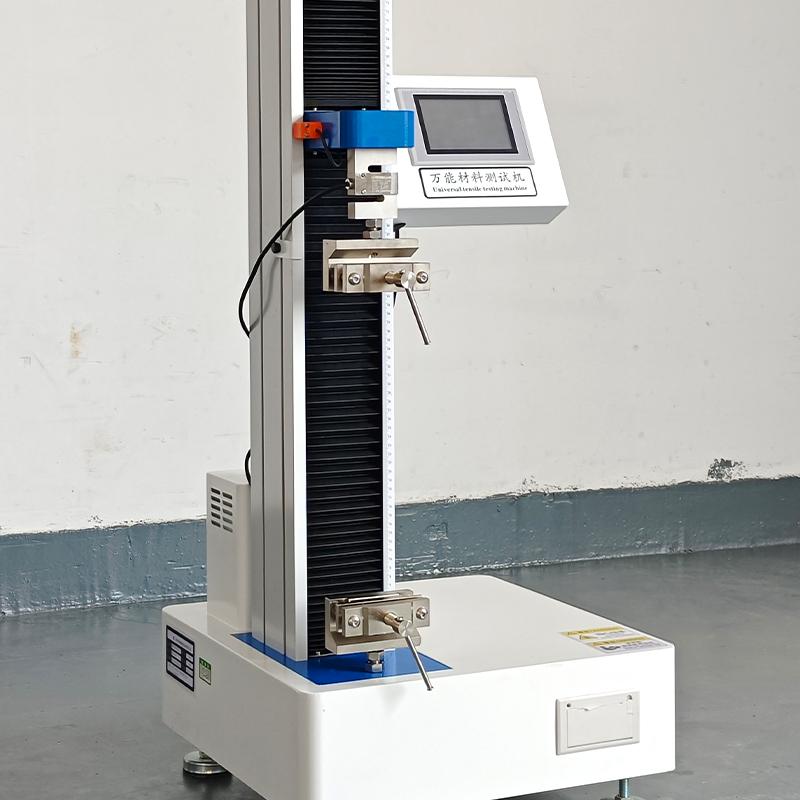
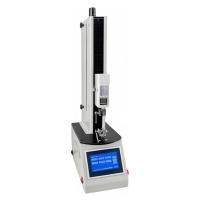
Entry-level model (1-50,000 yuan), focusing on basic testing, suitable for small and medium-sized manufacturing enterprises, small laboratories and teaching scenarios. The price is mainly based on the electronic universal testing machine, the maximum test force is 1-50kN, the force measurement accuracy is ± 1.0%, the use of ordinary servo motor with ball screw, can complete simple tests such as stretching and peeling, and the software supports basic data display and report export. Its advantages are cost-effective, low maintenance cost, suitable for routine testing of low-strength materials such as plastic films and textiles, but it cannot meet the needs of high-precision and complex testing, and a small maintenance budget needs to be reserved.
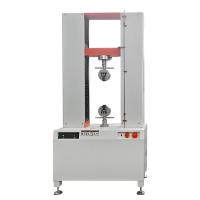
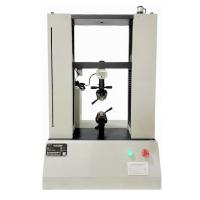
Advanced models (5-150,000 yuan), taking into account precision and versatility, are the mainstream choice in the market, suitable for medium-sized manufacturing enterprises, university laboratories and conventional scientific research scenarios. The model covers two driving modes: electronic and hydraulic, with a maximum test force of 10-300kN, and the force measurement accuracy is increased to ±0.5%, which meets the first-level accuracy requirements of GB/T 16491-2008. The core accessories use brand sensors and servo systems, which can complete a variety of tests such as tensile, compression, and bending, and the software can automatically calculate mechanical indicators and export reports, and some support simple non-standard customization. Most brands offer a one-year warranty and 24-hour technical response, and budgets can focus on configuration upgrades.
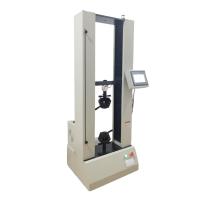
High-end models (more than 150,000 yuan), focusing on high-precision and high-complexity testing, suitable for high-end scientific research institutes and large industrial enterprises. Mainly high-precision electronic universal testing machine and electro-hydraulic servo model, the maximum test force can reach more than 1000kN, the force measurement accuracy is ± 0.3%, the imported drive system is adopted, the operation is stable, and can meet the high-end testing needs of aerospace materials and other high-end tests. The software supports cloud management, multi-curve comparison, adapts to international standards, and provides more than 2 years of warranty and value-added services after sales, but the procurement and maintenance costs are high, and sufficient accessories and calibration costs need to be reserved.
The core of the selection budget planning is "demand matching", it is recommended that users first clarify the test materials, test power and accuracy requirements, and then choose the model in combination with the budget: basic testing to choose the entry level, taking into account the accuracy to select the advanced level, and high-end scientific research to choose the high-end level. At the same time, it is necessary to include after-sales and maintenance costs in the total budget, and give priority to brands with relevant certifications to ensure reliable test data.
In summary, the performance differences of tensile testing machines at different price points are concentrated in accuracy, driving mode, function and after-sales, and reasonable budget planning needs to be based on actual needs, balancing performance and cost, in order to select adaptive equipment and provide reliable support for material testing.