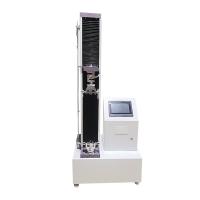
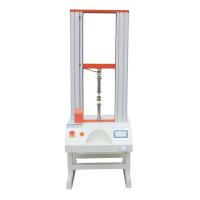
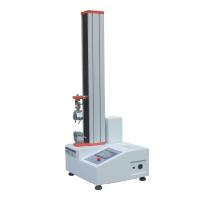
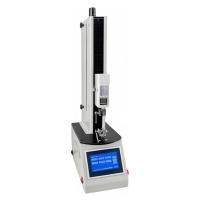
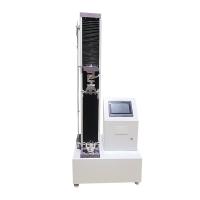
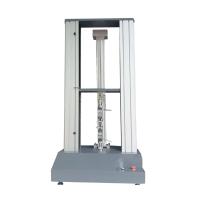
In the test of material mechanical properties, environmental simulation, reliability, etc., the fixture is the core component connecting the specimen and the equipment, and its installation accuracy and debugging quality directly determine the data validity and test safety. Improper installation can lead to eccentric loading, specimen slippage, stress concentration, data drift, and more, leading to distorted results, abnormal specimen breakage, and even damage to sensors and moving parts. This paper focuses on the whole process of fixture installation, commissioning, calibration and maintenance, and gives standardized operation points to help laboratories stably output reliable data.
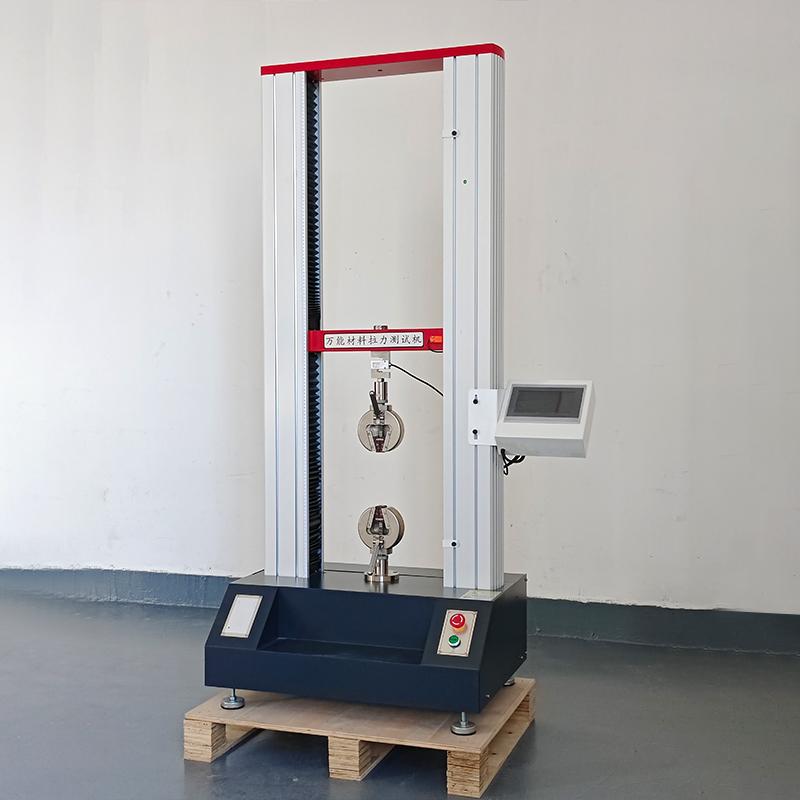
Preparation before installation: Eliminate errors at the source
Three verifications need to be completed before installation to avoid "congenital deficiencies".
1. Matching fixtures and specimens: according to the material, shape and size of the specimen, the corresponding fixtures are selected, such as V-shaped jaws for round bars, flat fixtures for plates, and pneumatic wide-face fixtures for film and soft materials, and mixing is prohibited. The width of the clamping surface should not be less than 1.2 times the width of the specimen to prevent edge warping and local stress.
2. Cleaning and condition check: clean the oil, scale, and debris on the mounting surface, positioning keyway, and jaw tooth surface, and the contact resistance should be controlled within 10μΩ. Check whether the jaws are chipped and the scratch depth exceeds 0.05mm and need to be replaced in time, and the fasteners and anti-slip gaskets are intact.
3. Equipment and environment confirmation: the equipment is preheated for 15-30 minutes, and the force value and displacement are cleared; Calibrate the worktable with a level with an inclination of no more than 0.1% to avoid the introduction of additional bending moments by foundation tilt.
Standardized installation: coaxial and fastening are at the core
The installation of the fixture follows the four-step process of centering, pre-tensioning, uniformity, and review to ensure that the stress axis coincides with the loading axis.
1. Precise Alignment: Place the clamp into the mounting slot so that the positioning key and keyway fit perfectly, ensuring that the centerline of the upper and lower clamps is aligned. The coaxiality deviation is not greater than 0.05mm, and the eccentricity will deviate the strength data by 10%–20%.
2. Step by step tightening: Pre-tighten the bolts by hand first, and then use a torque wrench to tighten them evenly in diagonal order step by step until the specified torque. It is strictly forbidden to tighten one side sequentially to prevent the fixture from warping and the fitting gap exceeding the standard.
3. Specimen clamping: Place the specimen in the clamping center to ensure that there is no skew vertically. The clamping force is based on the principle of no slipping and no crushing, the clamping force is reduced for brittle materials, and the bite degree is appropriately increased for hard materials.
Debugging and verification: Ensure that the status is up to standard
After installation, it must be debugged with no load and load to confirm that there are no hidden dangers before starting the test.
1. No-load debugging: manually move the beam to check the smooth movement without stuttering or abnormal noise; Use a dial indicator to detect the runout of the end face, no more than 0.03mm, start the equipment running empty for 10 minutes, and confirm that the fixture is not loose.
2. Alignment and parallelism verification: visually combined with the gage to check the parallelism of the upper and lower clamping surfaces; Alignment tooling can be used to assist calibration to avoid eccentric loading.
3. Clamping reliability verification: there is no slippage of the specimen when gently pushed, and the preloading is confirmed to be stable and there is no jumping. If the data fluctuates by more than 0.5%, it should be stopped immediately for investigation.
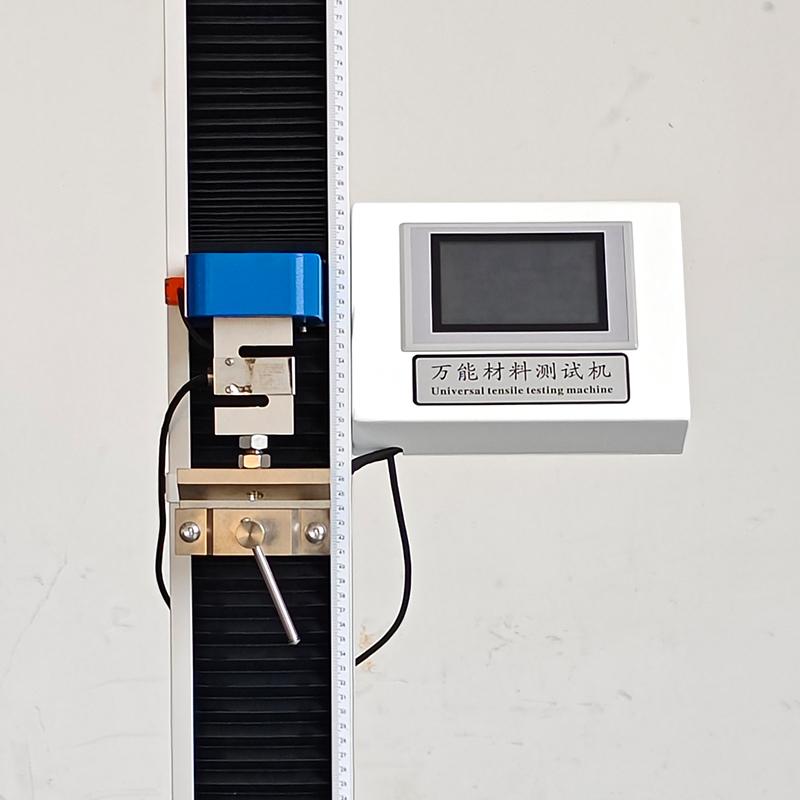
Common problems and circumventions
1. Slippage of the specimen: mostly caused by jaw wear, insufficient clamping force, and oil stains on the contact surface. The jaws should be replaced, the clamping pressure should be reset, and the clamping surface should be thoroughly cleaned.
2. Fracture at the clamping site: caused by stress concentration and over-tight compression. It is necessary to ensure that the clamping length meets the standard and is evenly stressed, and protective gaskets can be added to soft materials.
3. Poor data drift/repeatability: due to loose fixtures, poor coaxiality, and uneven foundations. Bolts should be retightened, realigned, and the equipment level should be calibrated.
4. Abnormal noise and vibration: mostly large fit gaps, loose fasteners, and fixture resonance. Inspect the mounting surface, retighten and optimize the clamping position.
Maintenance and cycle management
Long-term stable dependence on normative maintenance
check the wear and fastening status of the jaws every 50 tests;
Replace anti-slip gaskets and lubricate moving parts quarterly;
Perform full calibration of the fixture system every 2000 tests or 6 months;
Establish a ledger to record installation, commissioning, fault and replacement information to achieve traceability management.
epilogue
Fixture installation and debugging are the "basic accuracy links" of testing work, and small deviations will be magnified as data errors. Strictly implement the whole process of alignment, uniformity, debugging, and verification, and do a good job in matching inspection and daily maintenance, which can significantly reduce the risk of failure and improve data consistency and credibility. Laboratories should standardize and institutionalize fixture operations to ensure that test results are accurate, reliable and reproducible from the source.